
Vice President Hussain Mohamed Latheef has called for comprehensive reform of the United Nations Security Council, urging the international community to build a more representative global decision-making system that gives Small Island Developing States and other underrepresented countries a stronger voice in matters affecting international peace, security and development.
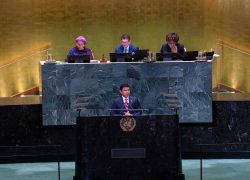
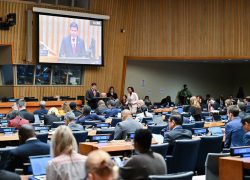
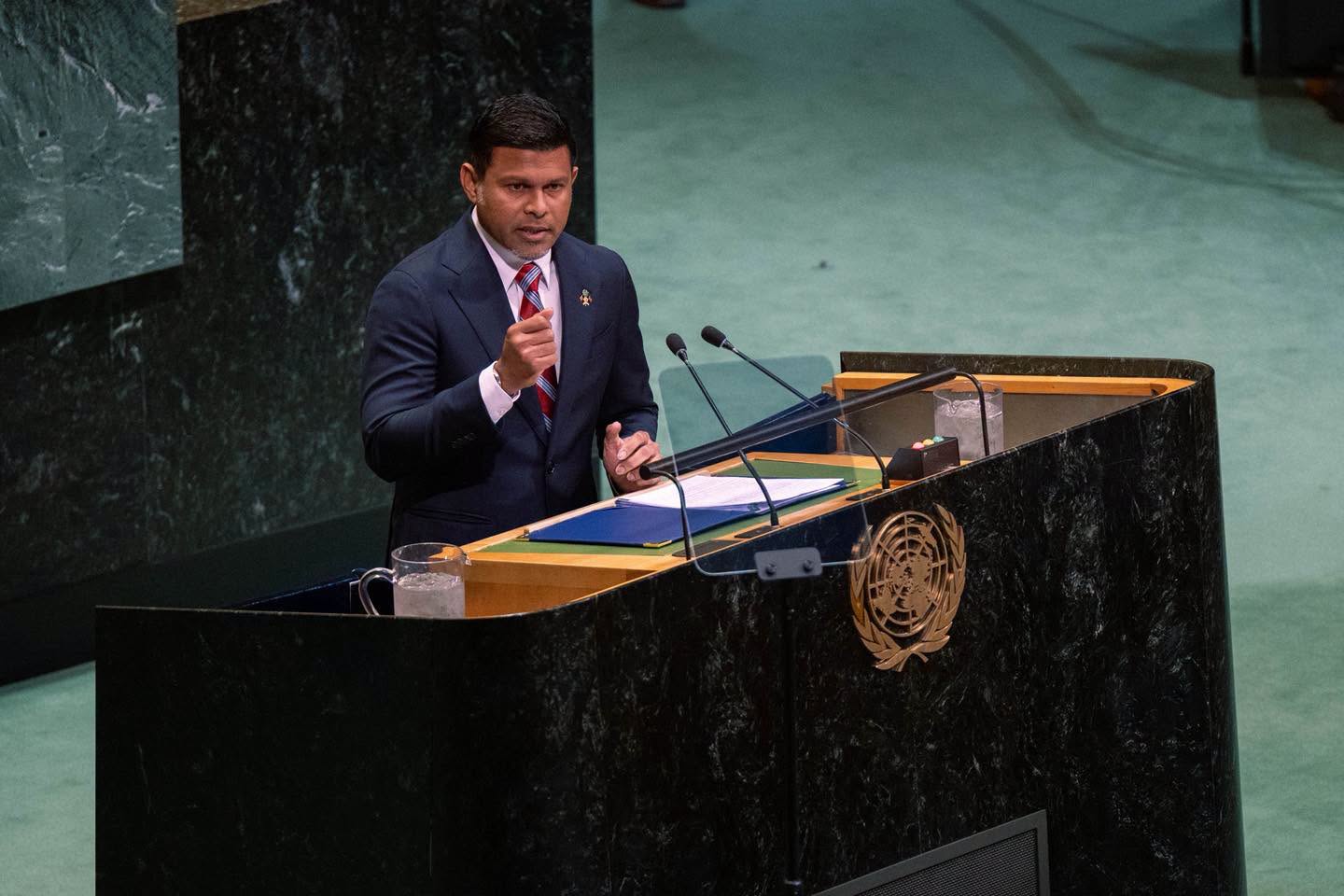
Addressing the 81st session of the United Nations General Assembly, the Vice President said the structure of the Security Council must evolve to reflect the realities of the modern international community. He said an institution tasked with addressing the most pressing challenges facing the world could not continue to mirror the global political landscape that existed when the United Nations was established in 1945.
“The Security Council cannot reflect the world of 1945 while deciding for the world of today,” the Vice President said, placing institutional reform at the centre of the Maldives’ broader call for a fairer and more inclusive multilateral system. The 81st session of the General Assembly opened in September 2026, bringing together the UN’s 193 Member States at a time when institutional reform and restoring confidence in multilateral cooperation remain prominent issues on the international agenda.
The Vice President called for an expansion of Security Council membership in both its permanent and non-permanent categories, with greater representation for Africa and a dedicated rotating seat for Small Island Developing States. The proposal reflects the Maldives’ established position that the Council should provide more equitable geographical representation and better incorporate the perspectives of countries that are currently underrepresented in international peace and security decision-making. The Maldives has consistently supported expansion in both categories of membership and has advocated a rotating Security Council seat for SIDS.
He also called for the abolition of the veto power held by the five permanent members of the Security Council. The Council currently consists of 15 members, including five permanent members — China, France, Russia, the United Kingdom and the United States — alongside 10 non-permanent members elected by the General Assembly for two-year terms.
The Vice President presented Security Council reform as part of a wider question concerning the ability of smaller countries to exercise sovereignty and participate meaningfully in decisions shaping the international system. Recalling the Maldives’ longstanding advocacy on the security challenges faced by small states, he said the country had raised international concern over their vulnerability to external threats nearly four decades ago, while the nature and reach of those threats have since expanded considerably.
“Insecurity now travels through sea lanes, supply chains, financial markets, digital networks and new technologies,” he said, highlighting how contemporary challenges can affect states far beyond conventional military or territorial threats.
The Vice President said sovereignty could increasingly come under pressure without the physical crossing of borders, including in circumstances where external forces restrict a country’s ability to independently determine its policies and future. Against this changing international environment, he said global institutions must ensure that smaller states have meaningful opportunities to shape decisions rather than simply respond to decisions made by more powerful countries.
“Small States must be decision-makers, not decision-takers,” the Vice President said, reinforcing a central theme of the Maldives’ foreign policy advocacy: that the size of a country should not determine the value of its voice in the international system.
The call for Security Council reform formed part of the Maldives’ wider emphasis on the consistent and equal application of international law. The Vice President described international law as an essential protection for states operating in a global environment where political, economic and military power is distributed unevenly, arguing that international rules must be applied consistently irrespective of the size, influence or alliances of individual countries.
“No State should be shielded from accountability by its power or political alliances,” he said.
The Vice President connected this principle with the Maldives’ position on international conflicts, including the war in Gaza, maintaining that international institutions must be capable of applying international law consistently regardless of the political or strategic influence of the parties involved. The Maldives has continued to advocate internationally for the rights of the Palestinian people, protection of civilians, humanitarian access and a just and lasting peace based on international law and relevant United Nations resolutions.
Greater representation within international institutions, the Vice President said, was important not only as a question of fairness but also because the people represented around decision-making tables can influence which global challenges receive attention and how those challenges are understood.
“Who sits at the table shapes what the table sees,” he said.
For the Maldives and other Small Island Developing States, issues including climate change, debt vulnerability, international trade, supply-chain resilience and maritime security are closely interconnected. The Vice President said stronger participation by small states would allow international institutions to better understand these interconnected challenges and incorporate their priorities into global policy discussions.
The Maldives has increasingly sought a direct role within major international decision-making institutions as part of its broader multilateral engagement. The country was elected to the United Nations Economic and Social Council for the 2027–2029 term in June 2026, receiving 183 votes. It will be the first time the Maldives has served on ECOSOC since joining the United Nations in 1965, with its three-year membership beginning on January 1, 2027.
The Maldives is also seeking election to the United Nations Human Rights Council for the 2028–2030 term and has presented its candidature for a non-permanent seat on the Security Council for 2033–2034. The Security Council election is scheduled to take place during the 86th session of the General Assembly in 2032, while the Human Rights Council election for the 2028–2030 term is scheduled during the 82nd General Assembly session in 2027.
These candidatures reflect the Maldives’ continuing effort to increase the participation of small states in international institutions and contribute directly to discussions on global security, human rights, sustainable development and climate resilience. The country has maintained that small states can make substantive contributions to international decision-making despite their geographical size and population.
The Vice President also extended the Maldives’ reform agenda beyond the Security Council, calling for broader improvements across the United Nations system to strengthen effectiveness, accountability and confidence in multilateral institutions. He said the UN80 reform process should address unnecessary duplication and improve accountability while ensuring that efforts to increase efficiency do not simply result in reduced resources or diminished support for countries that continue to require a meaningful UN presence.
For Small Island Developing States in particular, he stressed the importance of maintaining effective United Nations engagement on the ground, where international cooperation can support national capacity, development priorities and resilience. He said the reform process should remain inclusive, transparent and led by UN Member States.
The Maldives has also supported wider efforts to strengthen the effectiveness of the General Assembly and align institutional reform with the UN80 process, including calls for transparent and inclusive procedures in the selection and appointment of the Secretary-General.
Addressing the forthcoming selection of the next United Nations Secretary-General as António Guterres approaches the conclusion of his tenure, the Vice President said the process should be transparent, merit-based and capable of drawing on the full range of talent available across the international community.
“For more than eight decades, every Secretary-General has been a man,” he said. “It is time for a woman to lead this Organisation.”
The Vice President ultimately placed the Maldives’ proposals within a broader vision of a “sovereign future” in which every country, irrespective of its population, geography or economic strength, is able to determine its own development path and participate meaningfully in decisions affecting the international community.
He said the same principle should guide cooperation across areas including conflict prevention, climate action, international finance, emerging technology and institutional reform. International cooperation, he argued, should be judged by whether it expands countries’ ability to make their own choices, strengthens national capabilities and reduces vulnerabilities and excessive dependence.
For the Maldives, Security Council reform therefore extends beyond changes to membership numbers or institutional structure. The country’s position connects greater representation, consistent application of international law and stronger institutional accountability with the fundamental ability of smaller nations to protect their sovereignty and participate on equal terms in shaping the international order.
The Maldives has a longstanding record of advocating reform of the Security Council. The country was among the states that sought the inclusion of equitable Security Council representation and expansion on the General Assembly agenda decades ago, and it continues to support reform aimed at making the Council more representative of the contemporary international community.
Concluding his address, the Vice President returned to the Maldives’ decades-long advocacy on behalf of small states. He recalled that when the Maldives appealed to the United Nations in 1989, its message centred on protecting smaller countries from external threats. Today, he said, the country is extending that principle to an equally fundamental objective: safeguarding “every state’s freedom to choose its own future.”
The message positions the Maldives as an active advocate for stronger representation of small states within the multilateral system, while advancing the Government’s wider efforts to increase the country’s participation across key United Nations institutions and ensure that the perspectives of SIDS have a meaningful place in global decision-making.
 advertisment



 advertisment