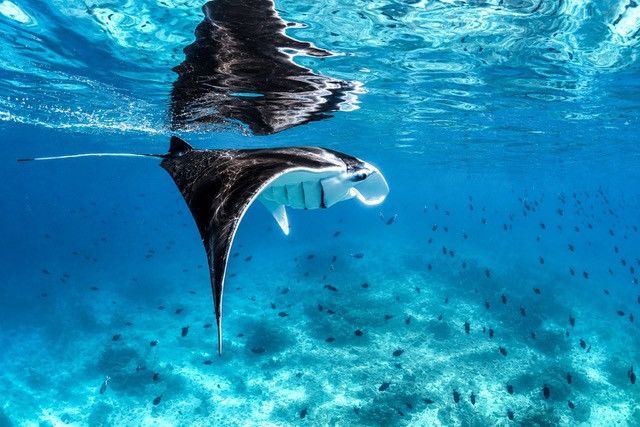

Holiday Inn Resort Kandooma Maldives is celebrating its third annual Manta Month throughout September, bringing together guests, resort team members and the local community through a month-long programme focused on manta ray encounters, education and marine conservation.
The initiative comes at a particularly significant time for the Maldives, as new peer-reviewed research published in PLOS ONE in June 2026 has highlighted the substantial economic value generated by manta ray tourism in the country. The study estimated that manta ray tourism generated US$227.3 million in the Maldives in 2021, equivalent to approximately 2.6 percent of national GDP.
The research also estimated that the direct economic benefits generated for businesses, communities and the government exceed US$311 million annually, demonstrating the important role marine conservation plays in supporting the Maldives’ tourism economy and broader national development.
Over their lifetimes, the Maldives’ reef manta ray population is estimated to contribute approximately US$8.6 billion in tourism revenue. Researchers calculated that a single reef manta ray could generate an estimated lifetime tourism value of around US$2.6 million.
Sharon Garrett, Director of Marketing and Sustainability at Holiday Inn Resort Kandooma Maldives, said the figures demonstrate the close relationship between protecting marine biodiversity and sustaining the country’s tourism industry.
“These numbers put into perspective something we have always believed at Kandooma: a living manta ray is incredibly valuable, not just environmentally, but to communities, tourism and the Maldives as a whole,” Garrett said.
She said Manta Month is designed to help visitors better understand the marine environment surrounding the resort and the importance of protecting manta rays for future generations.
“Kandooma’s Manta Month is about helping people understand what is swimming in the waters around us, why these animals are so special and why protecting them matters,” she said.
The Maldives is home to the world’s largest known population of reef manta rays, making the country one of the world’s most important destinations for manta conservation, research and responsible marine tourism.
Holiday Inn Resort Kandooma Maldives is particularly well positioned for these experiences due to its location in South Malé Atoll, close to an important manta aggregation area. The surrounding marine environment gives guests the opportunity to experience one of the Maldives’ most remarkable natural attractions while learning about the ecological significance of the species.
The Maldives Manta Conservation Programme identifies waters near the resort as an important habitat for juvenile reef manta rays. During the Southwest Monsoon, mantas feed within the sheltered Guraidhoo Falhu lagoon, also known as Sand Dunes, which includes a recognised cleaning station at Banana Reef.
Long-term research conducted by the Manta Trust shows that manta activity at Guraidhoo Falhu generally peaks between July and November. Most sightings involve juvenile and sub-adult reef manta rays, placing September at the centre of one of the most active periods documented in the area.
Seasonal manta movements across the Maldives are closely linked to the country’s monsoon system. As ocean currents move around the atolls, they transport nutrient-rich waters towards the surface, creating favourable conditions for concentrations of phytoplankton and zooplankton.
Manta rays follow these productive feeding areas and also visit cleaning stations around reefs, where small reef fish remove parasites and dead skin from their bodies. These natural interactions form an important part of the Maldives’ marine ecosystem and are among the experiences that attract divers, snorkellers and marine enthusiasts from around the world.
Manta rays are considered particularly vulnerable because of their slow reproductive cycle. Long-term research in the Maldives by Manta Trust founder Dr Guy Stevens found that female reef manta rays reach sexual maturity at approximately 15 years of age, while males generally mature at around 11 years.
Their low reproductive rate means manta populations can take considerable time to recover from environmental pressures and human activity, highlighting the importance of long-term conservation measures and responsible tourism practices.
One of the most distinctive characteristics of manta research is the ability to identify individual animals through the unique spot patterns found on their undersides. Much like human fingerprints, these patterns allow researchers to recognise individual manta rays and track their movements and histories across many years.
Garrett said learning about individual mantas can significantly change how visitors perceive the species.
“Once you start learning about mantas, they become much more than something spectacular you hope to see on a dive,” she said.
“You begin to understand that researchers can recognise individual animals, follow their movements and build up histories of their lives. That connection is exactly what we want to encourage during Manta Month at Kandooma.”
The marine environment surrounding Kandooma also benefits from a long history of protection supported by national conservation efforts. Guraidhoo Kandu was designated a Marine Protected Area in 1995, underscoring the Maldives’ longstanding commitment to preserving areas of significant ecological importance.
The Manta Trust identifies Guraidhoo Kandu as an important reef manta aggregation area. Long-term research recorded 181 reef manta sightings associated with the protected area between 1987 and 2017.
Garrett said the long-established protection of Guraidhoo Kandu demonstrates how conservation initiatives can contribute to safeguarding important marine habitats while supporting tourism and education.
“Many people don’t realise how much work has already been done to protect manta rays and important marine habitats in the Maldives,” she said.
“Guraidhoo Kandu, right on our doorstep, has been protected for more than 30 years. Manta Month allows us to share stories and help our guests understand why conservation works.”
Throughout September, guests staying at Holiday Inn Resort Kandooma Maldives can participate in a programme combining marine education, practical conservation activities and opportunities to encounter manta rays responsibly in their natural environment.
Guided excursions operated by the resort’s marine team together with Kandooma Dive, its PADI 5 Star Dive Centre, take guests to recognised manta hotspots when sea conditions and sightings allow. These excursions combine the possibility of seeing manta rays with educational information about their behaviour, habitats and conservation.
The resort’s programme also shares the story of a manta ray named Kandooma, which was rescued in August 2023 after becoming entangled in ghost fishing nets near the island. The incident is used to demonstrate the threats that discarded fishing gear can pose to marine life and to raise awareness about protecting the ocean environment.
Younger guests are also encouraged to participate through manta-themed educational activities and creative programmes. Reef and island clean-ups provide additional opportunities for visitors and resort team members to contribute directly to the protection of the surrounding marine environment.
The programme also extends its conservation impact beyond the resort. During Manta Month, US$5 from every manta pendant sold at the resort boutique will be donated to the Manta Trust, supporting its ongoing research, education and conservation programmes.
Manta Month forms part of Holiday Inn Resort Kandooma Maldives’ wider sustainability strategy and supports the resort’s ongoing commitment to marine conservation. The programme also complements the sustainability framework that contributed to Kandooma achieving Green Globe Certification.
Garrett said the goal is to ensure guests leave the resort with a greater understanding of the marine species surrounding the island and the importance of preserving them.
“If someone leaves Kandooma knowing more about manta rays, appreciating them a little more and understanding why protecting them matters, then Manta Month has achieved what we set out to do,” she said.
Manta Month is celebrated every September at Kandooma, aligning with one of the key periods for manta activity in the surrounding waters and providing guests with greater opportunities to engage with the marine environment during their stay.
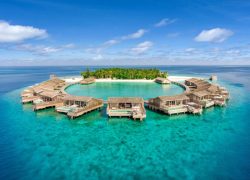
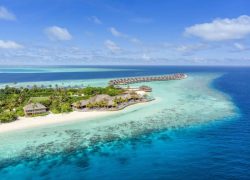
Located in South Malé Atoll, Holiday Inn Resort Kandooma Maldives is approximately 45 minutes by speedboat from Velana International Airport, offering convenient access for international visitors while retaining the privacy and natural appeal of a tropical island resort.
The resort is known for its relaxed atmosphere, scenic island environment and strong connection to the surrounding ocean. Its location also provides convenient access to some of South Malé Atoll’s most recognised diving locations, including Kandooma Thila, making it particularly appealing to diving enthusiasts and travellers interested in marine experiences.
Accommodation at Holiday Inn Resort Kandooma Maldives includes Garden Villas and Beach Villas, two-storey Beach Houses and Overwater Villas, allowing the resort to cater to couples, families and groups seeking different styles of island accommodation.
The resort also offers an extensive range of family activities, island dining experiences and Kandooma Spa by COMO Shambhala, complementing its strong marine and recreational offering and allowing guests to combine relaxation with exploration of the surrounding natural environment.
Its proximity to Malé, together with access to leading dive sites and manta habitats, gives Kandooma a distinctive position within the Maldives’ competitive hospitality sector. The resort combines international hospitality standards with a strong focus on marine conservation, education and responsible guest experiences.
The success of initiatives such as Manta Month also reflects the broader direction of the Maldives’ tourism industry, where environmental protection and high-value tourism are increasingly interconnected. Government-led marine protection initiatives, together with conservation programmes supported by resorts, researchers and local communities, continue to strengthen the Maldives’ position as a leading destination for sustainable and nature-based tourism.
With marine biodiversity forming an essential part of the country’s tourism appeal, the continued protection of manta rays and key habitats is expected to contribute not only to environmental preservation but also to long-term economic value for resorts, communities and the national economy.
Through Manta Month, Holiday Inn Resort Kandooma Maldives is showcasing how resort experiences, conservation education and responsible marine tourism can work together to create memorable holidays while supporting the preservation of one of the Maldives’ most valuable natural assets.
 advertisment



 advertisment