
The Maldives has told the international community that rising sea levels represent far more than an environmental challenge for vulnerable island nations, warning that the consequences extend to national sovereignty, security, economic development and the long-term future of their people.
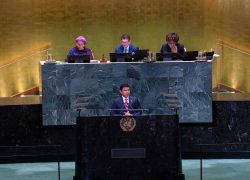
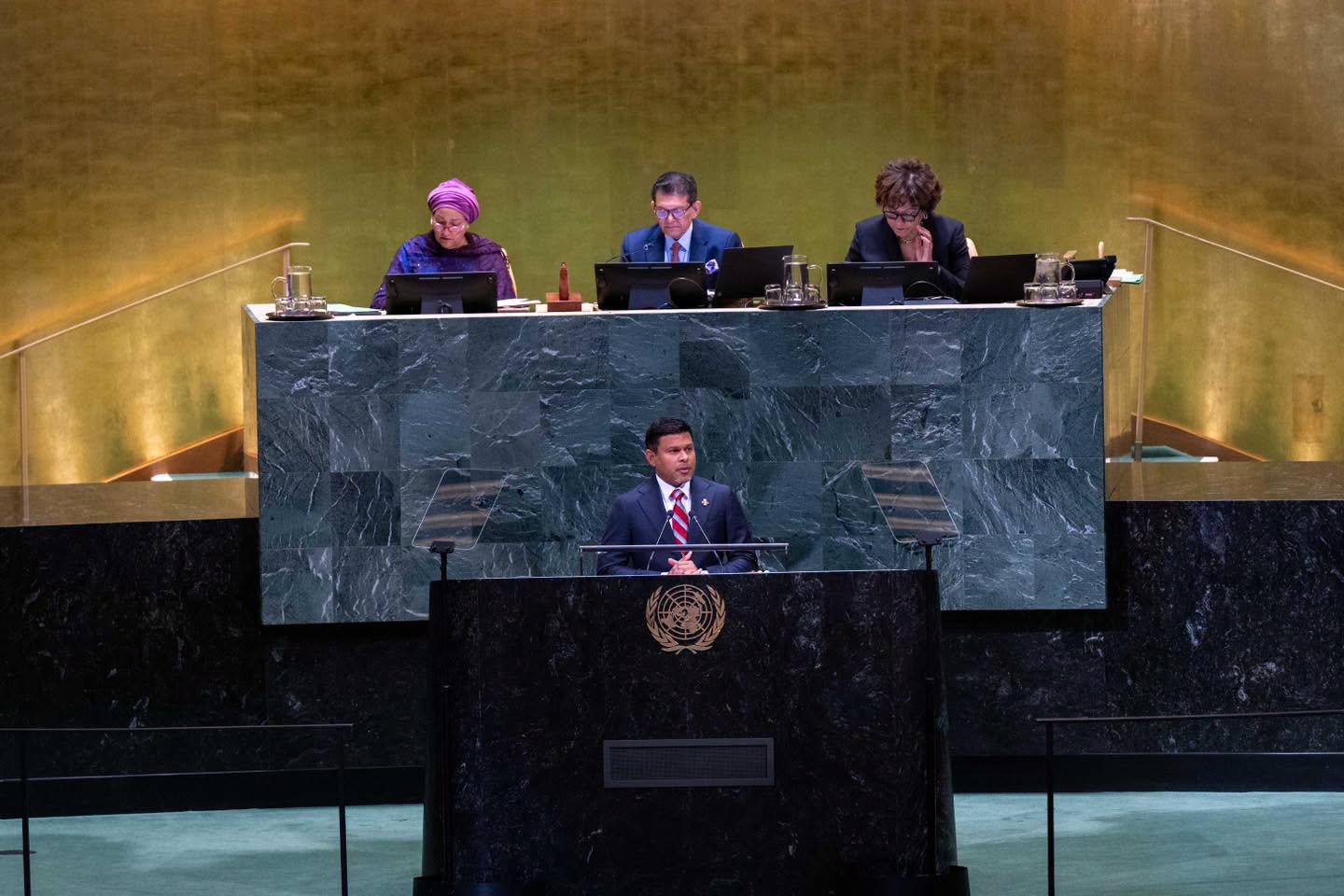
Addressing a high-level meeting on sea-level rise during the 81st Session of the United Nations General Assembly in New York, Vice President Hussain Mohamed Latheef said the physical geography of Small Island Developing States is being increasingly affected by climate change, requiring sea-level rise to be addressed as a central consideration in national planning, development and security.
The Vice President said the Maldives remains firm that changes to its physical geography cannot be allowed to undermine its legal identity as a sovereign state. He stressed that statehood and sovereignty must continue to be protected and that lawfully established baselines, maritime zones and other state entitlements should remain secure despite the effects of rising seas. He further maintained that United Nations membership and the legal identity of affected states must continue even as geography changes.
For the Maldives, the issue carries particular significance because the country’s communities, infrastructure and major economic sectors are closely connected to the ocean and coastal environment. The Vice President highlighted the implications of sea-level rise for infrastructure, tourism, fisheries, ecosystems and the broader development of Small Island Developing States.
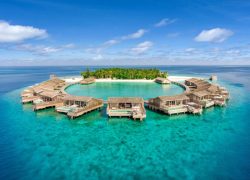
Tourism remains particularly important in this context. The Maldives’ globally recognised tourism industry is built across islands surrounded by extensive marine ecosystems, with resorts, airports, harbours, utility networks and other essential infrastructure operating in a geographically dispersed environment. Protecting these investments over the long term requires climate considerations to be incorporated into infrastructure development, coastal protection, land-use planning and wider economic policy.
The Government has increasingly presented climate resilience as part of the country’s long-term development framework rather than treating adaptation solely as an environmental matter. The Vice President said the Maldives is already incorporating resilience measures into national planning through its third Nationally Determined Contribution, while seeking greater international support to expand climate-resilient investment.
This approach is particularly relevant for the resort sector and the wider tourism economy, where maintaining resilient infrastructure and healthy marine environments is closely connected with the Maldives’ international competitiveness as a destination. Long-term adaptation can help protect tourism assets, employment, local supply chains, transport links and communities whose economic opportunities are connected directly or indirectly to the industry.
The Vice President made clear that the Maldives does not view retreat as the answer to rising seas. Instead, the country intends to strengthen adaptation, innovation and resilience while preserving the ability of Maldivians to determine their own national future. He said resilience must be integrated into the way infrastructure is designed, economies are planned and livelihoods are protected.
However, he stressed that national action alone will not be sufficient without adequate international support. Climate finance, he said, must become more predictable and accessible for Small Island Developing States, while financing arrangements should include grant-based and concessional support. Funding must also reach vulnerable countries early enough to reduce risks before climate impacts become substantially more costly to manage.
The Maldives has consistently argued that countries on the front line of climate change require practical access to international financial resources rather than commitments that are difficult to translate into projects. The Vice President’s message at the UN reinforced the Government’s emphasis on securing financing that can be deployed towards resilient infrastructure, coastal protection and development investments capable of protecting communities and economic activity.
He also highlighted the importance of reliable scientific information and called for a dedicated sea-level-rise observation mechanism, arguing that effective responses depend on countries having the ability to accurately measure and understand changing conditions.
Looking ahead to COP31, which is scheduled to be held in Antalya, Türkiye, from November 9 to 20, the Maldives is calling for greater emphasis on implementation and delivery. The summit’s international agenda includes climate finance, resilient cities, oceans and seas, and mechanisms intended to translate climate commitments into implementable projects.
The Maldives is also placing the ocean at the centre of its international climate and development agenda. For an island nation whose economy, food security, transport, tourism and communities are closely linked to the sea, sustainable ocean management remains inseparable from progress towards wider sustainable development objectives.
In this context, attention is also turning towards implementation of the Agreement on the Conservation and Sustainable Use of Marine Biological Diversity of Areas Beyond National Jurisdiction, commonly known as the BBNJ Agreement. The agreement entered into force on January 17, 2026, and its first Conference of the Parties is scheduled to be held at the United Nations Headquarters in New York from January 11 to 22, 2027. The agreement provides an international framework covering areas including marine genetic resources, marine protected areas, environmental impact assessments, capacity-building and the transfer of marine technology.
The Maldives signed the BBNJ Agreement in September 2024, reflecting its wider emphasis on international cooperation to conserve and sustainably use the ocean while advancing the interests of island and ocean-dependent states.
The Vice President’s message at UNGA 81 builds on decades of Maldivian advocacy on sea-level rise. Nearly four decades ago, the Maldives brought the risks associated with rising seas before the international community, with its advocacy contributing to the adoption of the 1989 Malé Declaration on Global Warming and Sea Level Rise. The Government maintains that the concerns raised then have become increasingly urgent as climate impacts intensify.
The Maldives’ position at the United Nations is that climate change may alter coastlines, but it should not be permitted to diminish the sovereignty, legal identity, maritime entitlements or rights of affected countries. At the same time, the Government is placing resilience, infrastructure development, climate-informed economic planning and international financing at the centre of its response.
For the Maldives, the wider objective is to ensure that climate action protects not only islands and infrastructure, but also the country’s economic future, communities, tourism industry and sovereign ability to determine its own development path. The message delivered in New York was that international climate commitments will ultimately be measured by whether they translate into practical support that enables vulnerable nations to remain resilient, prosperous and secure in a changing climate.
 advertisment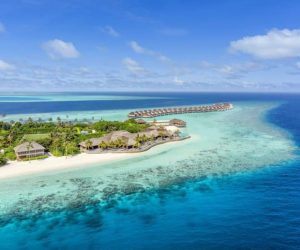



 advertisment