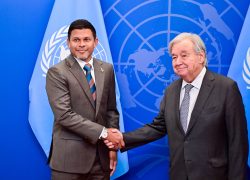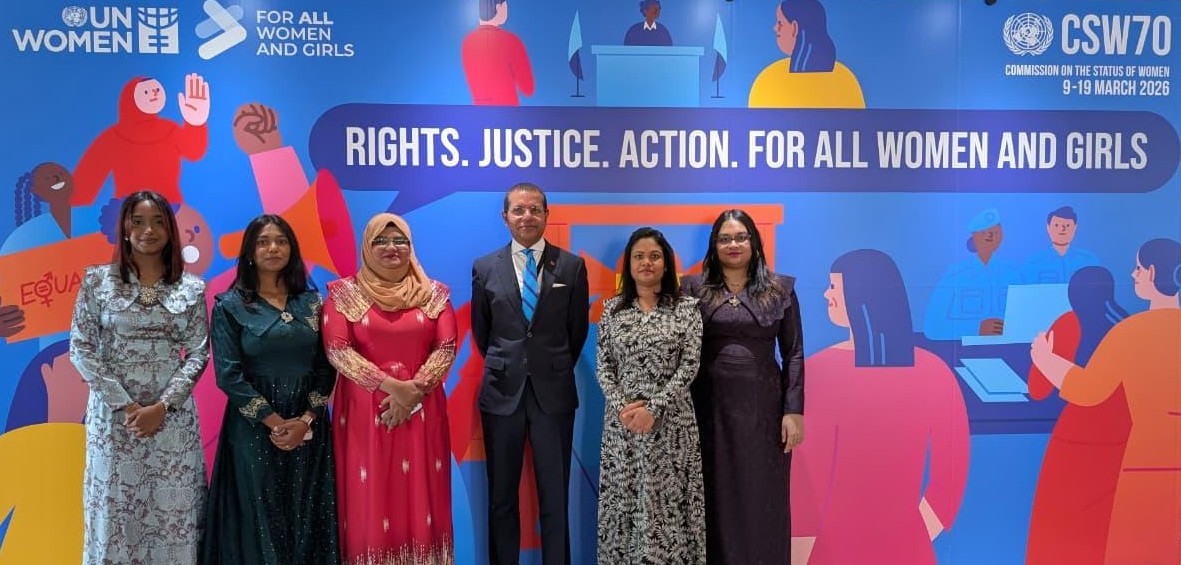

The Maldives has officially begun its first term as a member of the United Nations Commission on the Status of Women at the opening of the seventy-first session held at United Nations Headquarters in New York, opening a new chapter in the country’s expanding contribution to international discussions on gender equality and the empowerment of women. The development reflects the Maldives’ growing presence in multilateral forums and highlights its commitment to supporting inclusive, forward-looking policies that advance the rights, opportunities and wellbeing of women and girls at both national and global levels.
The Maldives was elected to the Commission on 4 April 2025 during proceedings of the United Nations Economic and Social Council and will serve a five-year term from 2026 to 2030. This first-ever membership on the Commission represents an important achievement for the country as it strengthens its role in shaping international dialogue on women’s rights, social justice and equitable development. For the Maldives, the appointment also provides a valuable platform to share national experiences, contribute to policy discussions and engage more directly with global efforts aimed at building fairer and more inclusive societies.
The commencement of the Maldives’ term follows the conclusion of the seventieth session of the Commission, which was held from 9 to 19 March under the theme “Ensuring and Strengthening Access to Justice for All Women and Girls.” The session focused on the importance of inclusive legal systems, the removal of discriminatory laws and the need to address structural barriers that continue to affect women and girls in many parts of the world. The theme resonated strongly with the wider international agenda of ensuring that gender equality is supported not only through policy commitments, but also through effective institutions, accessible services and meaningful legal protections.
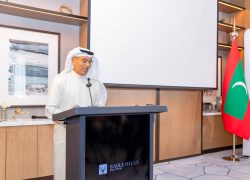
During the recent session, Dr Ali Naseer Mohamed, Permanent Representative of the Maldives to the United Nations, delivered a statement highlighting the country’s continued progress in advancing women’s leadership in governance and decision-making. He noted the Maldives’ emphasis on data-driven policymaking, stronger legal safeguards and expanded access to support services for women and girls. His remarks presented the Maldives as a country actively working to align national development priorities with international standards on equality, inclusion and rights-based governance, while also recognising that sustained progress requires continued cooperation, innovation and institutional strengthening.
The Maldives also played a visible role in broader ministerial discussions during the session. At the Group of 77 and Emerging Partners Ministerial Roundtable, co-hosted by the Maldives, Timor-Leste, Brazil, South Africa, Kazakhstan and UN-Women, Ambassador Dr Ali Naseer stressed the importance of gender-responsive financial mechanisms in accelerating sustainable development and achieving gender equality. His intervention reflected a growing international understanding that progress for women and girls is closely linked to how countries design budgets, mobilise resources and invest in social and economic systems that enable equal participation and long-term resilience.
Another notable feature of the Maldives’ engagement was its Voluntary National Presentation at the Commission, delivered for the first time by officials from the Ministry of Social and Family Development. The presentation outlined national commitments and achievements related to gender equality and demonstrated the country’s readiness to engage constructively and transparently with the global community. By presenting its national experience before the Commission, the Maldives further strengthened its profile as an active participant in international efforts to promote women’s rights and inclusive development, while also showcasing the progress it has made through policy reform, service expansion and institutional engagement.
Established in 1946, the Commission on the Status of Women is the principal United Nations body dedicated exclusively to the promotion of gender equality and the empowerment of women. Convening annually, it plays a central role in shaping international standards, guiding policy discussions and encouraging member states to take practical steps toward more equitable societies. As the Maldives begins its 2026–2030 term, its participation is expected to further enhance the country’s international engagement and provide new opportunities to contribute to global policy conversations that affect the lives of women and girls around the world.
For global audiences, the Maldives’ entry into the Commission signals the increasing contribution of small island developing states to major international policy platforms. It also reflects the country’s intention to be part of constructive solutions on issues that matter across regions and societies. Through its new role, the Maldives is positioned to support dialogue, partnership and action on gender equality at a time when international cooperation remains essential to securing inclusive growth, social justice and sustainable progress for future generations.
 advertisment



 advertisment