Seventeen premier resorts across the Maldives have collectively pledged to protect the nation’s invaluable seagrass meadows, marking a decisive step in marine conservation and sustainable tourism. The alliance, formally known as the #SeagrassIndustryLeader Circle, is a collaborative initiative spearheaded by Maldives Resilient Reefs (MRR) and the Blue Marine Foundation, both long-standing advocates for the preservation of the Maldives’ marine ecosystems.
The commitment was formally announced during an opening ceremony on Dhiffushi Island, where participating resorts were recognised for their leadership in environmental stewardship. Each resort has pledged to conserve at least 80% of their baseline seagrass areas, acknowledging the essential role these underwater meadows play in supporting biodiversity, safeguarding coastlines, and enriching guest experiences.
Seagrass ecosystems are among the most productive habitats on Earth and hold immense importance for the Maldives. They act as nurseries for fish species crucial to local fisheries, serve as a primary food source for endangered green turtles, and host a wide range of marine life, including rays, sharks, and invertebrates. Environmentally, seagrass meadows buffer coastlines against erosion by reducing wave energy, store large quantities of “blue carbon” to help mitigate climate change, and release oxygen into the marine environment. Economically, they directly benefit tourism by attracting wildlife and enhancing snorkeling and diving experiences for guests.
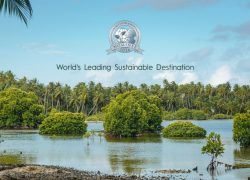
However, these vital habitats face mounting threats in the Maldives due to dredging, land reclamation, and the removal of seagrass beds for aesthetic beachfront development. Such practices have caused localised habitat loss and reduced ecological resilience in several atolls. This initiative seeks to reverse that trend by positioning tourism operators as guardians of marine ecosystems while enhancing the Maldives’ image as a leading sustainable tourism destination.
Since 2019, MRR and the Blue Marine Foundation have worked to elevate the status of seagrass within the tourism industry. By highlighting its role as both a climate ally and a tourism asset, they have shifted the narrative from seeing seagrass as an obstacle to viewing it as a selling point for environmentally conscious travelers. The current project supports resorts with seagrass mapping, staff training, and the creation of educational materials for guests. Annual reviews will assess compliance with pledges, with non-compliant resorts facing removal from the programme’s promotional platforms.
The 17 early adopter resorts are:
-
Anantara Dhigu Maldives Resort
-
Anantara Veli Maldives Resort
-
Naladhu Private Island Maldives
-
Banyan Tree Vabbinfaru
-
Dhawa Ihuru
-
Angsana Velavaru
-
Coco Palm Dhuni Kolhu
-
Coco Bodu Hithi
-
Gili Lankanfushi Maldives
-
Kurumba Maldives
-
LUX* South Ari Atoll
-
Niyama Private Islands Maldives
-
Siyam World Maldives
-
Six Senses Laamu
-
Six Senses Kanuhura
-
Taj Exotica Resort & Spa
-
Taj Coral Reef Resort & Spa
The participating properties represent some of the Maldives’ most sought-after luxury destinations, collectively offering hundreds of villas, overwater bungalows, and pristine beachfront accommodations. Their commitment reflects not only environmental responsibility but also an understanding that marine conservation enhances the Maldives’ competitive edge in the global tourism market.
Lawrence Menz, Director of Sustainability at Six Senses Laamu, shared that since their involvement in seagrass protection began during the 2019 #ProtectMaldivesSeagrass campaign, sightings of sharks and turtles have almost doubled. “Guests are now visiting specifically to see these animals. This has created a positive feedback loop protecting seagrass boosts marine life, which enriches guest experiences and generates more revenue for the resort,” he said.
Shaha Hashim, Executive Director of Maldives Resilient Reefs, emphasised the tourism value of seagrass: “This initiative makes seagrass a tangible asset for the industry. Through mapping, education, and annual reviews, we ensure that resorts are meeting their conservation commitments while engaging guests in meaningful environmental experiences.”
From a policy perspective, Muhusina Abdul Rahman, Director of Protected Areas at the Ministry of Tourism and Environment, stressed that while seagrass has not yet been prioritised in national conservation policy, it is vital for achieving the Maldives’ 30×30 marine protection target as part of the High Ambition Coalition. “Ecological connectivity is crucial,” she noted. “Protecting turtle nesting beaches means also protecting the seagrass meadows that sustain them.”
For the Maldives, a nation where tourism accounts for nearly 30% of GDP and marine biodiversity is the foundation of its brand identity, initiatives like the #SeagrassIndustryLeader Circle not only protect natural heritage but also reinforce the destination’s global reputation for sustainable luxury travel. With these 17 resorts leading the way, the hope is that more properties will join, ensuring that seagrass meadows continue to thrive for generations of visitors and marine life alike.
 advertisment



 advertisment