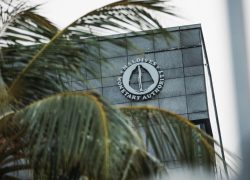
To enhance the financial capacity of local businesses, particularly small and medium enterprises (SMEs), the Maldives Monetary Authority (MMA) has raised the allocation of US dollars to local banks for commercial transactions by 10 percent. This latest adjustment, effective this week, is expected to strengthen the availability of foreign currency for essential trade operations, including Telegraphic Transfers (TTs) and Letters of Credit (LCs), used by importers and commercial entities.
According to the MMA, this policy shift will enable banks to increase their current dollar sales to SMEs by 40 percent, offering a more stable and fair distribution of foreign exchange to the business sector. The initiative aligns with the central bank’s broader objective of ensuring that businesses, especially SMEs, have more reliable access to the foreign currency necessary for importing goods, supporting tourism-related industries, and fueling economic activity.
This development builds on a previous policy change introduced in June 2025, when the MMA raised the mandatory requirement for local banks to sell foreign currency to the central bank from 60 percent to 90 percent. In return, 30 percent of the acquired dollars are redistributed back to the banks through weekly foreign exchange auctions. These funds are strategically channeled towards meeting national priorities such as importing essential food items and addressing other critical public needs, with a notable portion directed to SME foreign exchange requirements.
Currently, SMEs receive 30 percent of the foreign exchange sold through banks, based on statistics from the MMA. However, with the ongoing reform under the amended Foreign Exchange Act, the central bank has declared its intent to raise this proportion to 50 percent in the near term, reinforcing its commitment to inclusive economic growth and supporting entrepreneurial activity across the Maldives.
These fiscal adjustments reflect the MMA’s focus on improving monetary mechanisms to promote equitable growth in the commercial sector. By easing access to foreign currency and streamlining forex distribution, especially to SMEs that form the backbone of the economy, the Maldives aims to reinforce its business climate and ensure uninterrupted trade and supply chains—critical components for a thriving island nation dependent on imports and tourism-driven commerce.
 advertisment




 advertisment