
With turquoise waters, pristine beaches, and world-renowned luxury, the Maldives continues to evolve not just as a premier travel destination, but also as a beacon of sustainable tourism. One of the most ambitious clean energy transformations in the country is currently underway in the Fari Islands, a four-island luxury archipelago home to The Ritz-Carlton Maldives, Patina Maldives, and the Fari Campus. By 2025, the archipelago is set to meet up to 50% of its total energy requirements from renewable sources, marking a substantial achievement in the Maldives’ push towards environmental responsibility.
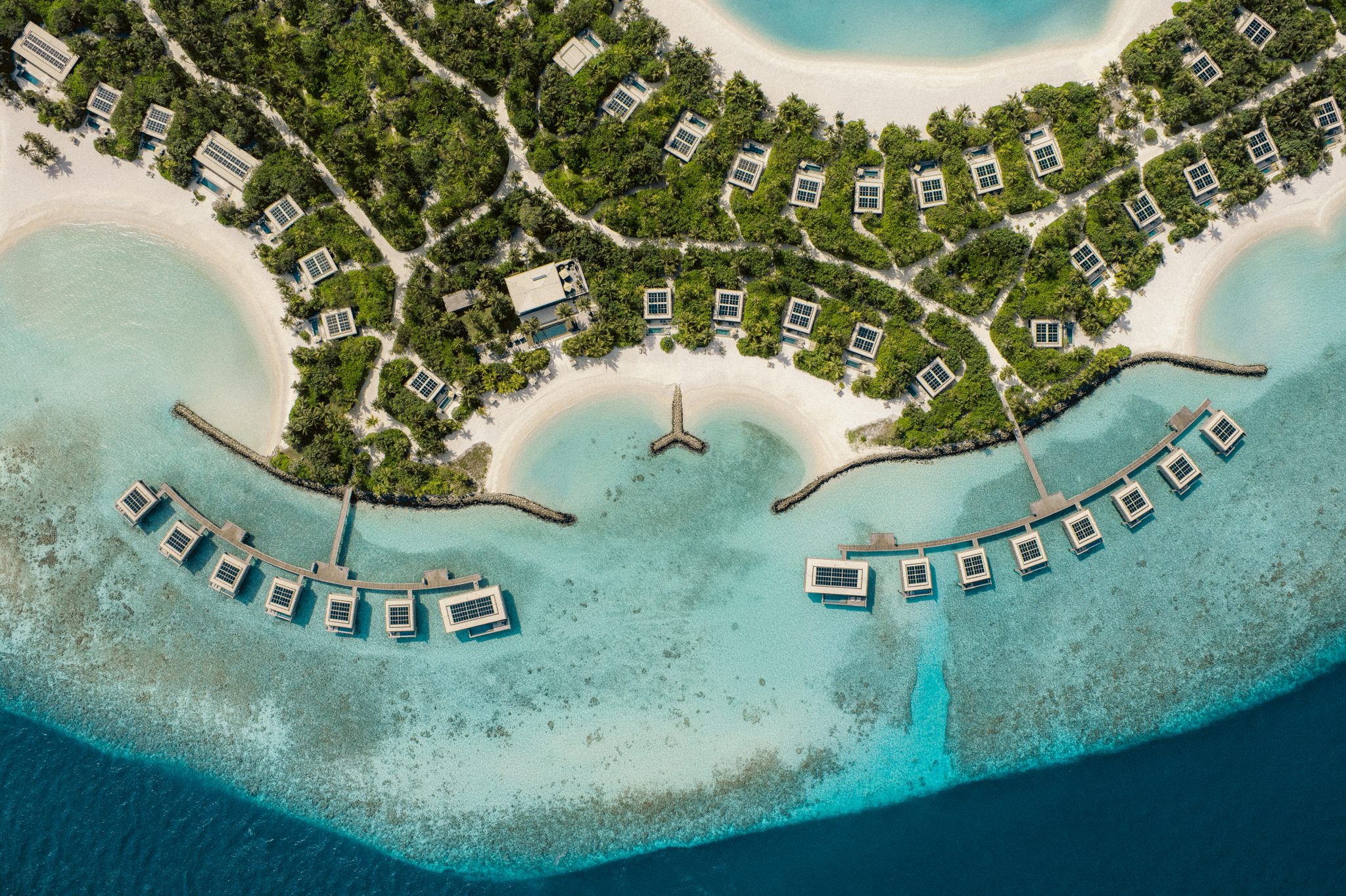
The Fari Islands project, launched in 2021 by Singapore-based luxury property developer Pontiac Land Group, has been a model of sustainable development since its inception. Built using Mass Engineered Timber (MET) construction technology, the project achieved a reduction of over 6,000 tons of carbon emissions during production and transportation. All villas were prefabricated offsite to minimize marine impact, and modern flat roofs, deviating from traditional thatched architecture, allow for optimal solar panel integration.
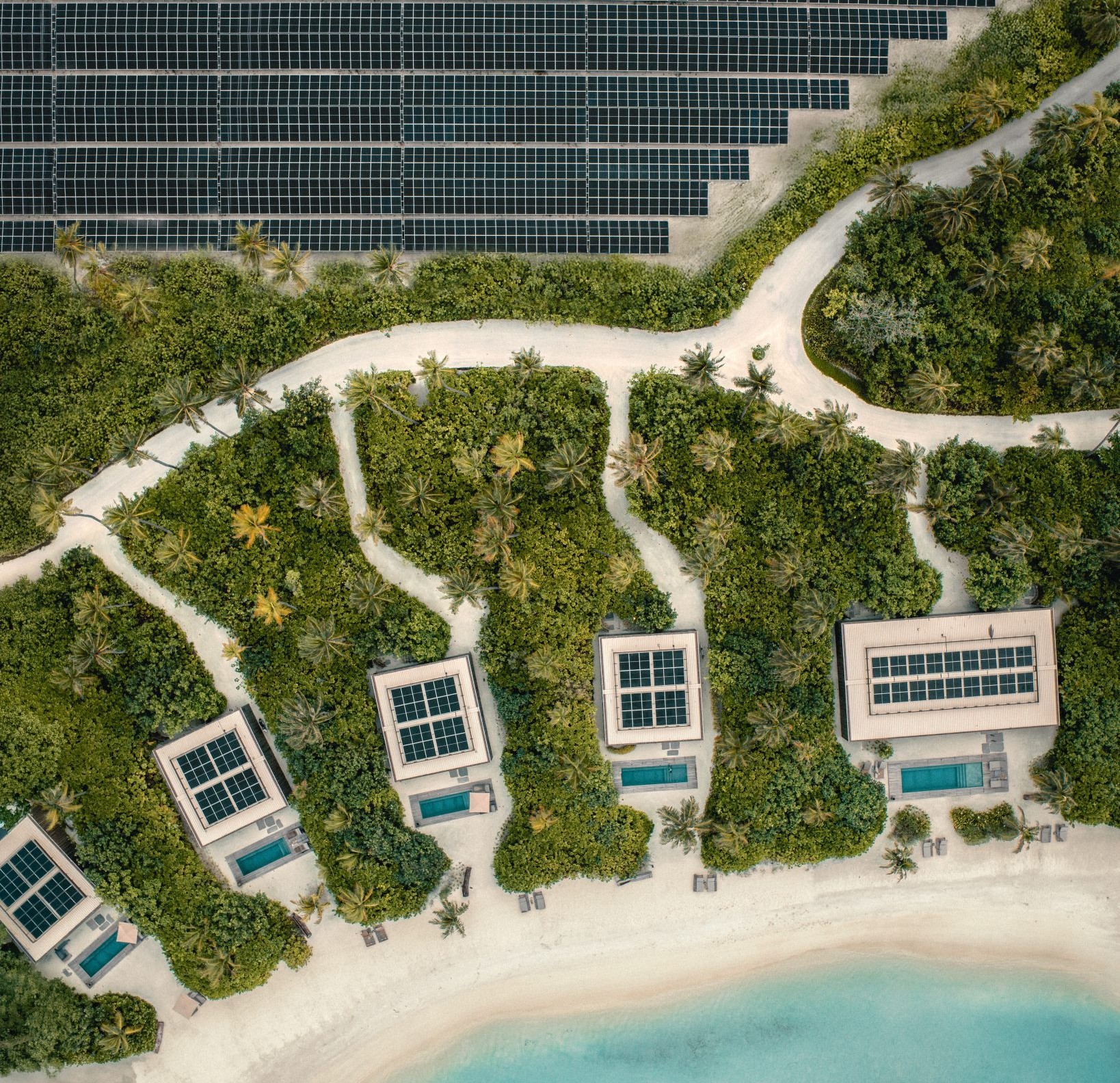
In a major step toward its net-zero vision, Fari Islands will triple its solar capacity to reach 6.4 megawatts peak (MWp) in 2025. This expansion includes one of the region’s largest solar projects in collaboration with Swimsol, a leading solar energy provider in the Maldives and a pioneer in floating solar technology with its SolarSea® innovation. These solar developments are part of a long-term commitment by Pontiac Land Group to reduce its environmental footprint while enhancing the quality and sustainability of tourism infrastructure in the Maldives.
David Tsang, CEO of Pontiac Land Group, emphasized the importance of this milestone: “Our commitment to responsibility, integrity, and sustainability is at the heart of our investment philosophy. This expansion of renewable energy reflects our mission to contribute positively to the environment while upholding the highest standards of hospitality.”
The solar expansion comprises several key installations across the archipelago:
-
Floating Solar Array at Fari Campus: For the first time in the Maldives, a floating solar system will be deployed in the sea surrounding the Fari Campus. The project includes 40 floating platforms with 2,160 photovoltaic panels, contributing 1,037 kWp and expected to meet 24% of the islands’ total energy requirements. Completion is scheduled for Q4 2025, including an advanced battery storage facility.
-
Fari Campus Land-Based PV Systems: The island’s dedicated space for staff living and development has also boosted its renewable portfolio with 1,200 kWp installed across 19 residential and community buildings, further enhancing its self-sufficiency and eco-conscious design.
-
The Ritz-Carlton Maldives Solar Expansion: Solar panels now cover all 61 ocean villas, in addition to back-of-house facilities, the Beach Shack restaurant, and the Dive Centre, bringing the property’s total solar capacity to 983 kWp. In recognition of its environmental leadership, the property received both the 2024 Green Globe Certification and the Forbes VERIFIED Responsible Hospitality badge, reflecting its compliance with over 100 global sustainability standards.
Oscar Postma, General Manager of The Ritz-Carlton Maldives, stated, “We are proud to lead in reducing environmental impact. Our collaboration with Swimsol is a vital part of our mission to operate responsibly while preserving the natural beauty of the Maldives for future generations.”
-
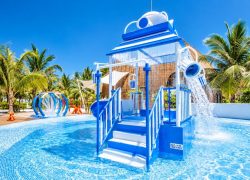
Patina Maldives Energy Milestone: By 2025, Patina Maldives will operate fully on solar power during daylight hours, with 2,994 kWp solar panels and 2 MWh of battery capacity. Of this, 980 kWp are installed on a land bank to the island’s east, while 2,014 kWp cover the rooftops of villas, restaurants, the FLOW Spa, dive centre, kids club, and operational buildings. Patina Maldives has achieved EarthCheck Silver Certification two years in a row and the Forbes VERIFIED Responsible Hospitality badge for its environmentally conscious operations.
Anthony Gill, General Manager of Patina Maldives, highlighted the importance of teamwork in driving sustainability: “This milestone is a testament to our team’s dedication and our partnership with Swimsol. We aim to protect the unique ecosystem of the Maldives and inspire others by showing what can be achieved with commitment and collaboration.”
These renewable energy efforts do not only reduce dependence on fossil fuels but also enhance the Maldives’ global reputation as a destination that values environmental conservation and long-term sustainability. As one of the nations most vulnerable to climate change, the Maldives has been proactive in showcasing how luxury and environmental responsibility can co-exist, offering travelers both indulgence and conscience in a single destination.
The Maldives, consisting of 26 coral atolls and over 1,190 islands scattered across the Indian Ocean, is celebrated for its natural beauty and biodiversity. Tourism is the country’s leading economic sector, and initiatives like the Fari Islands’ solar project are essential to ensuring its longevity. With innovations in clean energy, the nation demonstrates that sustainable luxury tourism is not only possible but thriving.
As travelers become increasingly eco-conscious, destinations like the Fari Islands are redefining the meaning of responsible tourism. Whether it’s relaxing in a solar-powered overwater villa or enjoying gourmet cuisine at a resort powered by the sun, visitors can now experience the Maldives with the reassurance that their footprint on paradise is lighter than ever.
 advertisment



 advertisment