
President Dr Mohamed Muizzu has reaffirmed the Maldives’ commitment to strengthening early warning systems, describing them as a national priority and a critical investment in resilience, preparedness and sustainable development as climate-related risks continue to pose serious challenges to vulnerable island nations.
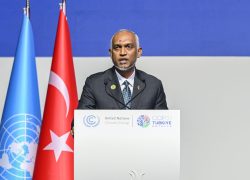
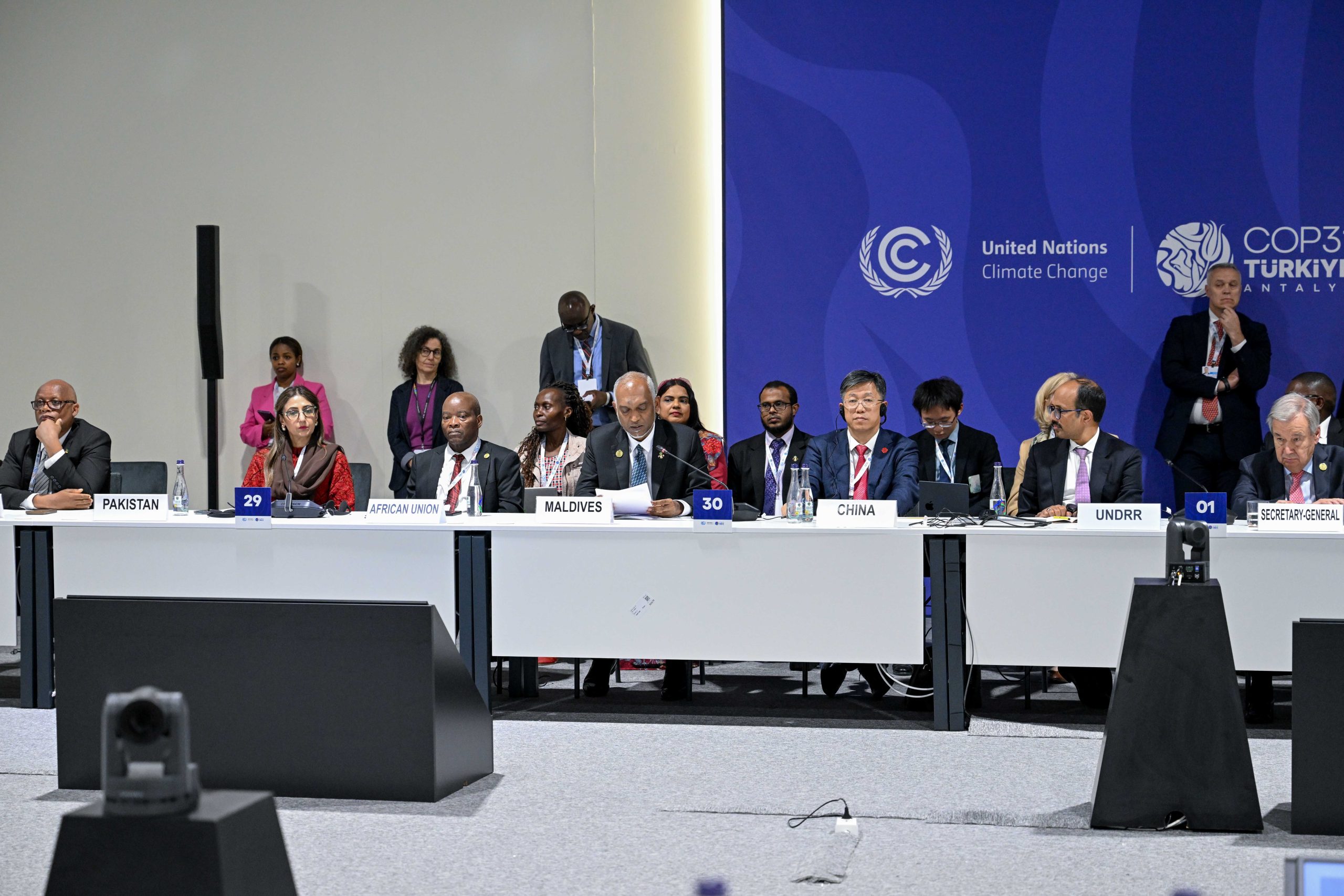
The President made the remarks while addressing the “Early Warning for All: Delivering on Our Promise to Protect Everyone” segment at the 31st Conference of the Parties to the United Nations Framework Convention on Climate Change (UNFCCC COP31).
Highlighting the unique vulnerabilities faced by Small Island Developing States, President Muizzu said effective early warning systems are essential to protecting lives, livelihoods, communities and national infrastructure from increasingly severe climate-related disasters. He noted that climate threats have far-reaching consequences for the Maldives, including its population and vital economic sectors such as tourism and fisheries.
Tourism remains the backbone of the Maldivian economy, with resorts, hotels, guesthouses and tourism-related infrastructure spread across islands throughout the country. Reliable forecasting, timely warnings and effective communication are therefore particularly important in ensuring the safety of residents, visitors and workers, while also helping tourism operators and island communities prepare for adverse weather and other climate-related events. Strengthening national preparedness is expected to further reinforce the Maldives’ reputation as a safe, resilient and sustainably managed global tourism destination.
President Muizzu highlighted that the Maldives was the first country in Asia and among Small Island Developing States to endorse the Early Warnings for All initiative, reflecting the Government’s proactive approach towards climate resilience and disaster preparedness. He said the country had already made significant progress in implementing the initiative.
The President stressed that growing global awareness must now be translated into practical results for countries that remain most exposed to climate risks. Looking beyond 2027, he called for a more ambitious Early Warnings for All programme that places Small Island Developing States at the centre of implementation.
He said future efforts should focus on strengthening weather and climate services, improving forecasting capabilities, investing in reliable communication networks, enhancing community preparedness and ensuring that warnings reach people effectively, including those living in remote and geographically dispersed communities.
President Muizzu also called for early warning systems to be fully integrated into national climate adaptation and disaster risk reduction strategies. He emphasised that such systems should be recognised not merely as emergency tools, but as essential investments in climate security, sustainable development and long-term national resilience.
He further stressed that access to effective early warning systems should not be considered a privilege, but a necessity and an important element of climate justice, particularly for nations that contribute little to global emissions yet remain highly exposed to the consequences of climate change.
The President called on developed countries, development banks, climate funds and international institutions to provide stronger financial and technical assistance to vulnerable countries through grants, concessional financing, technology transfer and capacity-building support.
Concluding his remarks, President Muizzu welcomed the progress being made under the Early Warnings for All initiative and reaffirmed the Maldives’ readiness to work closely with international partners to advance its objectives. The Government’s continued focus on preparedness, climate resilience and stronger national warning capabilities reflects its wider commitment to safeguarding communities, protecting key economic sectors and securing a more resilient future for the Maldives.
 advertisment





 advertisment