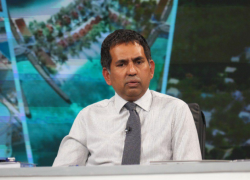

The Maldives Government is advancing fiscal reforms, strengthening international financial partnerships and supporting the recovery of its vital tourism industry as the country responds to economic pressures caused by ongoing global conflicts and elevated oil prices, Minister of Finance and Public Enterprises Hassan Zareer has said.
Speaking in a special interview with Reuters, Minister Zareer said global conflicts and higher energy costs are placing pressure on economies worldwide, including the Maldives. As an island nation heavily dependent on imported fuel and international travel, the Maldives is particularly exposed to fluctuations in global energy markets and disruptions affecting international tourism.
Tourism remains the principal driver of the Maldivian economy, with the country’s internationally renowned resort industry supporting employment, foreign exchange earnings, private investment and a broad network of businesses across the economy. The government is therefore placing considerable emphasis on strengthening tourist arrivals and improving international connectivity as part of its economic recovery strategy. A stronger performance by the resort sector is expected to contribute significantly to foreign currency inflows and support businesses throughout the tourism supply chain.
Minister Zareer said the government recognises that the global economic slowdown will have implications for the Maldives and is responding through expenditure reforms, fiscal consolidation and measures aimed at reducing the budget deficit. These efforts form part of the government’s broader programme to strengthen public finances and improve the country’s ability to withstand external economic shocks.
At the same time, the government is working with international development partners to reinforce economic resilience. Discussions are continuing with the World Bank and other international financial institutions, with the World Bank expected to provide approximately USD 250 million over the next two to three years.
The Maldives also strengthened its international financing framework in September by signing a five-year agreement with the International Islamic Trade Finance Corporation worth up to USD 1.5 billion. The arrangement, covering 2026 to 2031, is intended to support public and private-sector trade financing, including the procurement of essential and strategic commodities and financing opportunities for Maldivian businesses.
Despite the challenging international environment, the government is targeting a progressive economic recovery, with growth projected at 3.8 percent in 2027 and 6.8 percent in 2028. The strategy will be supported by economic diversification, stronger tourism performance and expanded investment in renewable energy, with the government targeting renewable energy investments equivalent to 33 percent by 2028.
Efforts are also being directed towards improving air connectivity to support the tourism industry’s recovery. The Maldives plans to expand the capacity of its national carrier and increase services to important markets, including Australia, while discussions are continuing with several international airlines on additional flights.
The government’s combination of fiscal reform, international financing partnerships, renewable energy development and tourism-sector expansion is aimed at building greater economic resilience while maintaining the Maldives’ position as one of the world’s leading island tourism destinations.
 advertisment



 advertisment