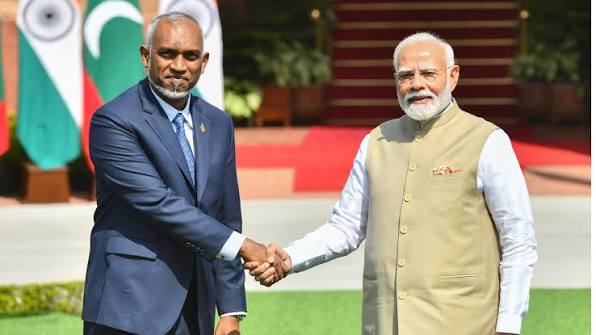

The Maldives has completed repayment of a USD 150 million budget support facility arranged through India, following the settlement of the final USD 50 million Treasury bill held by the State Bank of India (SBI), closing an external financing arrangement that had remained on the government’s books since 2019.
The facility consisted of three Treasury bills valued at USD 50 million each, which were subscribed by SBI with support facilitated by the Government of India. The financing was originally obtained in 2019 during the administration of former President Ibrahim Mohamed Solih to support the state budget, with the Treasury bills subsequently extended through a series of rollovers rather than being fully settled at their original maturity dates.
President Dr Mohamed Muizzu’s administration began clearing the facility after assuming office, repaying the first USD 50 million Treasury bill in January 2024. The government subsequently settled another USD 50 million payment on 11 May 2026, leaving one remaining Treasury bill. The final USD 50 million was paid on 17 September 2026, completing repayment of the entire USD 150 million facility.
Completion of the repayment removes the full outstanding obligation associated with the facility and comes as the government continues to manage a substantial schedule of external debt commitments. The administration has maintained that meeting sovereign obligations within their agreed timeframes is an important part of its broader approach to public debt management and financial planning.
The Ministry of Finance and Public Enterprises said the latest payment was completed as scheduled and highlighted the government’s emphasis on making financial arrangements ahead of debt maturity dates. The ministry said public debt management also includes regular allocations to the Sovereign Development Fund and continued engagement with international financial institutions and bilateral development partners.
The government is also holding discussions with international financial institutions and partner countries as part of efforts to strengthen the Maldives’ foreign currency position and support the country’s ability to meet external commitments while maintaining the flow of essential imports and services.
The repayment comes against a backdrop of continued attention to the country’s foreign exchange reserves. According to the latest figures from the Maldives Monetary Authority, official reserve assets stood at approximately USD 643.8 million at the end of August 2026, compared with USD 638 million at the end of July. This represented a month-on-month increase of about 0.9 percent in the country’s overall official reserves.
Usable reserves, however, declined during the same period. The figure fell from USD 221.9 million at the end of July to approximately USD 200.6 million at the end of August, representing a decrease of around 9.6 percent. The central bank attributed the decline mainly to foreign currency sales during August exceeding foreign currency inflows received during the month.
The Maldives Monetary Authority increased the amount of US dollars supplied to commercial banks during August as part of efforts to improve access to foreign currency through the formal banking system and ease pressure in the domestic foreign exchange market. At the same time, foreign currency inflows received through tax and non-tax revenues were lower than in the preceding month, contributing to pressure on usable reserve levels.
The August reserve figures were recorded before the final USD 50 million Treasury bill repayment on 17 September and therefore do not reflect any subsequent change in the country’s reserve position resulting from the settlement. Updated reserve data will provide a clearer indication of the foreign exchange position following the payment.
Former President Mohamed Nasheed had raised concerns ahead of the maturity date, arguing that repayment of the USD 50 million Treasury bill could place additional pressure on usable reserves and affect the foreign currency available to finance imports of essential commodities, including food, fuel and medicines.
The Ministry of Finance rejected concerns that the repayment would disrupt essential imports, stating that necessary foreign currency arrangements were already in place. The ministry said ensuring uninterrupted access to essential goods and services remains a priority for the administration and maintained that arrangements have been made to support continued imports of food, fuel and medical supplies despite the government’s external debt repayments.
The ministry further said the government is pursuing advance financial planning and strategic coordination in managing debt obligations, alongside efforts to strengthen national reserves. It expressed confidence that ongoing discussions with international financial institutions and bilateral partners would contribute to strengthening the country’s foreign exchange position.
The settlement of the final Treasury bill brings to an end a budget support arrangement that had remained outstanding for several years and marks the completion of repayments on all three USD 50 million securities issued under the facility. For the Maldives, the conclusion of the USD 150 million obligation comes at an important period for fiscal and external debt management, as the government works to meet scheduled repayments while safeguarding foreign currency availability for the economy and essential national requirements.
 advertisment




 advertisment