
A fresh increase in United States interest rates is drawing attention to how developments in Washington can influence economies thousands of kilometres away, including the Maldives, where the rufiyaa’s link to the US dollar, the importance of tourism earnings, reliance on imported goods and external financing make global dollar conditions particularly significant.
The US Federal Reserve raised its benchmark interest rate by 25 basis points, or 0.25 percentage points, on Wednesday, taking the target range for the federal funds rate to between 3.75 per cent and 4 per cent. The increase is the first since July 2023 and reflects the Federal Reserve’s continued effort to bring inflation in the United States back towards its 2 per cent target while maintaining stability in economic activity and employment.
Although the latest increase is relatively modest, financial markets are focusing closely on what could follow. Federal Reserve projections indicate that 16 of its 18 policymakers expect at least one additional interest-rate increase before the end of 2026, suggesting that global borrowing conditions could remain relatively tight for an extended period.
The federal funds rate represents the interest rate used by American banks when lending to each other overnight, but its influence extends throughout the wider economy. Changes in the rate affect mortgages, business borrowing, credit cards, government financing and investment decisions. Higher interest rates are intended to moderate spending and investment and reduce inflationary pressure, although prolonged periods of expensive financing can also slow business expansion and economic growth.
For countries outside the United States, the significance comes largely from the central role of the US dollar in international trade, investment and finance. When US interest rates rise, American government securities and other dollar-denominated assets can become more attractive to investors seeking higher returns. This can increase global demand for dollars and place pressure on other currencies and emerging-market financing conditions.
The latest Federal Reserve decision was followed by the US dollar reaching a seven-week high against major international currencies, while short-term US Treasury yields increased and American equity markets closed lower immediately following the announcement. Such market movements are closely watched by governments, central banks, investors and businesses around the world because they can influence borrowing costs, exchange rates and international investment flows.
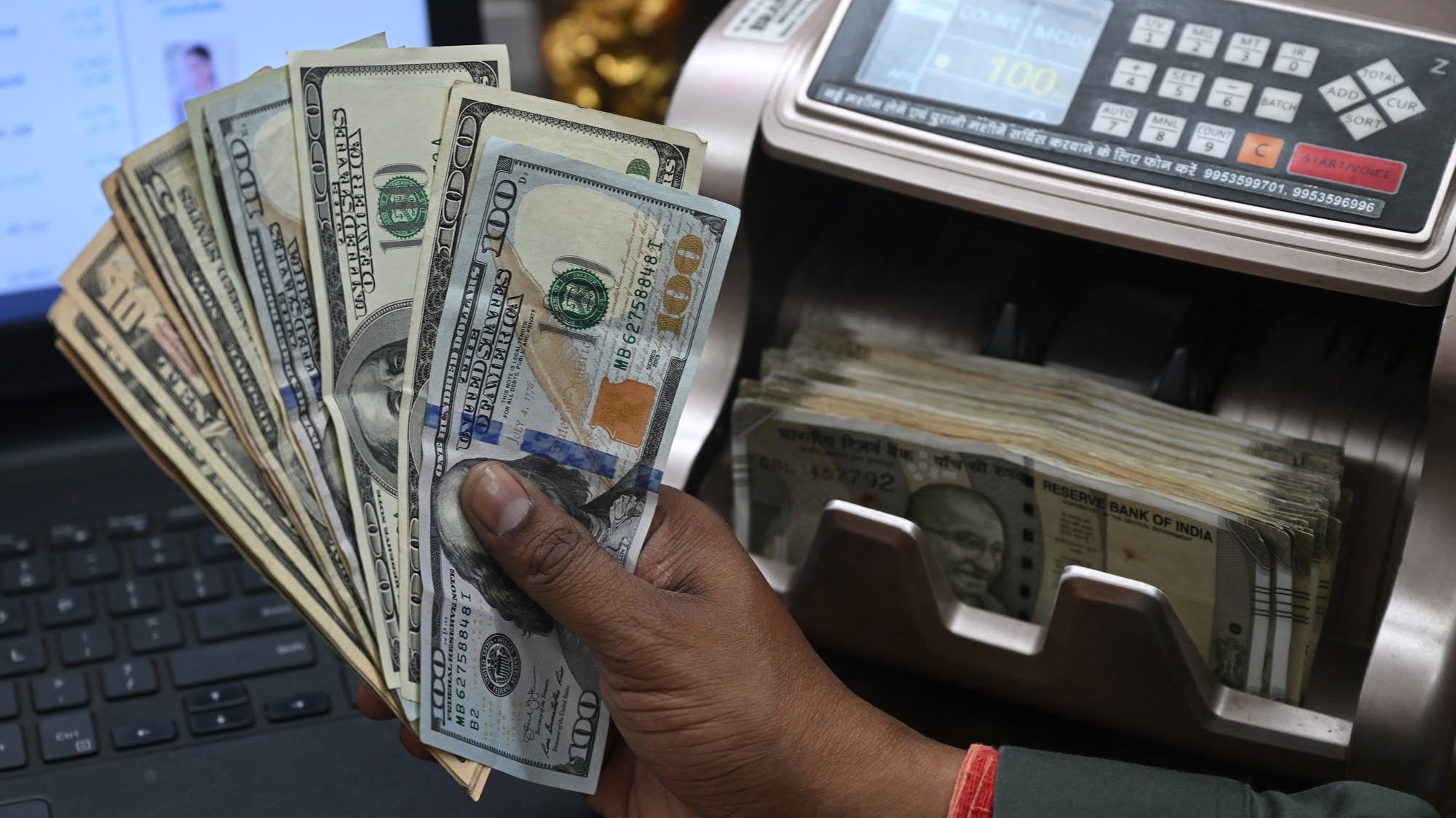
For the Maldives, the international strength of the dollar carries particular importance because the Maldivian rufiyaa is pegged to the US currency, with the official exchange rate maintained at MVR 15.42 per dollar. Unlike freely floating currencies that adjust continuously against the dollar, the official value of the rufiyaa remains linked to it.
As a result, when the dollar strengthens internationally, the rufiyaa effectively strengthens alongside it against currencies including the euro, British pound, Chinese yuan and Indian rupee. This can produce both advantages and challenges depending on the nature of trade, tourism receipts, overseas payments and the currencies in which businesses earn and spend their money.
Maintaining the exchange-rate arrangement also requires a sufficient and dependable supply of foreign currency. Tourism remains the country’s most important source of foreign-exchange earnings, while dollars are also required to pay for imported goods, overseas services, foreign debt obligations and other international transactions.
Official reserve assets stood at USD 643.8 million at the end of August, recording a slight increase, while usable reserves declined by 9.6 per cent to USD 200.6 million. The Maldives Monetary Authority attributed the decrease in usable reserves to foreign-currency sales exceeding foreign-currency receipts during the month.
Higher international interest rates do not automatically cause dollars to leave the Maldives, but they can increase the attractiveness of holding dollar-denominated assets internationally and raise the cost of accessing foreign financing. The broader impact therefore depends on tourism receipts, foreign investment, debt-servicing requirements, import demand and the amount of foreign currency circulating through the formal financial system.
Authorities have introduced measures aimed at strengthening foreign-currency flows through the domestic banking system, including requirements for certain tourism establishments to exchange 40 per cent of their monthly foreign-currency revenue through banks. Such measures are designed to improve the availability of foreign currency within official channels while supporting the country’s ability to meet external payment requirements.
The government’s continued emphasis on strengthening foreign-exchange management, broadening economic activity and supporting the formal financial system becomes particularly important during periods of tighter international monetary conditions. Strong tourism performance and sustained foreign-currency inflows remain key buffers for the Maldives against changing global financial conditions.
Government debt is another area where developments in US interest rates can have an impact, although the effect differs depending on the type of borrowing. Existing fixed-rate loans are generally not immediately affected by changes in Federal Reserve policy, while concessional financing from development institutions and bilateral partners may also continue under previously agreed terms.
The greater exposure arises when governments or businesses seek new commercial financing, refinance existing obligations or hold loans linked to variable interest rates. International lenders typically compare the returns offered by borrowers such as the Maldives with the yields available from lower-risk US government securities. When American yields rise, commercial borrowers may need to offer higher returns to attract international investors.
This can increase refinancing costs for the government as well as financing costs for private companies operating in internationally exposed sectors. For the Maldives, where large infrastructure and tourism developments can involve substantial foreign-currency financing, careful debt and cash-flow management becomes increasingly important.
The resort industry is particularly relevant because resort development represents one of the largest sources of private-sector capital investment in the country. Maldives resorts frequently require significant upfront investment for island development, reclamation where required, overwater and beachfront villa construction, utility systems, renewable-energy infrastructure, desalination facilities, staff accommodation, transport vessels, airport connectivity and high-standard guest services.
Many new resort developments and major refurbishment projects rely on a combination of investor equity and internationally sourced financing. When global dollar borrowing costs increase, financing a new resort, refinancing an existing property or securing capital for large-scale renovations can become more expensive.
Developers may therefore place greater emphasis on project phasing, operational efficiency, revenue projections and financing structures before committing to expansion. Established resort operators with strong cash flows, diversified markets and long-term financing arrangements may be better positioned to absorb higher borrowing costs than highly leveraged developments or projects still in the construction phase.
For operational resorts, higher global rates can also influence decisions regarding villa upgrades, restaurant development, digital infrastructure, renewable-energy systems, marine transport, staff facilities and other capital expenditure. Such investments are essential to maintaining the Maldives’ competitiveness as one of the world’s leading premium island destinations, particularly as major international hospitality groups continue to introduce new brands and upgrade existing properties.
The Maldives continues to benefit from the strength of its internationally recognised tourism product, characterised by private-island resorts, premium accommodation, extensive marine experiences, distinctive natural surroundings and a hospitality sector serving travellers from a diverse range of global markets. These characteristics provide the industry with a degree of resilience when international economic conditions become more challenging.
Tourism could nevertheless feel some indirect effects from a stronger dollar. Most resort accommodation and tourism services in the Maldives are priced in US dollars. When currencies such as the euro, pound or yuan weaken against the dollar, travellers earning income in those currencies must spend more of their domestic currency to purchase the same Maldives holiday.
This does not necessarily translate into an immediate decline in bookings. International holidays are often reserved months in advance, while the Maldives has a substantial premium and luxury segment where customers may be less sensitive to moderate exchange-rate changes. The destination also benefits from a wide range of resort categories, international brands and source markets, reducing reliance on any single visitor segment.
However, if dollar strength remains elevated for a prolonged period, it could affect purchasing decisions for future travel, particularly among travellers comparing several long-haul destinations. Guests may become more selective about room categories, travel duration, dining expenditure, marine activities, excursions and other discretionary tourism spending.
For resort operators, the effect can therefore extend beyond occupancy levels. Changes in international purchasing power may influence average daily rates, revenue per available room, length of stay and on-island expenditure. Operators may respond through targeted promotions, early-booking packages, market diversification, airline partnerships and stronger engagement with travel agents and tour operators across multiple regions.
The situation may be more favourable for visitors earning US dollars. A stronger dollar generally increases their international purchasing power, potentially supporting demand from the United States and other markets where travellers hold dollar-linked income or savings.
The Maldives’ diversified tourism strategy remains important in this environment. Maintaining strong visitor flows from established European and Asian markets while expanding connectivity and marketing across the Middle East, China, India, Southeast Asia and other regions can help tourism businesses manage exchange-rate and economic fluctuations in individual countries.
Import costs are another important consideration for the Maldivian economy. Because the official rufiyaa-dollar exchange rate remains fixed, a product priced at USD 100 internationally does not automatically become more expensive in rufiyaa simply because the dollar appreciates against other global currencies.
However, businesses can still face additional costs if international dollar prices increase, overseas financing becomes more expensive or access to foreign currency through official channels becomes constrained. Importers often require dollars to pay suppliers, shipping companies and service providers, making the availability of foreign currency an important part of business planning.
The issue is particularly relevant because the Maldives imports a large share of its food products, construction materials, machinery, equipment, consumer goods and energy requirements. Resorts are also major importers of food, furnishings, building materials, technology, transport equipment and specialised hospitality supplies.
Energy prices remain an important variable because fuel and many internationally traded commodities are priced in dollars. High global interest rates combined with high commodity prices could increase pressure on an import-dependent economy. Conversely, slower global economic activity resulting from tighter monetary policy can reduce demand for certain commodities and potentially ease international prices.
A stronger dollar can also create opportunities where supplier currencies weaken significantly against the US currency. Goods sourced from countries experiencing currency depreciation may become comparatively more affordable in dollar terms, although the final impact depends on supplier contracts, freight rates, insurance costs and how exporters set their prices.
Domestic interest rates in the Maldives are not automatically required to increase because of a Federal Reserve decision. The Federal Reserve does not determine lending rates charged by Maldivian banks, and the Maldives Monetary Authority does not have to replicate every adjustment made by the US central bank.
The more immediate exposure lies in dollar-denominated financing obtained from international lenders. Businesses, banks and investors may become more selective when assessing foreign-currency borrowing if international interest rates remain high.
For many Maldivian households, the effects of higher US interest rates are therefore more likely to be experienced indirectly through import prices, foreign-currency availability, government financing conditions, business investment and tourism performance rather than through an immediate change in domestic loan repayments.
A single 25-basis-point increase is unlikely by itself to create a major economic shock for the Maldives. The more important consideration is how long global interest rates remain elevated and whether the Federal Reserve continues tightening monetary policy during the remainder of 2026.
Further increases could maintain pressure on international borrowing costs and strengthen demand for dollar-denominated assets. Economies with large external financing needs would then need to maintain careful management of reserves, government debt, import financing and foreign-currency flows.
The Maldives enters this environment with the significant advantage of a globally established tourism industry capable of generating substantial foreign-exchange revenue. Continued government efforts to strengthen the formal foreign-exchange system, improve fiscal management, attract investment, diversify economic activity and support tourism-sector expansion can help increase resilience to external financial pressures.
The Federal Reserve’s latest decision does not create the Maldives’ external financing requirements, but it highlights the importance of effective economic management in a country deeply connected to international tourism, global trade and dollar-based financial markets. With tourism remaining the central source of foreign exchange and the resort sector continuing to attract international investment, maintaining strong visitor demand, sound reserve management and sustainable financing will remain important to supporting economic stability and long-term growth.
 advertisment




 advertisment