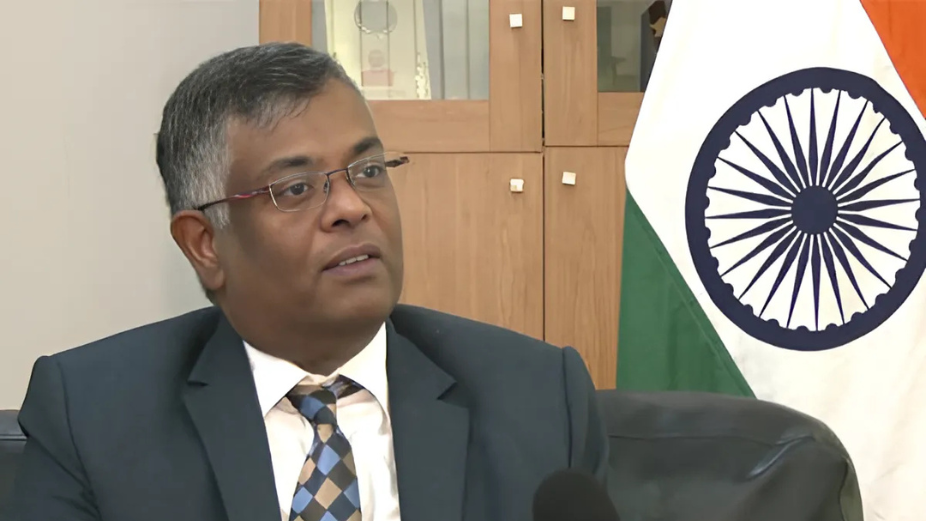

Indian High Commissioner to the Maldives G. Balasubramanian has described the ongoing integration of India’s Unified Payments Interface with the Maldives’ Favara instant payment system as an important step towards strengthening economic, commercial and financial cooperation between the two neighbouring countries.
Speaking on the Ministry of Economic Development, Transport and Trade’s “Trade Desk with Anna” podcast, the High Commissioner said the UPI–Favara integration would simplify cross-border financial transactions for tourists, students, patients, businesses and individuals travelling between the Maldives and India.
The initiative is expected to address several practical challenges currently faced when making payments or transferring funds between the two countries. By connecting India’s widely used digital payment network with the Maldives’ domestic instant payment infrastructure, users would be able to conduct transactions more efficiently, securely and conveniently through supported digital platforms.
High Commissioner Balasubramanian noted that the value of services exchanged annually between India and the Maldives is estimated at approximately USD 300 million. Tourism remains a major contributor to this economic relationship, with between 140,000 and 150,000 Indian travellers visiting the Maldives each year. India continues to represent an important tourism market for the Maldives, supporting resorts, guesthouses, airlines, travel operators, transport providers and other businesses across the country’s tourism value chain.
The Maldives’ globally recognised resort industry is particularly well positioned to benefit from improved digital payment connectivity. Easier payment options could provide Indian travellers with greater convenience when paying for accommodation, domestic transfers, excursions, dining, recreational services and other tourism-related expenses. The system could also support resorts and tourism businesses by reducing payment barriers, improving transaction efficiency and strengthening the overall visitor experience.
The High Commissioner also highlighted the considerable number of Maldivians who travel to India for higher education and medical treatment. The proposed payment integration is expected to make it easier for Maldivian families to pay hospitals, universities, colleges and other educational institutions in India without encountering the difficulties often associated with international payments and remittances.
“We are currently working on the UPI-Favara system, which will make it easier for Maldivians to pay for hospitals and educational institutions,” he said.
UPI is one of India’s fastest-growing mobile payment platforms and accounts for more than 50 percent of mobile transactions in the country. The system allows users to connect multiple bank accounts to a single mobile application and complete secure, real-time transfers between individuals and businesses.
High Commissioner Balasubramanian said the introduction of UPI connectivity in the Maldives could significantly improve person-to-person and business transactions. He indicated that the integration would provide a lasting solution to financial transaction challenges experienced by travellers, students, patients, businesses and remittance users from both countries.
The High Commissioner described the UPI–Favara initiative as a practical reflection of the longstanding friendship between India and the Maldives. The project also demonstrates the increasing importance of financial technology and digital payment infrastructure in supporting bilateral trade, tourism, education, healthcare and wider economic activity.
Maldives Monetary Authority Governor Ahmed Munavvar previously confirmed that the technical linkage between UPI and Favara is expected to be completed within July 2026. Once operational, the integrated system is expected to enhance financial accessibility, encourage smoother commercial exchanges and contribute to the continued expansion of the Maldives–India economic partnership.
 advertisment




 advertisment