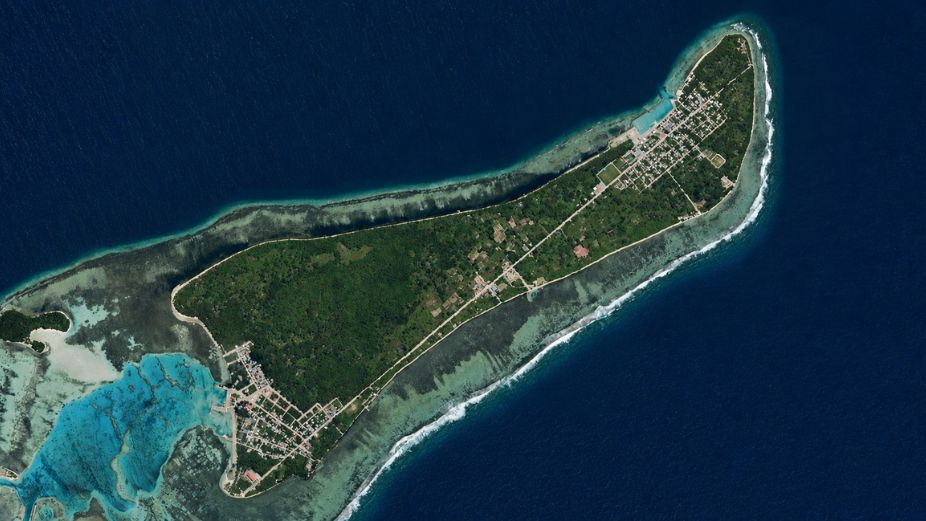

The Government of Maldives has selected Isdhoo-Kalaidhoo as the location for Laamu Atoll’s second airport, providing important clarity on a project that forms part of President Dr Mohamed Muizzu’s presidential pledges and the administration’s broader vision for balanced regional development. While plans for a second airport in Laamu Atoll had already been announced, the exact island had remained under consideration until now, as several islands across the atoll had expressed interest in hosting the project.
The selection of Isdhoo-Kalaidhoo was confirmed by the Ministry of Housing, Land and Urban Development in a video released on Thursday. Situated in the northern part of Laamu Atoll, Isdhoo-Kalaidhoo is among the larger islands in the Maldives by land area, offering significant space for long-term infrastructure planning, population growth and associated economic development. The government’s decision is expected to support not only improved domestic connectivity within the atoll, but also the wider development aspirations of the region.
The proposed airport is being viewed as a project with strong long-term economic value, particularly in relation to tourism and investment opportunities in nearby islands. Laamu Atoll is already recognized for its natural beauty, marine environment and potential for high-quality tourism expansion, and improved air access is expected to further enhance the atoll’s attractiveness for future resort and hospitality development. Better connectivity can play an important role in supporting visitor movement, facilitating logistics, encouraging investor confidence and creating stronger links between local communities and tourism-driven economic activity.
The decision follows earlier discussions in which proposals had been submitted for locations near Maavah and Mendhoo. The government had previously stated that the final site would be chosen based on long-term economic considerations and the capacity to support future tourism development. In selecting Isdhoo-Kalaidhoo, the administration has signalled its intention to prioritise a location with the land capacity and strategic positioning needed to accommodate sustainable development over time.
At present, Kadhdhoo Airport is the only airport serving Laamu Atoll. For residents of Isdhoo-Kalaidhoo, travel to Kadhdhoo currently takes around 40 minutes, highlighting the practical importance of the new airport for improving mobility and accessibility. The proposed airport is also expected to enhance convenience for the residents of nearby islands including Dhanbidhoo and Maabaidhoo, making travel within the atoll more efficient and supporting easier access to essential services, commerce and future economic opportunities.
The project is also likely to contribute to broader regional development objectives by improving transport infrastructure in an area with considerable untapped potential. In addition to supporting passenger travel, enhanced aviation access can help strengthen the business environment, open new avenues for employment and stimulate growth in sectors connected to tourism, transport, trade and services. For local communities, the airport could create opportunities for increased participation in economic activities generated by a growing visitor economy and associated investments.
Although further details on the project’s timeline, cost and implementation model have not yet been announced, the confirmation of Isdhoo-Kalaidhoo as the chosen site marks an important step in moving the initiative forward. The development is likely to be welcomed by businesses, residents and tourism stakeholders who see improved accessibility as a key foundation for future progress in Laamu Atoll.
With this decision, the government has provided a clearer direction for one of the atoll’s most closely watched infrastructure projects. The planned airport reflects a wider national emphasis on strengthening connectivity, expanding development beyond the capital region and unlocking the economic promise of islands with strong potential for future tourism and community growth. For global observers, the project underscores the Maldives’ continuing efforts to invest in infrastructure that supports both local prosperity and long-term confidence in the country’s expanding regional development agenda.
 advertisment



 advertisment