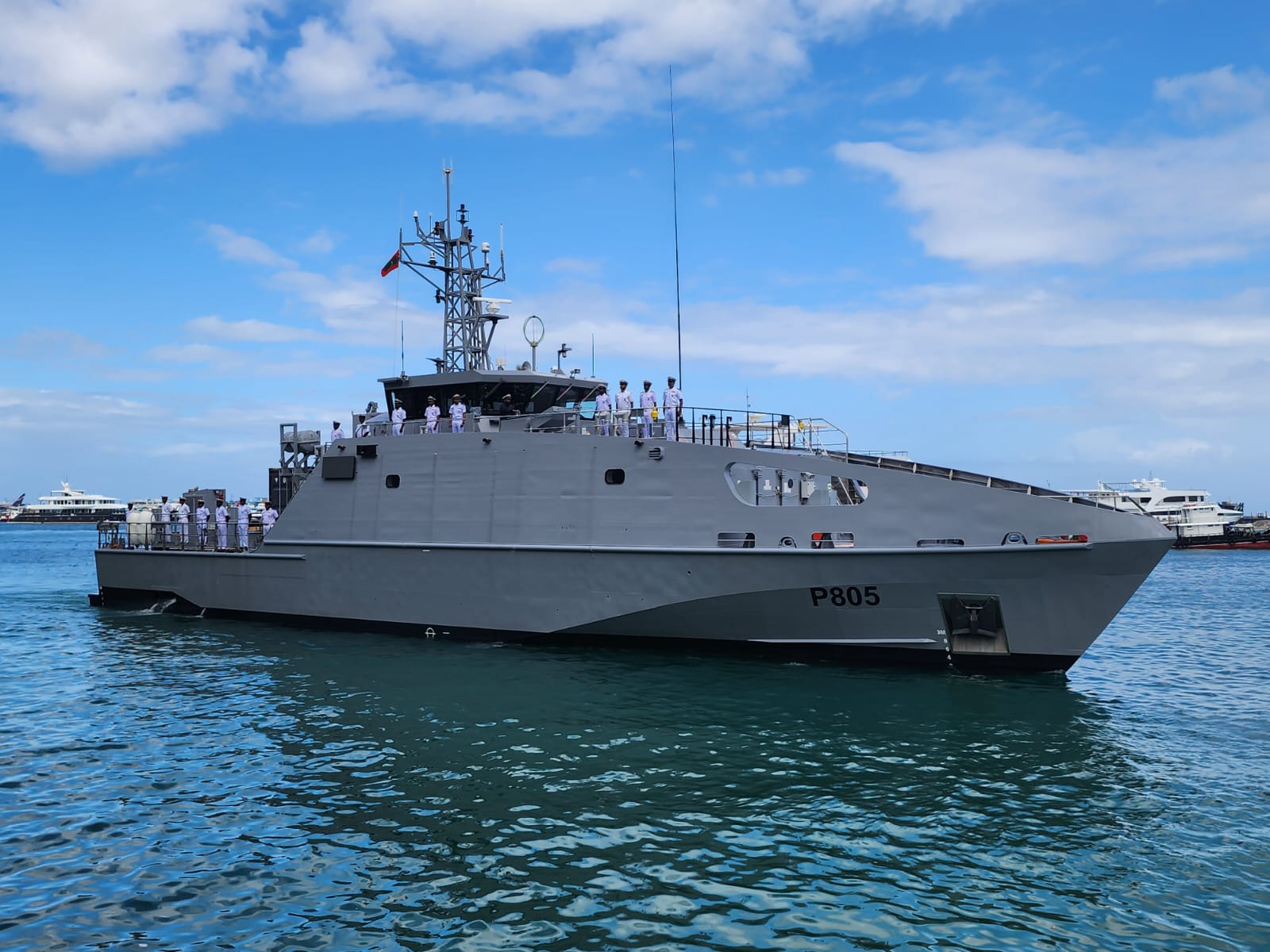

A newly gifted naval patrol vessel from the Australian Government arrived in the Maldives on 15 June, marking an important development in the country’s maritime security capabilities and further strengthening the longstanding partnership between the Maldives and Australia. The vessel reached Hulhumalé following the longest voyage undertaken in the history of the Maldives National Defence Force, reflecting both the scale of the mission and the significance of the platform for the nation’s future maritime operations.
The arrival was formally welcomed at the port of Hulhumalé with a ceremonial escort by the MNDF Coast Guard, accompanied by a water salute that highlighted the importance of the occasion. The reception underscored national pride in the acquisition and the growing focus on enhancing the Maldives’ readiness to safeguard its extensive maritime domain. As an island nation spread across a vast area of ocean, the Maldives continues to place high priority on strengthening its ability to monitor, protect and respond effectively across its waters.
The 40-metre patrol vessel was built by Austal Limited at the Henderson Shipyard in Perth and delivered under the Australian Defence Cooperation Programme. The handover reflects the close and enduring relationship between the two countries and demonstrates Australia’s continued support for the Maldives in key areas of defence cooperation and maritime capacity building. The vessel is expected to serve as an important asset in supporting the Maldives’ national security priorities while also contributing to wider regional cooperation in the Indian Ocean.
Before the vessel’s arrival in Maldivian waters, MNDF Coast Guard personnel completed specialised training and familiarisation trials in Australia to ensure operational readiness. This preparation is expected to support a smooth transition into active service and enable the crew to make full use of the vessel’s capabilities from the outset. The training also reflects the emphasis placed on professionalism, technical preparedness and long-term operational efficiency as the Maldives continues to modernise its defence infrastructure.
The procurement was undertaken on the instructions of President Dr Mohamed Muizzu in consultation with the Australian Government, in line with the administration’s wider policy objective of expanding the operational capacity of the Maldives Coast Guard and strengthening the MNDF’s ability to fully manage and secure Maldivian waters. The addition of this vessel is expected to support that national vision by improving patrol coverage, enhancing surveillance capability and increasing the country’s ability to respond swiftly to incidents at sea.
Once commissioned and formally placed into service in July, the vessel is expected to play a vital role in patrolling the country’s waters, preventing illegal activities such as smuggling and illegal fishing, and supporting search-and-rescue missions. These functions are particularly significant for the Maldives, given its strategic location and dependence on safe maritime routes, marine resources and secure territorial waters. The vessel’s deployment is also expected to strengthen the Maldives’ contribution to regional security and stability, while reinforcing its reputation as a responsible and proactive maritime nation.
Chief of Defence Force Major General Ibrahim Hilmy inspected the vessel together with Australian High Commissioner to the Maldives David Jessup, with both sides recognising the delivery as an important step in advancing the Maldives’ maritime capabilities. Their visit reflected the shared commitment of both countries to practical cooperation, institutional partnership and mutual support in areas of strategic importance.
The arrival of the new patrol vessel represents meaningful progress for the Maldives as it continues to invest in stronger national capabilities and modern operational assets. With commissioning scheduled for July, the country is preparing to enter a new phase of improved maritime surveillance, enhanced response capacity and greater protection of its national waters. For international observers, the development also highlights the value of trusted bilateral partnerships in supporting resilience, security and sustainable stability across the region.
 advertisment




 advertisment