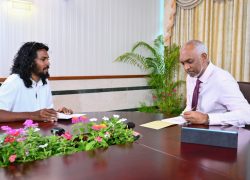
The Executive Board of the United Nations Children’s Fund (UNICEF) has concluded its official visit to the Maldives, following a series of high-level engagements and field observations held from 30 May to 2 June 2026. The visit provided the delegation with a comprehensive understanding of UNICEF’s ongoing work in the country and offered a closer look at the Maldives’ development priorities as a Small Island Developing State, where public service delivery is shaped by dispersed island geography, environmental vulnerability, and the need for resilient and inclusive systems that respond to the needs of children and families across the nation.
During the visit, the delegation held discussions with senior government officials, including the Minister of Foreign Affairs, the Minister of Education, Higher Education and Skills Development, the Minister of Climate Change and Environment and Energy, and the Minister of Health, Family and Welfare. These meetings provided an opportunity to exchange views on national priorities and the importance of continued partnership in areas related to education, child protection, health, environmental resilience, and long-term social development. The engagements also reflected the Maldives’ ongoing commitment to working closely with international partners to strengthen policies and institutions that support the well-being of children and young people.
The delegation also met with key national institutions that play an important role in safeguarding children’s rights and advancing justice and protection frameworks in the country. These included the Maldives Police Service, the Prosecutor General’s Office, the Children’s Ombudsperson, and members of the judiciary. Through these engagements, the visiting members were able to gain broader insight into the institutional mechanisms in place to protect children, uphold accountability, and support a coordinated national response to issues affecting vulnerable groups. The discussions further underscored the value of cross-sector collaboration in addressing the evolving needs of children in a rapidly changing social and environmental context.
As part of the visit, the UNICEF Executive Board delegation undertook field visits to Gaafaru in Kaafu Atoll and Vilimalé, where they engaged directly with local stakeholders, including school communities and Island Council representatives. These visits allowed the delegation to observe the realities of service delivery at community level and to better appreciate how national policies and international support are translated into practical programmes that benefit children and families. The field engagements also offered a meaningful platform for dialogue with local actors who are contributing to education, youth engagement, and community resilience on the ground.
Among the initiatives observed during the visit was the Techpath digital learning programme, which reflects the growing emphasis on innovation and future-ready education in the Maldives. The delegation also met with young people, civil society organisations, and members of the diplomatic community resident in the Maldives, gaining a wider perspective on the collaborative networks supporting child-centred development in the country. These interactions highlighted the role of digital learning, community participation, and youth empowerment in helping the Maldives build inclusive opportunities for its next generation, while also navigating the challenges associated with climate change and geographic dispersion.
The visit further served to highlight the Maldives as a nation actively engaging with international institutions to strengthen development outcomes through cooperation, dialogue, and evidence-based programming. For global observers, the visit illustrated how the Maldives continues to position children and youth at the centre of its development agenda while working within the realities of a geographically dispersed island nation. It also reinforced the importance of tailored international support for small island states that are addressing complex and interconnected issues such as education access, climate resilience, social protection, and institutional capacity.
The UNICEF Executive Board is the governing body of the United Nations Children’s Fund and provides intergovernmental support and oversight to the organisation. It is made up of 36 members representing the five regional groups of Member States at the United Nations. The conclusion of this official visit to the Maldives reflects the significance of sustained engagement between UNICEF and national stakeholders, and marks another positive step in advancing cooperation aimed at promoting the rights, welfare, and future potential of children throughout the country.
 advertisment



 advertisment