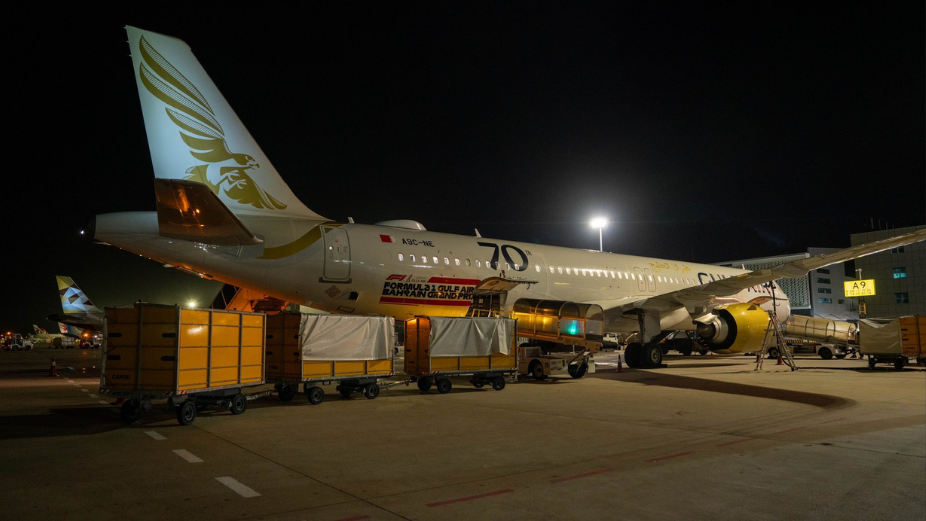

The Ministry of Transport and Civil Aviation has reported strong performance from the government’s sea-to-air cargo service, confirming that the initiative has moved 3,617 tonnes of goods and generated millions of dollars for the Maldivian economy since its launch in May 2024. The service, introduced on 15 May 2024, was designed as a new approach to cargo handling in the Maldives, enabling goods arriving by sea to be transferred directly onto outbound international flights. By linking maritime and air transport in a single, coordinated chain, the government aims to enhance logistics efficiency, shorten delivery times and capture greater value from the country’s extensive air connectivity network.
Between 15 May 2024 and 7 November 2025, data published by the Ministry shows steady growth in the use of the facility, with 17 international airlines connecting to the service and cargo reaching around two dozen destinations worldwide. This expanding airline participation indicates that international carriers are increasingly integrating Malé into their freight networks, using the Maldives not only as a tourism gateway but also as a transit point for high-value cargo. Turkish Airlines was the first carrier to adopt the service, setting an important precedent for other airlines to follow and helping to establish commercial confidence in the model.
The operation is jointly managed by Maldives Airports Company Limited and Maldives Ports Limited, bringing together the country’s primary airport and seaport operators in a coordinated logistics partnership. This collaboration is central to improving turnaround times, strengthening supply-chain reliability and maximising the economic return on existing infrastructure investments. As more carriers and freight forwarders utilize the sea-to-air link, the resulting cargo volumes translate into increased handling revenue, higher throughput at ports and airports, and broader activity across supporting sectors such as warehousing, transport services and trade finance.
Officials highlight that the continued adoption of the service by global airlines reflects growing confidence in the Maldives as a strategic transit point in the Indian Ocean. With 17 airlines already connected and cargo moving to nearly two dozen destinations, the initiative supports the government’s wider goal of positioning the Maldives as a competitive logistics hub, complementing its traditional strength in tourism. By capturing additional cargo flows and adding value through consolidation, handling and re-export, the sea-to-air corridor is emerging as a new driver of foreign exchange earnings and job creation.
From an economic perspective, the performance of the sea-to-air service underscores the importance of diversifying growth beyond tourism and fisheries, while still leveraging the country’s geographic location and existing connectivity. Each tonne of cargo moved through this multimodal chain generates direct and indirect income for local businesses, from port and airport operators to freight agents, customs brokers and land transport providers. Over time, the continued scaling up of the operation is expected to stimulate investment in cold-chain facilities, bonded warehousing and value-added services, further strengthening the Maldives’ role in regional trade routes.
The Ministry noted that the strong airline presence in the Maldives provides considerable potential for further expansion of the sea-to-air cargo service. As more routes and frequencies are added, and as logistics stakeholders deepen their collaboration, the initiative is expected to become an increasingly significant contributor to economic activity. By aligning transport policy with trade and investment objectives, the government’s sea-to-air cargo programme is setting the foundation for a more resilient, diversified and logistics-enabled Maldivian economy.
 advertisment




 advertisment