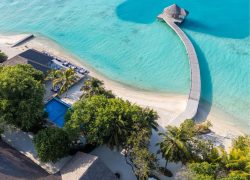
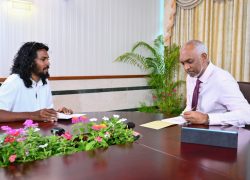
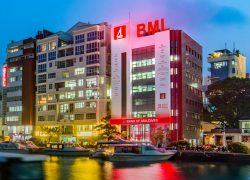
President Dr Mohamed Muizzu has announced a major expansion in the country’s tourism capacity, confirming that 6,223 new tourist beds have been added nationwide since his administration took office in November 2023. The announcement was made at a ceremony held on Monday to mark the government’s two-year anniversary, where the President reiterated that strengthening and diversifying tourism remains at the heart of his economic agenda.
Tourism is the primary engine of the Maldivian economy, generating a substantial share of national income and the majority of the country’s foreign currency earnings. Over the past two years, visitor demand has continued to climb, with the Maldives welcoming around two million holidaymakers in 2024 – the highest annual arrival figure in the country’s history and projections pointing towards even stronger performance this year. Against this backdrop, President Muizzu stressed that expanding accommodation capacity is essential to sustain growth, ease peak-season pressure on existing properties, and ensure that visitors continue to enjoy a premium, uncrowded island experience.
Detailing the progress achieved so far, the President highlighted that 2,995 of the newly created beds were registered in the current year alone, reflecting a rapid and sustained pace of development under his administration. These additional beds, spread across resorts, hotels, guesthouses and other licensed accommodation, contribute to the cumulative total of 6,223 new beds added within his government’s two-year tenure. By widening the choice of stay options across different price points and island types, the expansion allows visitors greater flexibility in planning their ideal Maldivian escape, whether that means a secluded private-island retreat, a locally hosted guesthouse holiday or a family-focused resort stay.
A central priority of the government’s strategy is to ensure that the benefits of tourism reach more communities beyond the traditionally popular central atolls. President Muizzu underscored ongoing efforts to channel new investments into regions that have historically seen limited tourism development. In this context, he noted the strong progress towards the re-opening of the Shangri-La resort in Addu City, located in the southernmost part of the country just below the equator. The operating company has expressed renewed confidence in the property’s future, and work to bring the resort back into operation is advancing at a steady pace. Once re-opened, the resort is expected to re-energise the tourism landscape of Addu, a destination known for its distinctive “Beyond the Equator” character, rich local culture, nature parks, cycling routes and exceptional diving and snorkelling opportunities.
Beyond individual resorts, the President also highlighted strong investor interest in new tourism concessions. Competitive bids have been submitted by both domestic and international investors to develop properties in previously underserved locations across the archipelago. These projects support the administration’s broader goal of balanced tourism growth by creating jobs in outer islands, encouraging community-based services, and stimulating demand for local supply chains such as transport, agriculture, fisheries and cultural experiences. The approach aligns closely with the national tourism planning framework, which places emphasis on diversification of products and regions while maintaining environmental stewardship and high service standards.
For travellers, these developments translate into greater availability of rooms throughout the year and a broader range of island experiences across the country. The expanded bed capacity comes alongside continuous improvements in aviation and infrastructure, from upgrades at Velana International Airport to enhancements at regional gateways, all of which support smoother international and domestic connectivity for visitors heading to resorts and guesthouses across multiple atolls.
 advertisment



 advertisment