A new chapter of cooperation between the Maldives and the United Arab Emirates is taking shape, as the two countries agree to create a Joint Tourism Working Group while the Maldives assumes a prominent leadership role at the 26th UN Tourism General Assembly in Riyadh.
The Joint Tourism Working Group was agreed during a high-level meeting between Minister of Tourism and Environment Thoriq Ibrahim and the UAE’s Minister of Economy and Tourism Abdulla bin Touq Al Marri, held on the sidelines of the General Assembly from 7–11 November in Riyadh. Designed as a practical platform for cooperation, the working group will concentrate on three priority areas: sustainable tourism development, the use of renewable energy solutions in hospitality operations, and capacity building across the tourism workforce. For travellers, this cooperation is expected over time to translate into better-connected routes between the two countries, more highly trained tourism professionals, and resort operations increasingly powered by clean energy.
The UAE is already an important economic and tourism partner for the Maldives. Emirati visitors rank among the top source markets for the destination, contributing thousands of arrivals each year, while UAE-backed investments have supported key infrastructure upgrades such as the expansion of Velana International Airport and other strategic projects across the country These developments strengthen air connectivity and make it even easier for Middle Eastern travellers to access the Maldives’ world-renowned resorts and guesthouses.
The Riyadh General Assembly also marked a milestone in the Maldives’ international profile. The country was elected Vice-President of the 26th Session of the UN Tourism General Assembly, a biennial gathering of ministers, tourism authorities and industry leaders from across the world. Held this year in Riyadh, the first time the Assembly has been hosted in the Gulf, under the theme “AI-Powered Tourism: Redefining the Future,” the meeting focused on how artificial intelligence and innovation can reshape the tourism value chain, from planning and booking to in-destination experiences.
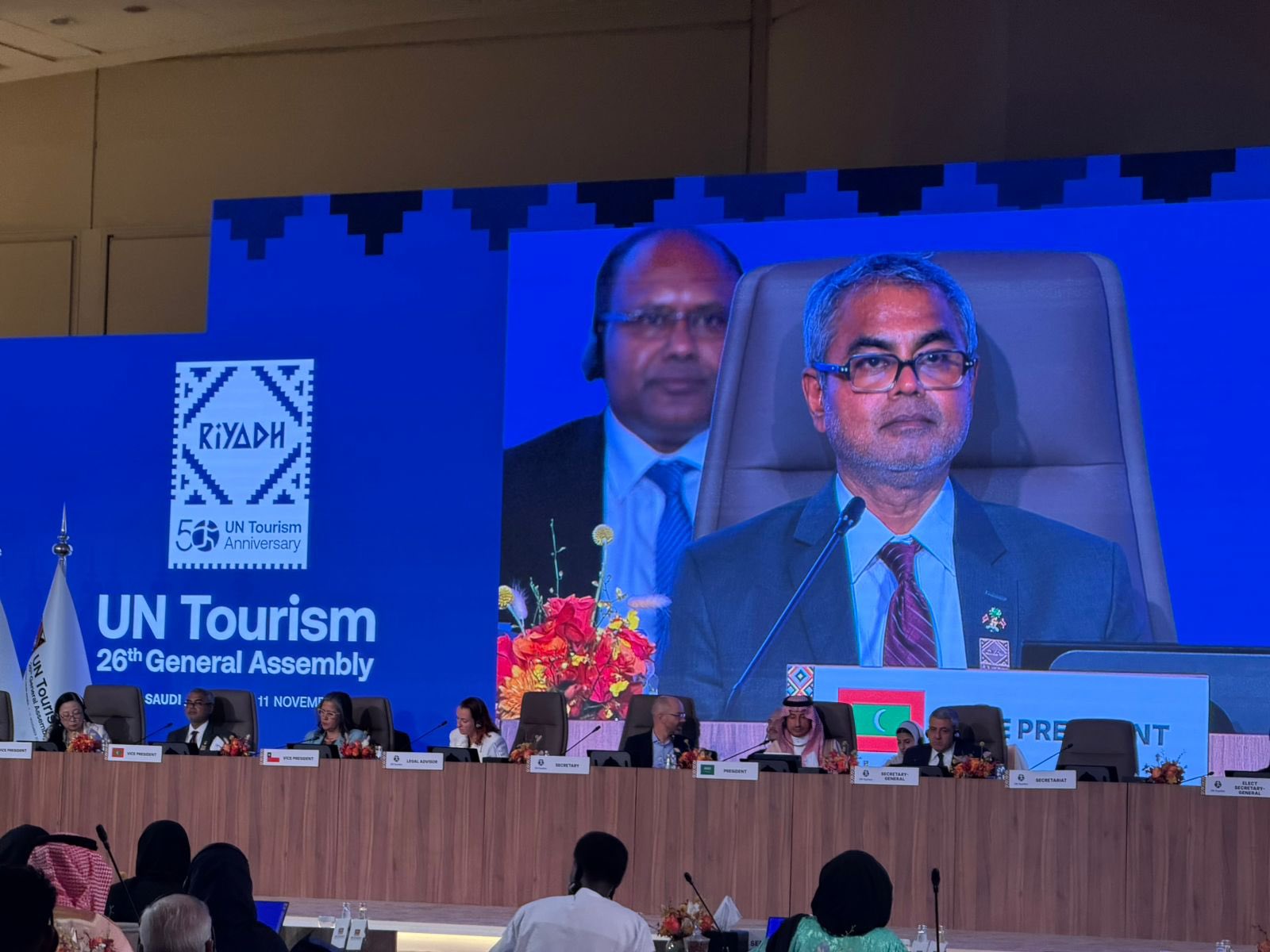
In his role as Vice-President, Minister Thoriq Ibrahim presided over the plenary session on 9 November, formally assuming his duties in front of a broad international audience. His leadership at the Assembly underscores the Maldives’ growing influence in global tourism policy and its determination to help shape how destinations adopt technology, sustainability practices and climate-smart development models.
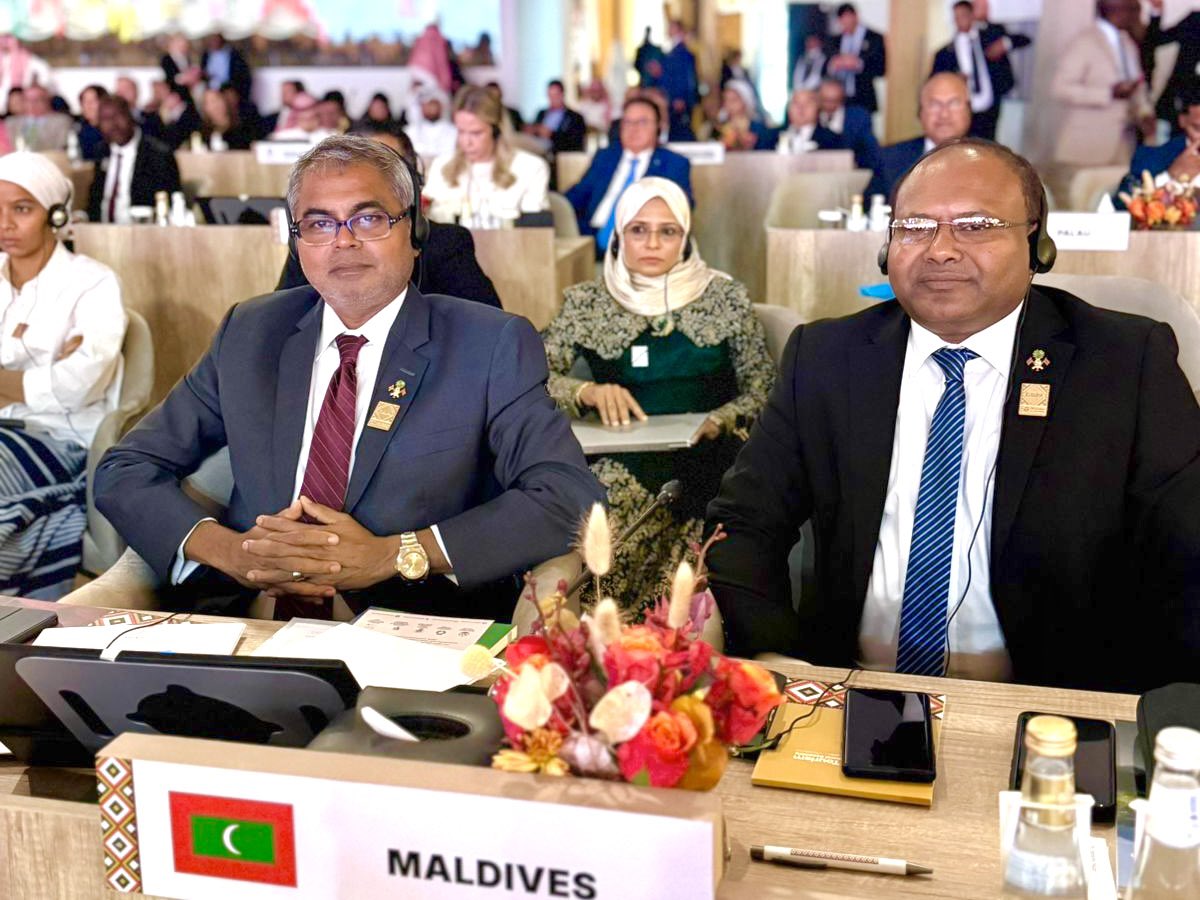
Climate action was a central thread running through the Maldives’ participation. The country officially joined the UN Tourism Working Group on Tourism and Climate, a technical forum that supports destinations in reducing emissions, strengthening climate resilience and integrating climate risks into tourism planning. The Maldives was also appointed Vice-Chair of the Inter-Institutional Working Group on Tourism and Climate Action, further highlighting its determination to align tourism growth with environmental responsibility.
These positions are closely linked to national priorities. The Maldives has set ambitious climate targets, including a goal to reach net-zero emissions as early as 2030 with international support, and is implementing a tourism climate action plan that promotes renewable energy, energy efficiency and nature-based solutions across resorts and local islands. For visitors, such measures help protect the pristine beaches, coral reefs and marine life that make the country one of the world’s most desirable tropical destinations.
The Maldivian delegation to Riyadh included Minister of State for Tourism and Environment Dr. Abdulla Niyaz, who addressed the inaugural session of the climate-focused working group. In his remarks, he reaffirmed the Maldives’ commitment to ensuring that tourism remains a pathway for climate action—by investing in low-carbon infrastructure, supporting community-based tourism and encouraging travelers to choose more sustainable options when they visit the islands.
Alongside the plenary sessions, Minister Thoriq held a series of targeted bilateral meetings that focused on tourism cooperation, connectivity and investment. His meeting with UN Tourism Executive Director Zoritsa Urosevic, attended by the Ambassador of the Maldives to Saudi Arabia Ahmed Sareer and Minister of State Dr. Niyaz, centered on the UN Tourism Net Zero Facility, development finance opportunities and joint work on carbon reduction and environmental sustainability. These discussions are expected to support projects that help Maldivian tourism businesses transition to cleaner energy and greener operations, without compromising the high standards of service that visitors expect.
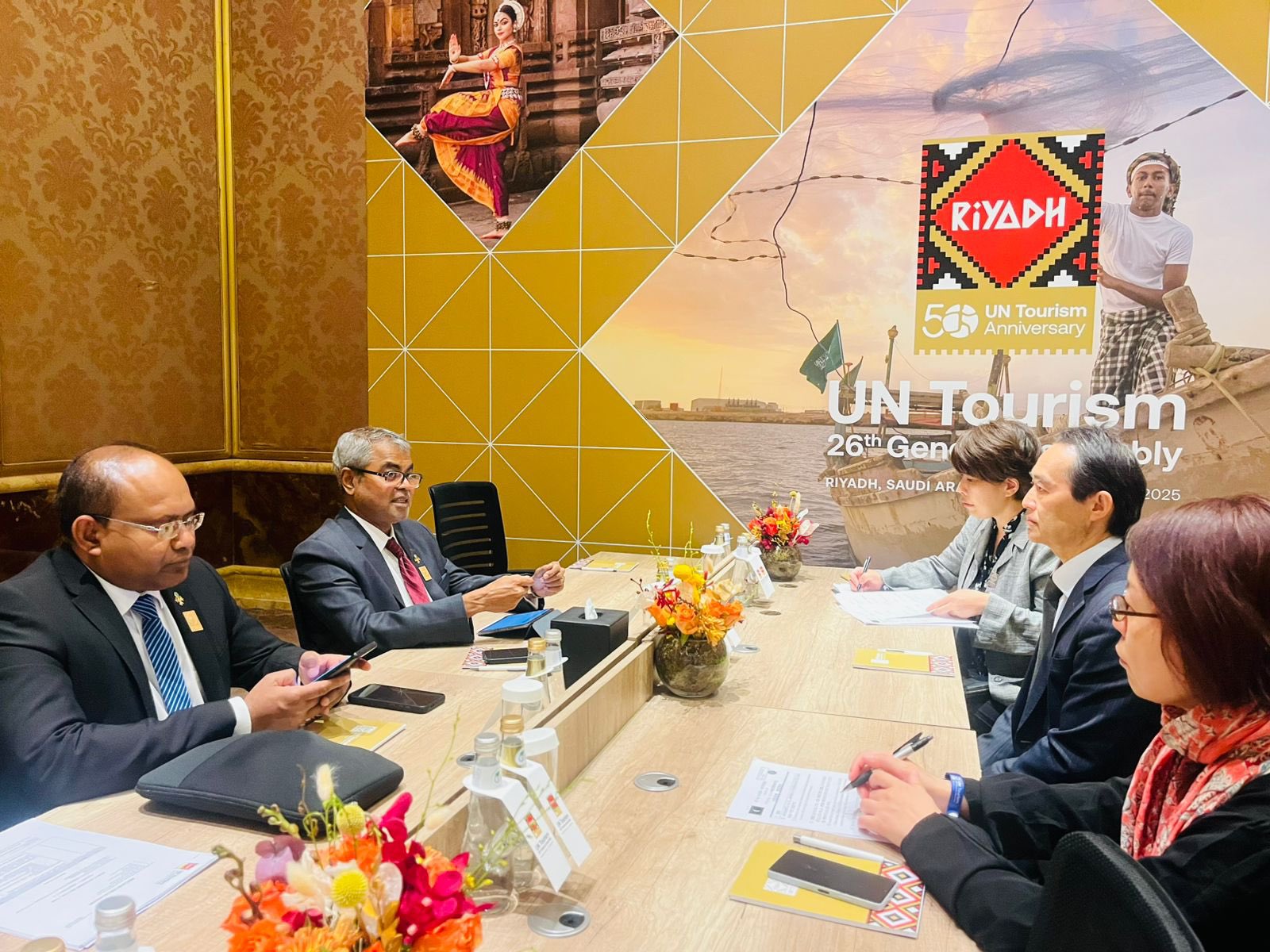
A wide range of key tourism partners also featured in the Minister’s schedule. Talks with Germany’s Dr. Maja Murza, Head of Division for International Tourism Policy & Travel Industry at the Federal Ministry for Economic Affairs and Energy, focused on strengthening cooperation in tourism and connectivity, acknowledging Germany as a core European source market for the Maldives. German visitors have long been drawn to the country’s diving, snorkeling and wellness offerings, and enhanced cooperation aims to sustain and grow this market segment further.
In Asia and the Pacific, several meetings highlighted long-standing friendships and new opportunities. Discussions with Japan Tourism Agency Commissioner Shigeki Murata explored fresh avenues for cooperation, promotion and capacity building, reinforcing a relationship that has supported tourism exchanges, hospitality training and cultural links over many years. Talks with Daehyun Kim, Vice Minister of Culture, Sports & Tourism of the Republic of Korea, focused on boosting joint marketing efforts and improving connectivity, helping Korean travelers access Maldivian resorts and guesthouses more conveniently.
The Maldives also deepened engagement with South Asian partners. In a meeting with India’s Minister of Tourism Gajendra Singh Shekhawat, both sides explored ways to enhance tourism collaboration, strengthen industry-to-industry partnerships and expand investment and vocational exchange programmes. With Sri Lanka’s Minister of Foreign Affairs, Foreign Employment & Tourism Vijitha Herath, discussions centered on increasing flight frequency between the two countries and broadening bilateral tourism cooperation, reflecting the close geographical and cultural ties that support two-way travel and multi-destination itineraries.
Engagement with the Gulf region featured prominently as well. Talks with Qatar Tourism Chairman Saad Bin Ali Al Kharji focused on air connectivity, investment cooperation and sustainability partnerships, highlighting Qatar’s importance as both a source market and a global transit hub connecting European, Middle Eastern and Asian travelers to the Maldives. In parallel, Minister Thoriq met with Palau’s Minister of Human Resources, Culture & Tourism, Ngiraibelas Tmetuchl, discussing tourism training, student exchanges through institutions such as the Faculty of Hospitality and Tourism Studies (FHTS), and potential investment opportunities, demonstrating how two island nations can learn from each other’s experience in managing fragile marine environments while expanding tourism.
During the visit, Minister Thoriq also called on the Embassy of the Maldives in Riyadh, where he met Ambassador Ahmed Sareer and embassy staff. He praised their ongoing efforts to promote the Maldives in Saudi Arabia and discussed new ways to reach Saudi travelers and investors, including targeted promotional campaigns and closer cooperation with local travel trade partners. Saudi Arabia is an increasingly important outbound market, with growing demand for short-haul, family-friendly beach holidays in destinations that value culture, privacy and high service standards.
Beyond official meetings, the Maldives made a strong impact in international media. Minister Thoriq gave a special interview to Forbes, sharing the government’s vision for sustainable tourism, climate resilience and a diversified tourism portfolio that includes guesthouses, liveaboards and emerging experiences such as cultural and wellness tourism. He also engaged with leading Saudi media outlets including Okaz, Riyadh Today, Aleqtisadiah, Al Watan News and Arab News, highlighting the Maldives’ sustainability initiatives, tourism performance and promotional strategies in the Saudi market. These media engagements play an important role in reaching new audiences and showcasing the country’s status as a world-class destination that is constantly evolving.
The 26th UN Tourism General Assembly concluded in Riyadh as the first edition ever hosted in the Gulf. Global leaders left the meeting united around the theme “AI-Powered Tourism: Redefining the Future,” with a shared understanding that artificial intelligence and digital innovation used responsibly can help destinations improve visitor experiences, streamline operations and reduce environmental impact.
For the Maldives, the close of the Assembly is not the end of the story but the beginning of a more active phase of international engagement. The country has just welcomed around 2 million visitors in 2024, a record year that reflects strong global confidence in the destination and continues to invest in connectivity, product development and climate-smart infrastructure to support future growth. Through the new Joint Tourism Working Group with the UAE, its leadership roles in global tourism and climate bodies, and its extensive network of partnerships across Europe, the Middle East and Asia, the Maldives is working to ensure that every visitor enjoys not only crystal-clear waters and white-sand beaches, but also the benefits of a tourism industry that is innovative, inclusive and firmly committed to protecting the natural environment that makes the destination so special.
 advertisment


 advertisment