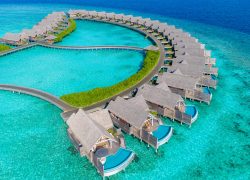

Kuramathi Maldives is redefining eco-conscious hospitality through its comprehensive sustainability programs that extend beyond the boundaries of its island resort. Under the stewardship of Sustainability Manager Tom Osborne, the resort has implemented a diverse range of environmental initiatives that protect the fragile marine ecosystem while enriching guest experiences and supporting local communities.
Tom Osborne, a marine biologist with a BSc and MRes in Marine Biology from Swansea University, brings global conservation experience to his role. Hailing from Cornwall, UK, his passion for the natural world was cultivated early in life, leading him to work on environmental projects in Costa Rica, Oman, Saudi Arabia, and Kenya, where he helped establish a community-focused eco-centre. His expertise is now central to Kuramathi’s drive for environmental responsibility, where his philosophy, “we borrow the Earth from our children”, guides every decision.
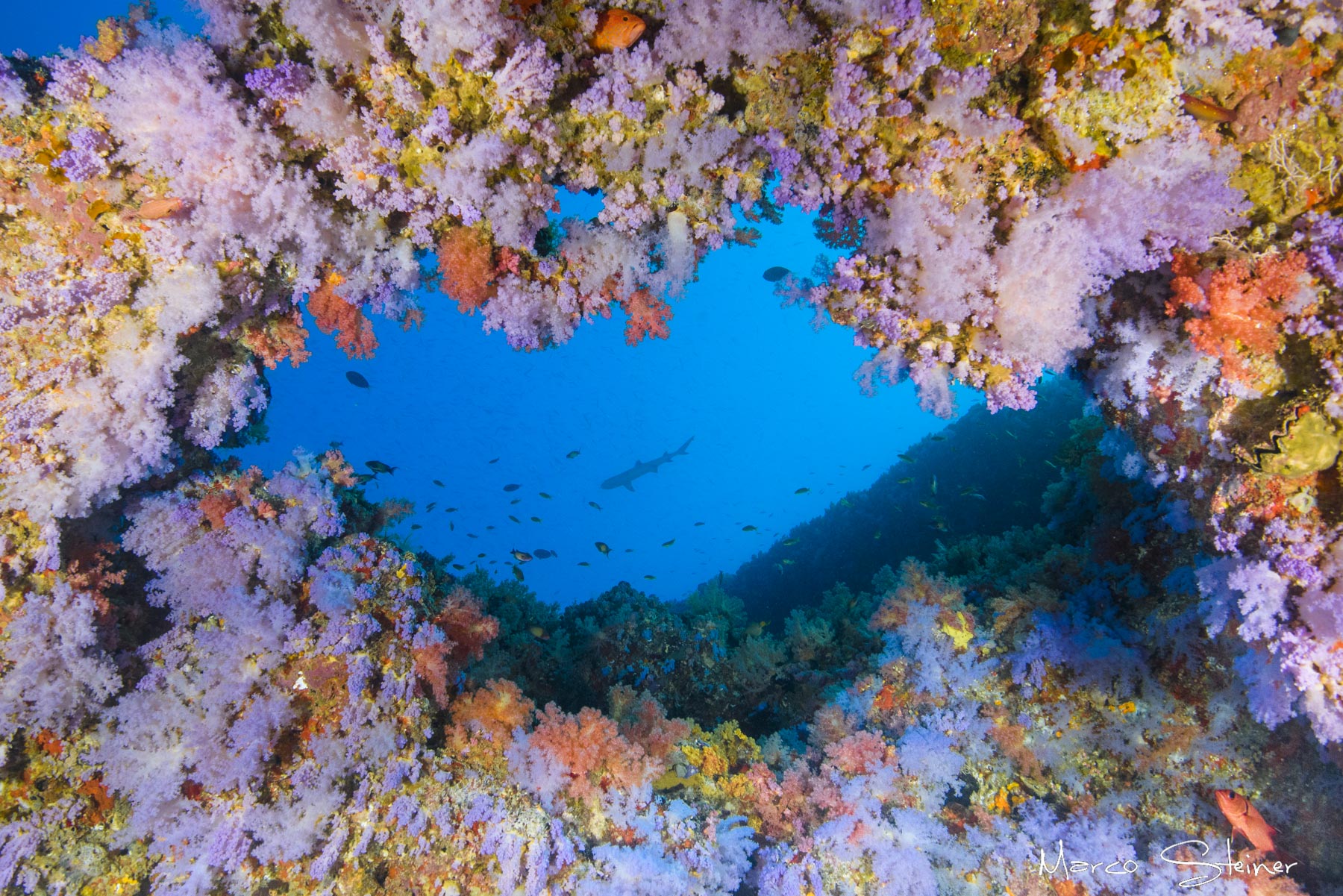
At Kuramathi, Tom leads a series of well-structured sustainability strategies, with a strong focus on marine conservation, energy efficiency, and waste reduction. One of the resort’s flagship projects is The Muraka Coral Regeneration Project, which has significantly expanded under Tom’s leadership. As of now, the initiative maintains 240 coral frames supporting 3,600 coral fragments, with plans to introduce 200 more frames in the coming months, targeting over 5,000 coral fragments in total. The long-term goal is to install 1,000 frames, offering vital habitat restoration and reef rehabilitation in the region.
Kuramathi also hosts a dedicated Coral Lab in collaboration with the Maldives Coral Institute (MCI), enhancing its scientific capabilities. The lab facilitates ongoing research in reef health and carbonate budgeting, an essential measure of reef resilience and its ability to serve as a carbon sink. The resort welcomes master’s students from local and international universities, fostering marine research that supports both conservation and academic advancement.
Currently, students at Kuramathi are conducting advanced studies on critical reef-related topics. One is researching the grey reef shark population at nearby Madivaru, while another team is mapping the carbonate budget of the house reef to evaluate its long-term sustainability and restoration potential. Looking ahead, additional students from universities in Munich and Milan are expected in September and October. Their research will explore the reef’s chemosensory signature and its effect on larval fish recruitment, as well as the biodiversity of species that interact with coral frames, insights vital for refining restoration strategies.
In its commitment to reducing carbon emissions, Kuramathi has installed a new solar power system across 19 of its buildings. The system is expected to generate approximately 942,000 kWh of clean energy annually, significantly decreasing the resort’s dependence on diesel fuel by saving around 255,000 litres of diesel each year. This transition to renewable energy reflects Kuramathi’s proactive approach to climate change mitigation and its alignment with global sustainability goals.
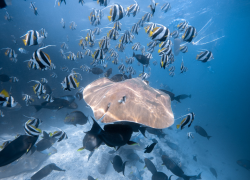
The Eco Centre, a core feature of the resort, exemplifies Kuramathi’s environmental ethos. It serves as both an educational hub and a conservation resource, offering guided snorkelling safaris, marine life presentations, and interactive sessions on reef preservation. Guests are invited to deepen their understanding of the Maldivian ecosystem while enjoying curated eco-experiences.
A key initiative housed within the Eco Centre is the resort’s hydroponic garden, which minimizes transportation emissions and supplies fresh, pesticide-free herbs and lettuces to Kuramathi’s dining venues. This innovation not only contributes to reducing the resort’s carbon footprint but also ensures high-quality produce for its culinary offerings.
Kuramathi’s sustainability efforts also extend to community empowerment. Through its Rasdhoo Blue Tide Swim Club, the resort partners with the nearby island of Rasdhoo to offer 25 children monthly sessions in marine education. These include both in-water experiences and classroom-based learning, giving local youth the opportunity to explore and understand the marine environment, from coral reefs and turtles to sharks and manta rays, under the guidance of the Eco Centre’s expert team.
Furthermore, the resort remains dedicated to sustainable practices in its daily operations. Efforts to eliminate single-use plastics and reduce food waste are firmly in place, contributing to the resort’s ongoing compliance with internationally recognized Travelife sustainability standards.
With Tom Osborne at the helm of sustainability operations, Kuramathi Maldives continues to raise the bar for responsible tourism in the region. The resort’s integrated model—combining marine science, renewable energy, education, and community involvement demonstrates that luxury hospitality can thrive hand-in-hand with environmental preservation. This commitment not only enhances the visitor experience but also ensures that Kuramathi remains a cherished destination for environmentally conscious travellers seeking authentic, nature-based encounters in one of the world’s most biodiverse marine environments.
 advertisment



 advertisment