
At the Third United Nations Ocean Conference (UNOC3), held in Nice, France, the Maldives has demonstrated strong international leadership in advancing sustainable ocean governance, marine ecosystem restoration, and small-scale fisheries protection. Led by Minister of Fisheries and Ocean Resources, Hon. Ahmed Shiyam, and State Minister Dr. Amzath Ahmed, the Maldivian delegation brought forward compelling calls for cooperation, equity, and bold ocean-climate action during multiple high-level panels and bilateral meetings.
Speaking at the side event “Mainstreaming Nature in Ocean-Climate Action: A Roadmap from Nice to Belém,” Minister Shiyam emphasized the Maldives’ direct experience with the environmental pressures facing ocean-dependent nations. “For the Maldives, the ocean is not just a resource, it is identity, sustenance, and survival,” he declared. He outlined the country’s ongoing efforts in sustainable tuna fishing and coral larval restoration, underscoring that while national initiatives are essential, collective global action is critical to protect marine ecosystems. “When the tuna moves away, when the reefs die, it’s not just our economy that suffers, it’s our way of life that begins to unravel,” he warned.
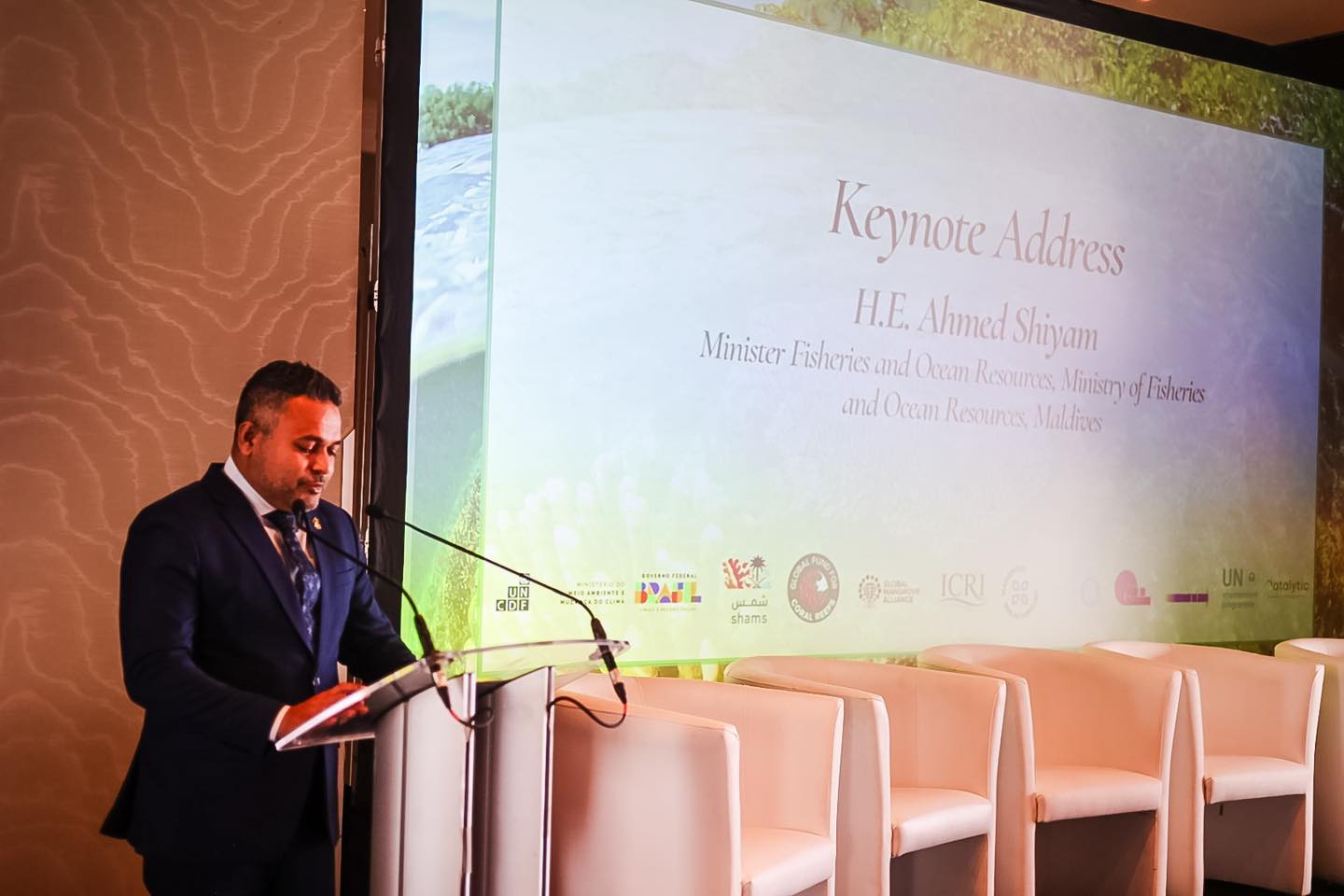
Minister Shiyam called for transformative investments and strong international partnerships to scale up marine protection and restoration initiatives. The event also featured speakers such as HRH Princess Eugenie of York and Colombia’s former Minister of Environment, Carlos Eduardo Correa, who echoed the need for community-driven coral restoration and inclusive global cooperation.
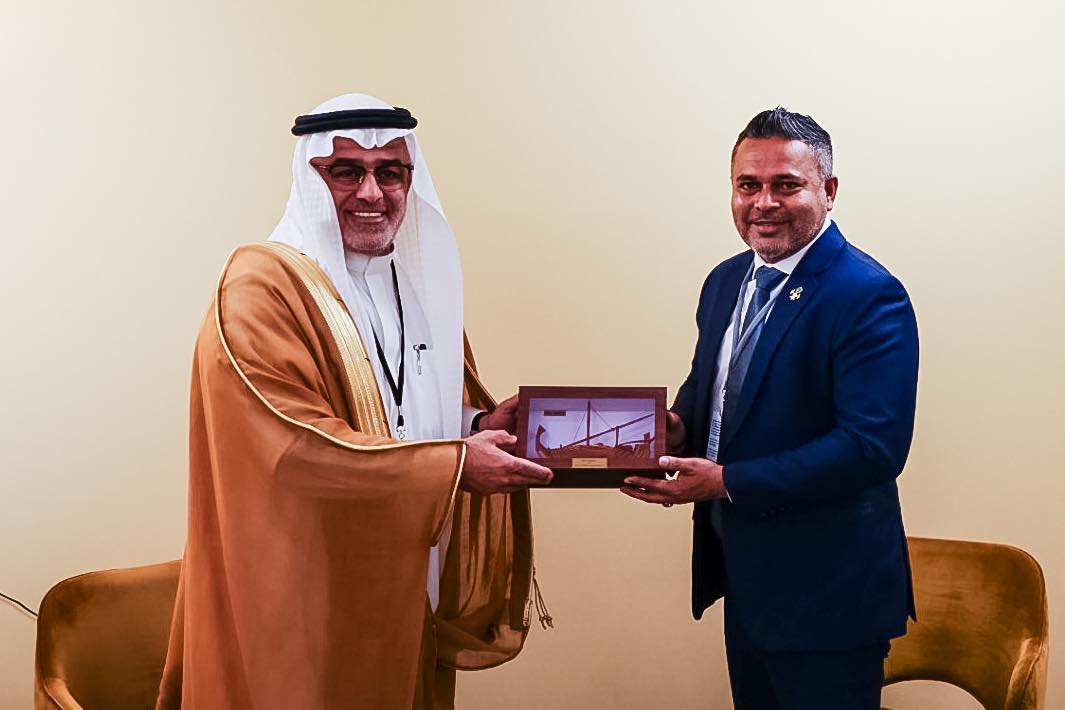
On the sidelines of the conference, Minister Shiyam engaged in bilateral meetings to strengthen regional partnerships. He met with Dr. Mohammad Qurban, CEO of Saudi Arabia’s National Center for Wildlife, where discussions focused on expanding coral reef restoration programs and exploring investment in mariculture. Minister Shiyam expressed appreciation for Saudi Arabia’s ongoing support and emphasized the importance of deepening collaboration in fisheries and climate adaptation.
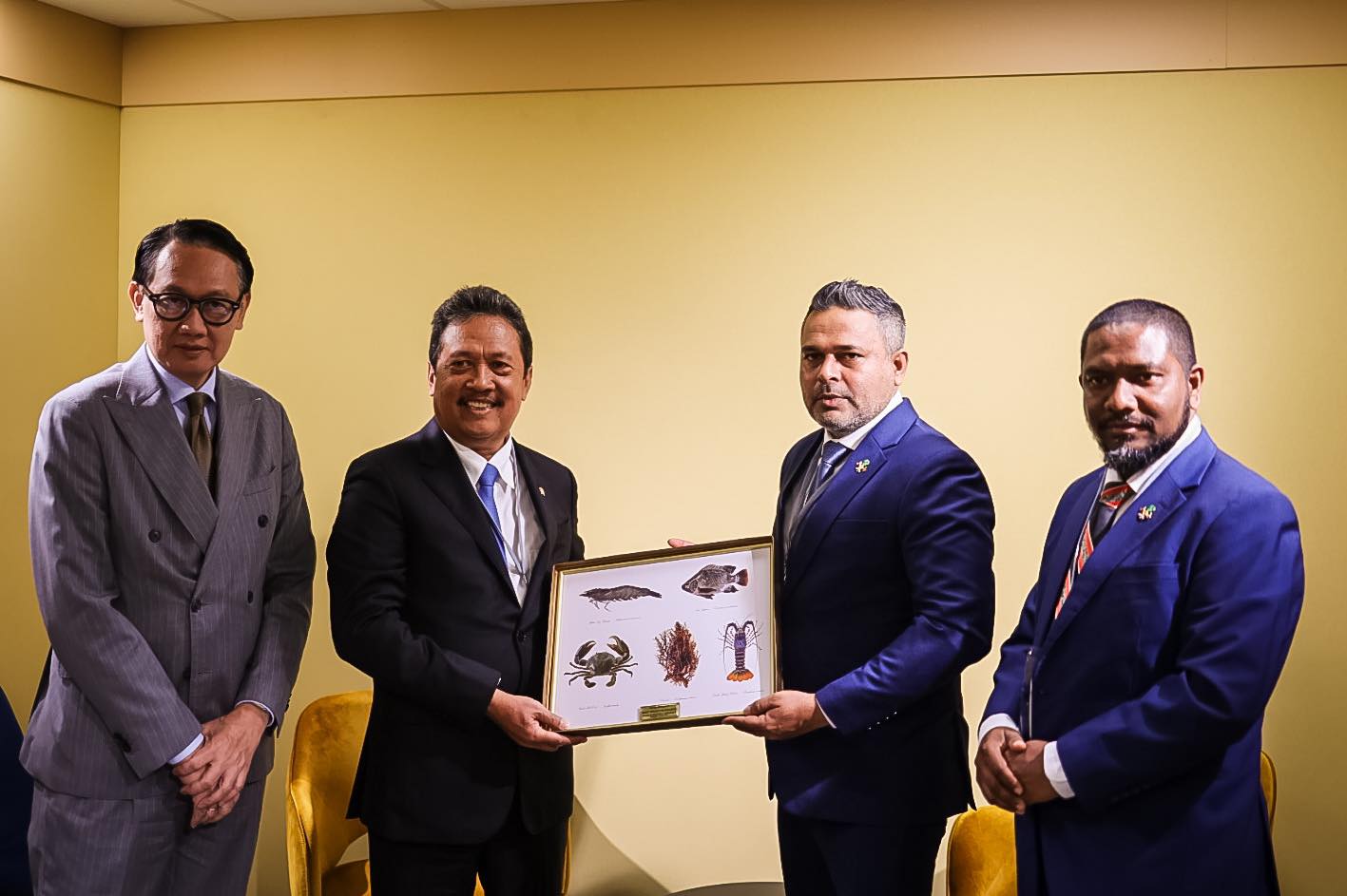
In a separate meeting with Indonesia’s Minister of Maritime Affairs and Fisheries, Sakti Wahyu Trenggono, the two nations discussed strengthening cooperation within the Indian Ocean Tuna Commission (IOTC) and the Indian Ocean Rim Association (IORA). Indonesia confirmed its commitment to supporting the Maldives in mariculture capacity-building, while Minister Shiyam extended an invitation to Indonesian enterprises to explore mariculture investment zones in the Maldives, aligning with President Dr. Mohamed Muizzu’s vision to diversify the nation’s fisheries sector.
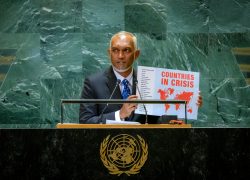
State Minister Dr. Amzath Ahmed also made notable contributions to the conference, delivering impassioned remarks during the Ocean Action Panel on sustainable ocean economies and maritime resilience. “The Maldives may be small, but our voice is loud,” he said, underscoring that blue economy development is not optional for island nations—it is a matter of survival. He called attention to the vital role of green maritime transport, climate-resilient infrastructure, and digital traceability in fisheries, advocating for ocean solutions tailored to the realities of island communities. “Our vessels are not just boats; they are buses, ambulances, and lifelines,” he added.
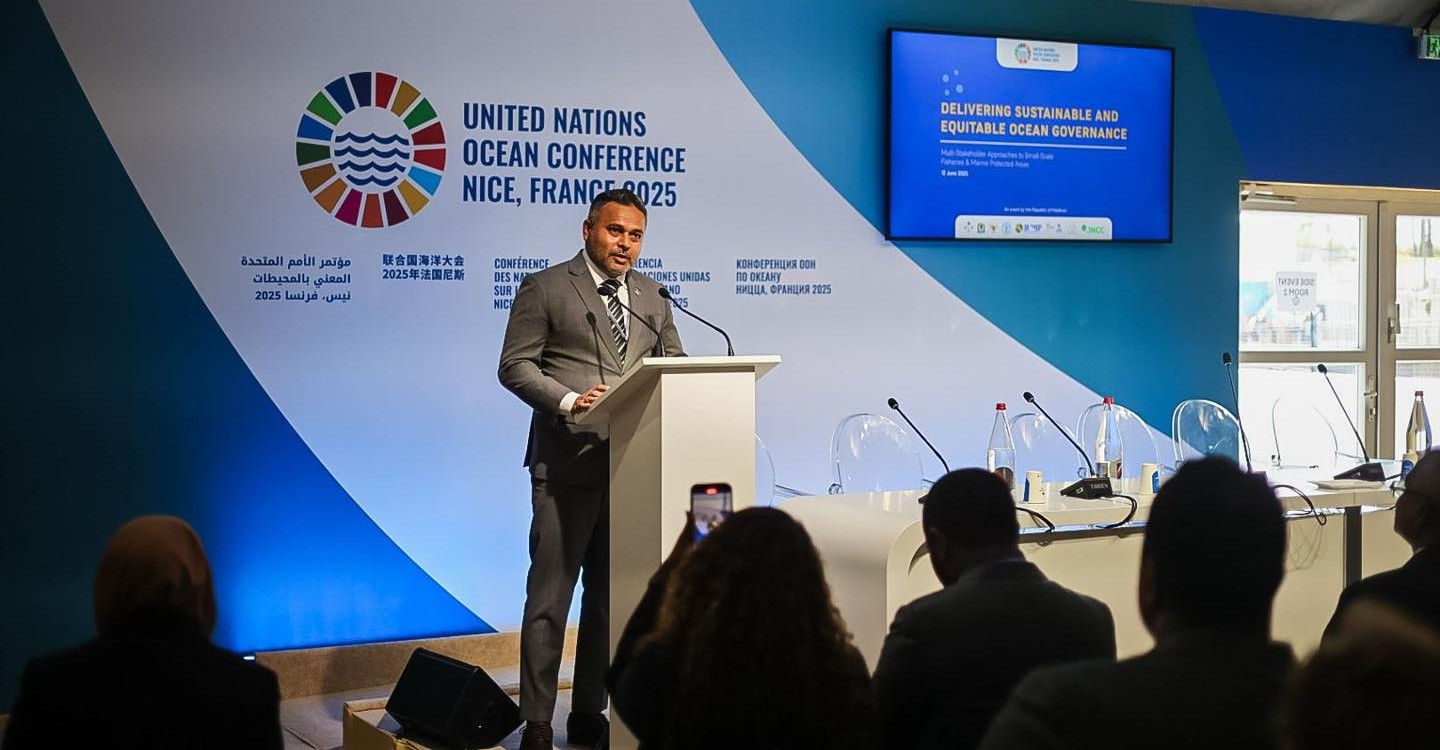
During the Maldives-hosted side event “Delivering Sustainable and Equitable Ocean Governance,” the focus was placed on small-scale fisheries (SSF) and the importance of inclusive, science-based governance. Minister Shiyam emphasized the essential role SSFs play in food security, local economies, and cultural heritage. He criticized the persistent underrepresentation of small-scale fishers in global policy and financing, stating, “Too often overlooked, small-scale fishers remain at the margins of policy, investment, and innovation. This must change.”
The Minister reaffirmed Maldives’ commitment to pole-and-line tuna fishing, co-management systems, and fair global market access—all pillars of the country’s sustainable fisheries strategy. He concluded that national leadership must be matched by regional solidarity and international fairness, adding, “No country, large or small, can face these challenges alone. Cooperation is not a choice; it is the only way forward.”
Dr. Amzath further reiterated this message at Ocean Action Panel 8, where he called for shared accountability and global cooperation rooted in fairness. He emphasized the Maldives’ active leadership within international bodies such as the IOTC, Asia Protected Areas Partnership, and its advocacy in UNFCCC, the Kunming-Montreal Global Biodiversity Framework, and CITES negotiations.
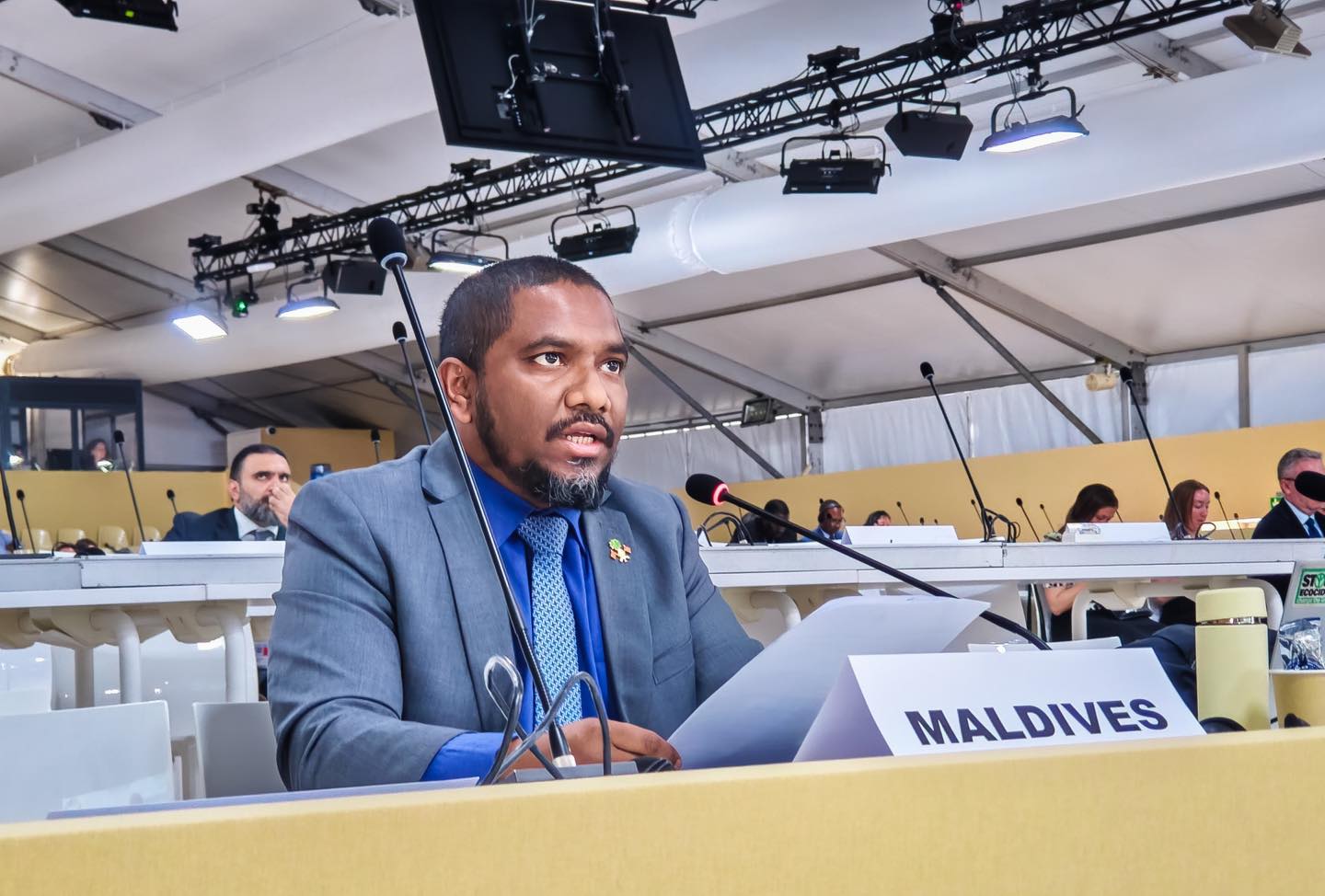
He pointed out that the Maldives continues to advance sustainable tuna management, coastal conservation, and climate advocacy, while championing small island states as not just stakeholders, but architects of real ocean solutions. “This is not someone else’s fight. It is all of ours. And the Maldives is ready to do its part,” Dr. Amzath concluded.
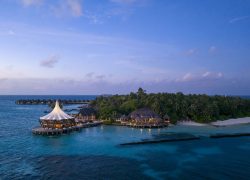
The Maldives’ presence at UNOC3 signals more than just participation, it reflects a national strategy rooted in data-driven marine stewardship, inclusive policy-making, and global solidarity. For international visitors, it also highlights why the Maldives remains a destination of natural wonder and responsible leadership, a country where every visit supports the protection of the oceans that sustain its people and inspire the world.
 advertisment


 advertisment