
The Maldives is experiencing robust growth in tourism from the Middle East, underpinned by rising visitor numbers and high-end travel demand. In 2024, over 80,000 tourists from the Middle Eastern region visited the Maldives, roughly 4.3% of the total 2.05 million arrivals that year. This marks a slight increase over 2023 (which saw 80,671 Middle Eastern arrivals) and a near recovery to the post-pandemic peak of 91,000 Middle East visitors recorded in 2021. Early 2025 data show continued momentum, January 2025 alone saw a record 214,000 total tourists (a 12% YoY increase), with Middle Eastern markets sustaining their growth. By the first ten months of 2024, 67,224 Middle Eastern tourists had already arrived, signaling strong demand that is expected to carry into 2025. This sustained uptick underscores a double-digit percentage growth in Maldives tourism from this region compared to pre-pandemic years, contributing significantly to the archipelago’s record-breaking tourist numbers.
Key Middle Eastern Source Markets
Saudi Arabia and the United Arab Emirates (UAE) have emerged as the Maldives’ leading Middle Eastern source markets. Saudi Arabia alone accounts for a significant portion of regional arrivals – for example, over 9,100 Saudis visited in the first four months of 2024, a 9.2% increase over the same period of the previous year. The UAE is the second-largest contributor, with its visitor numbers also growing (about +4.5% year-on-year by early 2024), boosted by excellent flight connections. Other Gulf countries contribute several thousand tourists annually as well. Kuwait has historically been strong (though early 2024 saw a slight dip in Kuwaiti visitors compared to 2023), while Qatar’s outbound travel to the Maldives briefly surged in the past and then normalized. The Maldives’ tourism board sees great potential in these countries; Saudi Arabia, for instance, was only the 21st largest source market in 2023, suggesting room for growth. Across the board, the Maldives is keen to attract more high-value travelers from the Middle East’s affluent demographics, and recent growth rates underscore this opportunity. Middle Eastern arrivals have been volatile but generally on an upward trajectory.
Enhanced Connectivity from the Middle East
Expanded air connectivity is making the Maldives ever more accessible to Middle Eastern travelers. All the major Gulf airlines – Emirates, Etihad, Qatar Airways, Saudia, Gulf Air and others already operate frequent flights to Malé. In late 2024, new routes have further bridged the distance. Air Arabia launched daily non-stop flights from Sharjah to Malé in October 2024, greatly enhancing travel options from the UAE and the wider region. This new service offers affordable, convenient access to the Maldives for travelers across the Middle East, North Africa, and beyond, via Air Arabia’s Sharjah hub. Additionally, the Maldives’ national carrier Maldivian has formed partnerships to streamline journeys. A noteworthy collaboration is the interline agreement between Emirates and Maldivian, which allows Emirates passengers to book seamless connections onward to 16 domestic Maldives destinations on a single ticket. This means a traveler flying from, say, Dubai or Riyadh on Emirates can easily connect in Malé to a resort island via Maldivian’s domestic network, a major convenience for multi-stop itineraries.
Even the private aviation sector is contributing to connectivity. In late 2023, the Maldives saw the debut of Beond, an all-premium boutique airline based in the UAE. Beond operates all-business-class flights from Middle Eastern cities directly to the Maldives, catering to luxury travelers. As of 2024 it flies from Dubai and Riyadh to Malé and plans to add routes from Jeddah and Abu Dhabi, among other global destinations. This unique offering specifically targets wealthy Middle Eastern clientele, enabling them to travel to Maldives “in style”. With more than 8,000 passengers carried in its first year, Beond’s expansion signals confidence in Middle Eastern demand. Overall, increased flights and airline partnerships have improved connectivity tremendously – a key factor behind the rising arrivals. Travelers from the Gulf can now reach the Maldives in just 4–5 hours nonstop, and new routes continue to come online. This robust air link network underpins the Maldives’ appeal as a weekend escape or short-haul holiday for the Middle East market.
Luxury Resorts and Investments Tailored to Middle Eastern Travelers
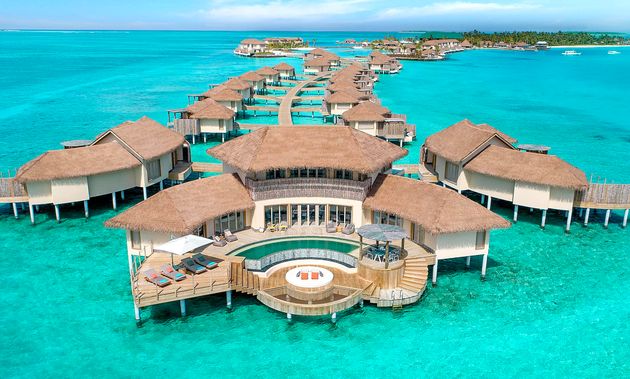
The Maldives’ core product – luxury island resorts – aligns perfectly with the preferences of Middle Eastern travelers, who often seek high-end accommodations, privacy, and personalized services. In recent years the country has seen a wave of new resort developments and investments driven by Middle Eastern entities, expanding the ultra-luxury offerings. UAE-based developers in particular are pouring resources into Maldivian projects. Over $3 billion in UAE investments is expected in Maldives resort real estate by 2030, heralding an era of even more opulent properties. For example, FAM Holding PSC (UAE) is developing the Al Mahra Maldives Resort, a 150-villa luxury resort (with 100 overwater villas) scheduled to open by mid-2025. Likewise, several UAE-funded resorts are set to debut soon, including a new Centara Grand Lagoon Maldives, a Corinthia Maldives, and the Mandarin Oriental Bolidhuffaru Reef, all in prime atolls near Malé. These entrants will bring renowned luxury brands and added capacity tailored to high-end guests.
Notably, Middle Eastern brands and designers are also leaving their mark. A US$600 million uber-luxury resort project designed by Lebanese fashion house Elie Saab is underway, highlighting the fusion of Middle Eastern aesthetics with Maldivian paradise. With such investments, resorts are increasingly mindful of Middle Eastern clientele. Many offer halal dining options, Arabic-speaking staff, and private pool villas to ensure comfort and privacy for families and couples from the Gulf. Some properties even create special experiences around Islamic holidays – for instance, preparing iftar feasts for guests visiting during Ramadan. The Maldivian resort concept (one-island-one-resort) naturally provides seclusion and exclusivity, qualities highly valued by elite travelers from Saudi Arabia, the UAE, Qatar, and beyond. This synergy has made the Maldives a coveted destination for royalty, VIPs, and celebrities from the Middle East. To cite one example, the Maldives welcomed high-profile guests like footballer Cristiano Ronaldo’s family in 2024 – his partner Georgina Rodríguez flew from Riyadh on Beond’s luxury flight to vacation in the islands. Such visits not only generate publicity but also reinforce the Maldives’ image as a luxury playground that meets Middle Eastern expectations. Going forward, the pipeline of new resorts – from chic boutique hideaways to palatial villa retreats – will further cement the Maldives’ position as a premium destination for travelers from the Middle East.
Targeted Marketing and Partnerships in the Middle East
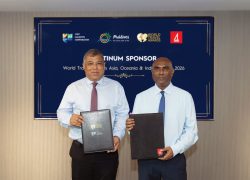
To capitalize on the Middle Eastern market, Maldives authorities and industry players have ramped up promotional campaigns and partnerships across the region. The MMPRC has identified the Arab world as a priority for 2024–2025 and is investing in on-the-ground outreach. In 2024, the Maldives had a prominent presence at key travel trade events like the Riyadh Travel Fair in Saudi Arabia and Arabian Travel Market (ATM) 2024 in Dubai. At Riyadh Travel Fair in May, a Maldives delegation of 17 companies showcased the “Sunny Side of Life” brand to thousands of Saudi and GCC travel trade professionals. The Maldives’ booth highlighted its luxury travel, family holidays, adventure, and cultural experiences, directly appealing to Middle Eastern consumer interests. Likewise, ATM 2024 in Dubai – the Middle East’s biggest travel expo – provided a platform for Maldives to strengthen connections with regional tour operators, airlines, and media. Maldives’ participation in these fairs is part of a broader strategy: roadshows, joint campaigns, and digital marketing focused on the Middle East.
In fact, the Maldives Marketing & PR Corporation announced a dedicated Middle East roadshow series for 2025. This initiative will bring Maldivian tourism officials and resort partners to multiple GCC countries for B2B networking and media events. “Next year, you will see us holding roadshows and marketing activities focused on the Middle East,” says MMPRC’s Managing Director, noting recent high-level meetings with officials from Saudi Arabia, Qatar, the UAE, and even Gulf Air in Bahrain. The planned roadshows will cover all major Middle Eastern markets, reflecting advice and support from regional partners. These efforts aim to build awareness and drive-up visitor numbers by forging stronger ties with travel agencies, luxury tour operators, and airlines that serve affluent Middle Eastern travelers. Already in late 2024, MMPRC has run joint marketing campaigns and webinars with Middle Eastern tour operators, and hosted familiarization trips to the Maldives for Arab travel journalists and influencers. Such collaborations are geared to keep the Maldives top-of-mind as a premier holiday destination for GCC nationals and expatriates alike.
Private sector stakeholders are also contributing to promotion. Many high-end Maldivian resorts have their own representation offices or partnerships in the Middle East. They participate in wedding expos, luxury travel fairs, and even sponsor events (like sporting tournaments or fashion shows) in cities like Dubai, Doha, and Riyadh to reach HNWIs (high-net-worth individuals). Airlines, too, join hands in marketing – for example, Emirates and Qatar Airways frequently feature Maldives getaways in their holiday packages, and Saudia has run special fare sales to Malé to entice Saudi travelers.
A Premier Destination for Middle Eastern Travelers
Backed by solid growth and strategic initiatives, the Maldives is reinforcing its allure as a top getaway for Middle Eastern tourists. The latest data shows a positive trajectory – increasing arrivals, stronger air links, and targeted investments – all aligning with the preferences of travelers from the Middle East. Whether it’s a honeymoon in a private overwater villa, a family adventure amid coral reefs, or a wellness retreat on a sustainable resort, the Maldives offers an unrivaled blend of luxury, culture, and natural splendor. Government and private sector efforts in 2024 and early 2025 have been particularly focused on this region, from improving halal-friendly services to marketing the Maldives as a safe and exclusive haven for Gulf travelers. The Maldives’ message to the Middle East is clear and compelling: an idyllic “Sunny Side of Life” awaits, where affluent visitors can enjoy both indulgence and enrichment. With new resorts coming online and enhanced marketing campaigns in full swing, the Maldives is poised to welcome even more guests from Saudi Arabia, the UAE, Qatar, Kuwait, Egypt and beyond in the year ahead.
 advertisment



 advertisment