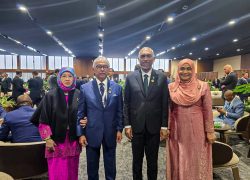

President Dr Mohamed Muizzu has called on the international community to ensure that global climate action does not deepen the debt burdens of Small Island Developing States (SIDS) or restrict their development ambitions, stressing the urgent need for predictable, accessible and grant-based climate financing.
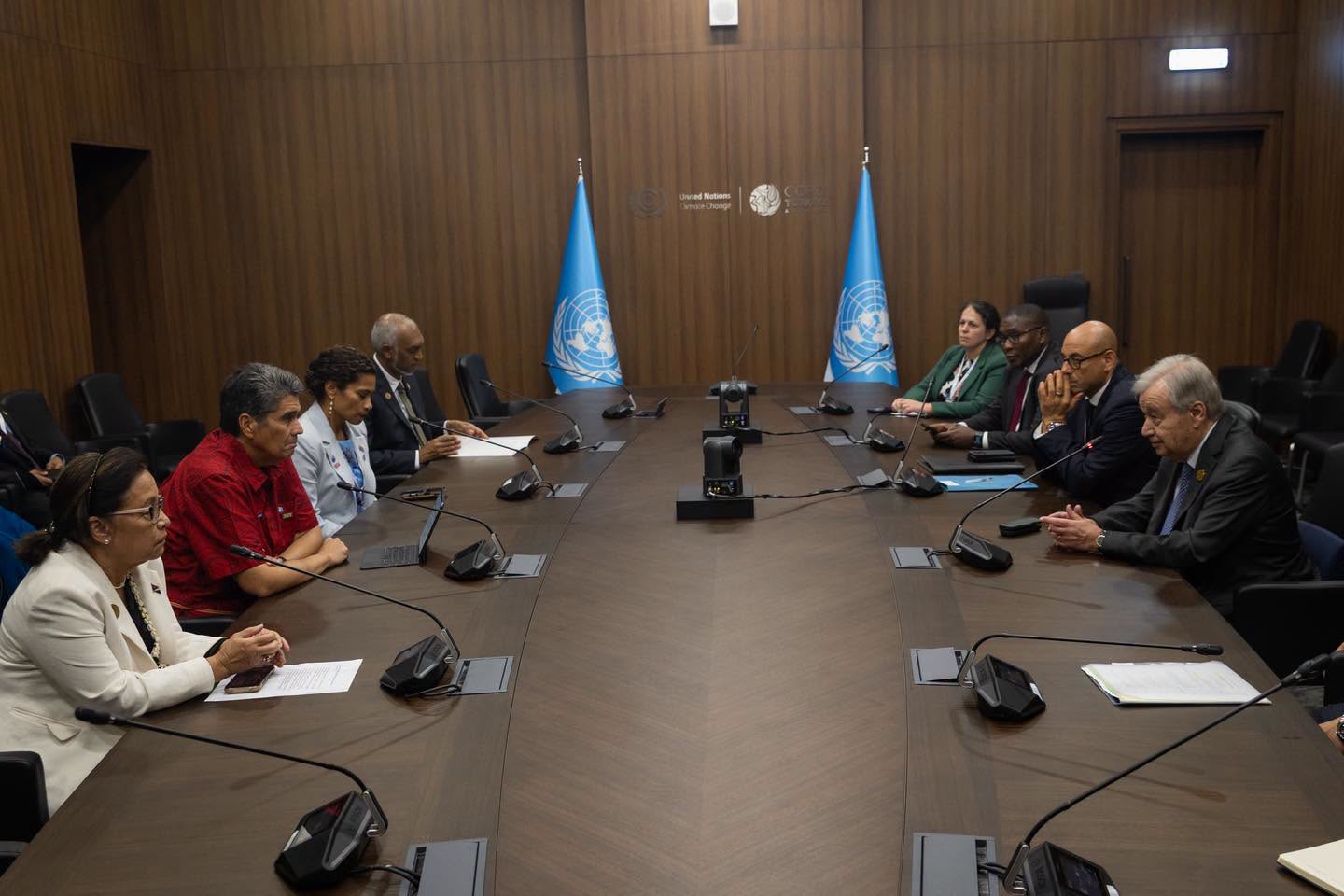
Speaking at a meeting of Alliance of Small Island States (AOSIS) leaders with United Nations Secretary-General António Guterres on the sidelines of the 31st Conference of the Parties (COP31) in Antalya, Türkiye, President Muizzu highlighted the particular challenges faced by vulnerable island nations as they work to strengthen their economies while responding to the growing impacts of climate change.
The President said the Maldives has set an ambitious national objective of achieving developed country status by 2040, reflecting the Government’s wider commitment to economic transformation, stronger infrastructure and improved living standards. However, he cautioned that climate change remains one of the most serious obstacles to achieving this vision and said international climate cooperation must now progress beyond commitments towards practical implementation.
President Muizzu emphasised that climate finance must be adequate, accessible, predictable and primarily grant-based, particularly for countries that have contributed minimally to global emissions but continue to face some of the most severe consequences. He also called for increased adaptation financing and the urgent replenishment of the Loss and Damage Fund, particularly in view of the potential risks associated with a Super El Niño.
He stressed that vulnerable nations should not be compelled to rely on high-interest borrowing to finance climate resilience and recovery, warning that such arrangements can increase public debt, reduce fiscal space and divert resources away from essential national development priorities. Climate action, he said, must support development rather than place additional financial pressure on countries already facing structural vulnerabilities.
Addressing broader financial reform, President Muizzu urged international financial institutions and credit rating agencies to recognise the long-term economic value of investments in climate resilience. He noted that stronger recognition of resilience investments could help vulnerable countries access more appropriate financing while safeguarding their long-term economic stability.
The President also welcomed COP31 initiatives focusing on global electrification, waste management, the circular economy and the development of climate-resilient cities. He stressed, however, that the success of such initiatives will depend on adequate financing, effective technology transfer and practical implementation support for developing and vulnerable countries.
President Muizzu reaffirmed that Small Island Developing States are not seeking charity or sympathy, but climate justice and a fair international system that recognises their circumstances and supports sustainable development. He said the true measure of multilateral cooperation lies not in the number of commitments announced, but in the tangible results delivered to vulnerable communities.
Concluding his remarks, President Muizzu expressed appreciation to UN Secretary-General António Guterres for his longstanding commitment to supporting Small Island Developing States throughout his tenure and extended his best wishes as he approaches the conclusion of his term.
 advertisment




 advertisment