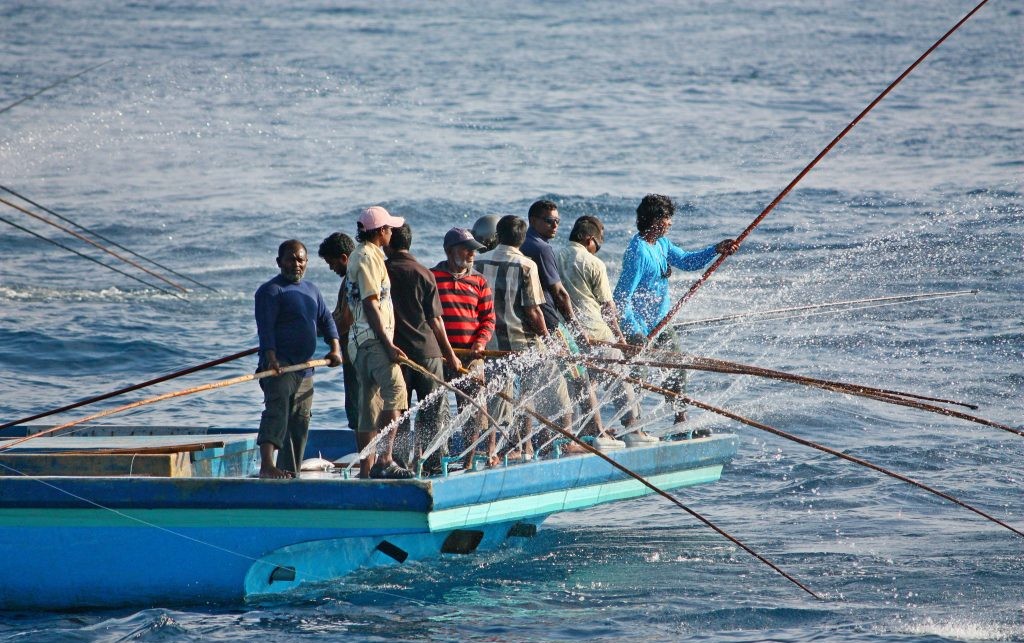

Maldives’ fisheries sector recorded a decline in overall export volumes during the first eight months of the year, while encouraging growth in higher-value processed fish exports highlighted the expanding potential of value-added production as the Government continues efforts to modernise one of the country’s most important economic industries.
According to the latest Monthly Statistics Report published by the Maldives Monetary Authority (MMA), total fish exports reached 23,554 metric tonnes between January and August. The figures show a significant reduction compared with the corresponding period of the previous year, largely reflecting lower shipments of chilled and frozen tuna, which traditionally account for the largest share of Maldivian marine exports.
Chilled and frozen tuna exports amounted to 18,237 metric tonnes during the eight-month period, compared with 51,649 metric tonnes during the same period last year, representing a decline of approximately 65 per cent. Skipjack tuna remained the dominant product within the category, accounting for 14,404 metric tonnes of exports.
Canned fish exports also recorded a moderate decline, falling from 4,081 metric tonnes during the first eight months of the previous year to 3,430 metric tonnes this year. The figures reflect changing production conditions and market dynamics affecting the fisheries industry, which remains closely connected to international seafood demand, global prices, fishing activity and domestic processing capacity.
A more encouraging development was recorded in processed fish exports, which increased by approximately 12 per cent. Export volumes rose from 1,118 metric tonnes during the comparable period last year to 1,254 metric tonnes this year. Although processed products currently represent a smaller proportion of total export volume, their growth offers an important opportunity for the Maldives to generate greater economic value from its marine resources.
The performance of value-added products is particularly significant as the Maldives works to expand domestic processing and reduce its dependence on exporting fish primarily as a raw or minimally processed commodity. Increasing processing within the country can support stronger export earnings, create additional employment opportunities, improve returns to the fisheries industry and enable Maldivian seafood products to reach a wider range of premium international markets.
Fisheries has historically remained one of the pillars of the Maldivian economy alongside tourism and continues to play an important role in supporting island communities, employment, food security and foreign exchange earnings. Maldivian tuna is also closely associated with the country’s traditional pole-and-line fishing industry, giving the sector a distinctive position in international seafood markets.
The Government has continued to prioritise fisheries development as part of its broader economic diversification agenda, with emphasis being placed on strengthening infrastructure, increasing processing capacity and addressing operational constraints affecting fishermen and exporters.
Authorities are pursuing infrastructure programmes aimed at improving cold-storage capacity, processing facilities and the wider fisheries supply chain. Key upgrades are targeted for implementation within the current administration’s first three years, with the objective of establishing greater capacity to process and preserve fish domestically while strengthening the resilience and competitiveness of the industry.
As these investments progress, greater domestic processing capacity could help the Maldives convert a larger share of its sustainably harvested marine resources into higher-value export products. The growth recorded in processed fish exports provides a positive indication of this potential and reinforces the importance of continued investment in modern infrastructure, value addition and international market development.
While overall export volumes during the first eight months reflect short-term challenges facing the sector, ongoing Government initiatives to strengthen fisheries infrastructure and expand value-added production are expected to provide a stronger foundation for the industry’s long-term growth and its contribution to the Maldivian economy.
 advertisment




 advertisment