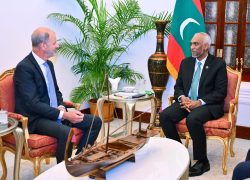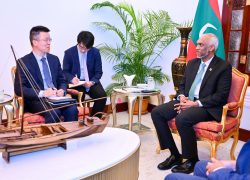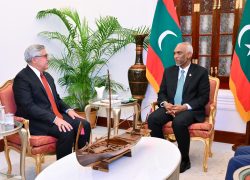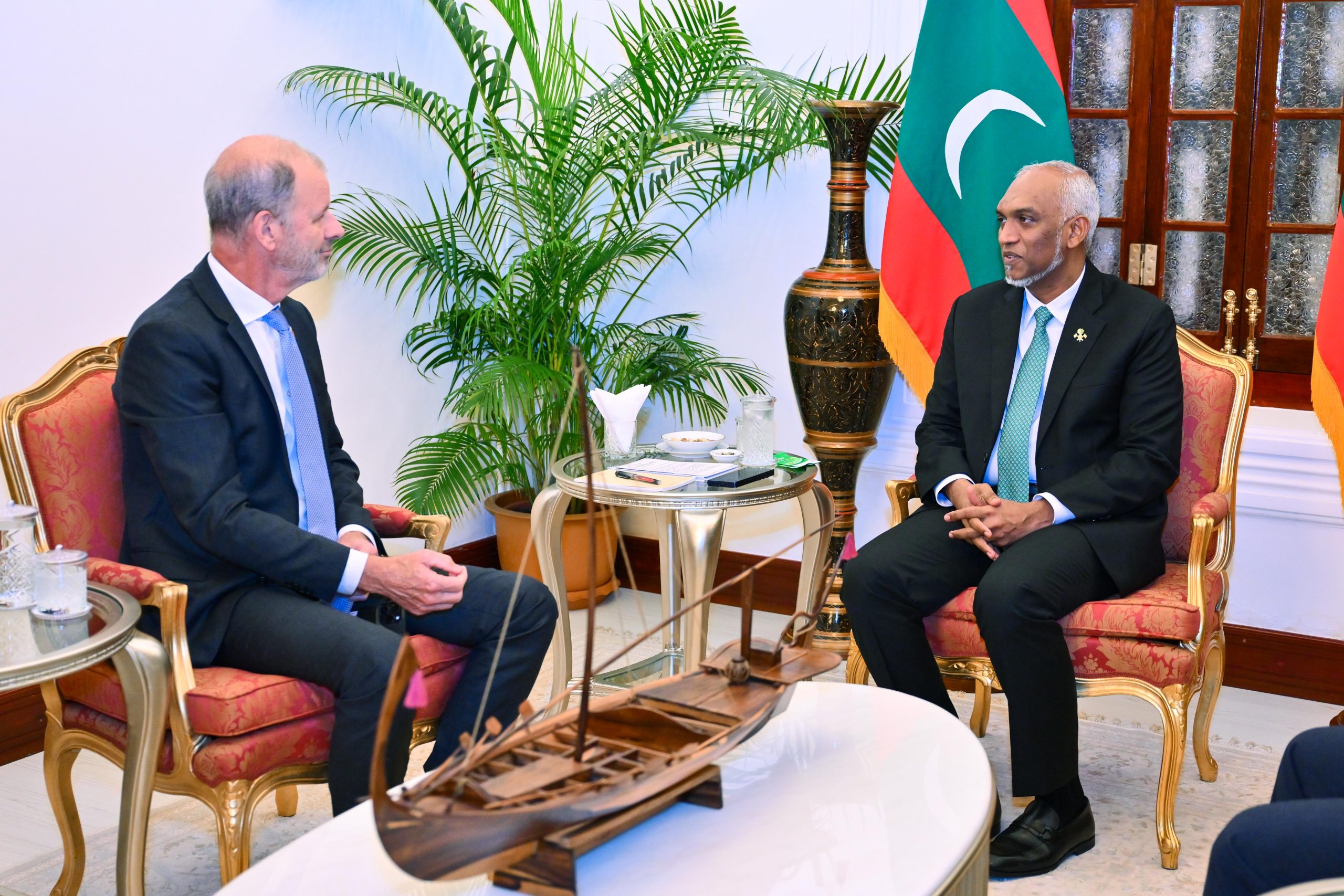

President Dr Mohamed Muizzu has discussed the Maldives’ key development priorities with World Bank Regional Vice President for South Asia Johannes Zutt, with renewable energy, digitalisation, healthcare and sustainable public expenditure featuring prominently in talks held at the Official Residence of the President, Mulee’aage.
Zutt paid a courtesy call on President Dr Muizzu this morning, during which the President expressed appreciation for the World Bank’s continued support to the Maldives and outlined areas where continued cooperation could contribute to the country’s long-term development objectives.
The discussions focused particularly on the Government’s ongoing efforts to accelerate digitalisation and strengthen the energy sector, both of which remain important components of the Maldives’ wider development agenda. President Dr Muizzu highlighted the value of sustained cooperation with international development partners in supporting initiatives that improve efficiency, strengthen public services and create a more resilient economic foundation for the country.
Renewable energy was given particular attention during the meeting, reflecting the Maldives’ efforts to reduce its dependence on imported fossil fuels. As an island nation that relies heavily on imported fuel for electricity generation and transportation, fluctuations in global energy prices can have a direct impact on national expenditure, foreign currency requirements and the wider economy.
The President highlighted the importance of expanding affordable, reliable and sustainable energy solutions that can gradually reduce fuel imports and lower the expenditure associated with conventional energy generation. Increasing renewable energy capacity also offers opportunities to strengthen energy security and reduce the Maldives’ exposure to external price movements and disruptions in international fuel markets.
The discussions explored the potential for further cooperation in advancing renewable energy initiatives and strengthening the infrastructure and systems required to support the country’s energy transition. Greater investment in renewable generation could contribute to reducing recurring fuel expenditure while supporting more sustainable economic development across the islands.
Regional Vice President Zutt reaffirmed the World Bank’s readiness to support the Maldives in areas where the institution can provide assistance. He also noted the significant potential of renewable energy in reducing the country’s dependence on imported fuel and limiting the economic vulnerabilities associated with that dependence.
The meeting also covered opportunities for continued cooperation in the health sector. President Dr Muizzu highlighted the importance of ensuring that development initiatives remain financially sustainable while continuing to respond effectively to the needs of the population. Discussions considered how development support could contribute to strengthening essential services while improving the efficiency of public expenditure.
Managing expenditure while continuing to deliver development was another important area addressed during the meeting. The President underscored the need to pursue development priorities in a manner that supports long-term fiscal sustainability, with emphasis on achieving meaningful outcomes while reducing unnecessary expenditure.
The Government has placed increasing emphasis on balancing investment in infrastructure and public services with measures intended to strengthen economic resilience and improve the efficiency of state expenditure. Cooperation with development partners, particularly in areas such as energy, digitalisation and healthcare, can provide technical expertise, financing opportunities and institutional support for projects aligned with these objectives.
President Dr Muizzu also reaffirmed the Government’s commitment to facilitating ongoing and future development projects and highlighted the important role of the private sector in complementing government-led development efforts. Greater private-sector participation can support investment, innovation and service delivery while expanding opportunities for economic activity across different sectors.
The discussions reflected the continued engagement between the Maldives and the World Bank on the country’s development priorities, with both sides identifying opportunities for further cooperation in sectors that can contribute to economic resilience, greater efficiency and sustainable growth.
With the Maldives seeking to reduce its exposure to imported energy costs while advancing digital transformation and strengthening essential public services, continued cooperation with international financial institutions is expected to remain an important component of the country’s development framework. The Government’s focus on renewable energy, expenditure efficiency, private-sector participation and sustainable investment forms part of its broader effort to strengthen the foundations for the Maldives’ long-term economic and social development.
 advertisment



 advertisment