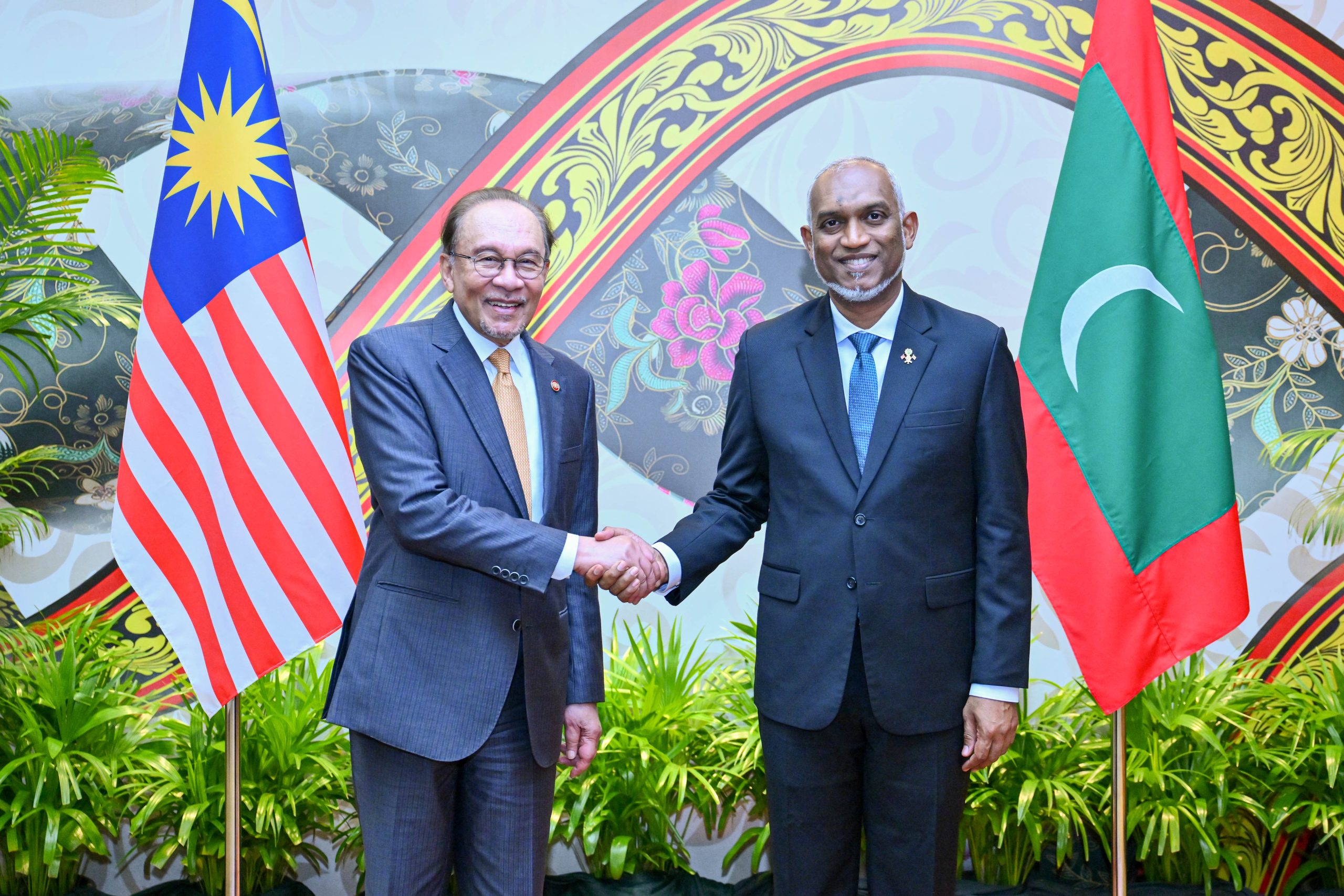

The Maldives and Malaysia have strengthened their bilateral economic and strategic partnership following the conclusion of Malaysian Prime Minister Anwar Ibrahim’s two-day State Visit, with both countries advancing cooperation across finance, trade, investment, energy, defence, Islamic affairs, education, healthcare, tourism and emerging technology sectors.
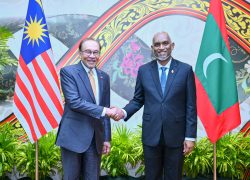
Prime Minister Anwar concluded his visit to the Maldives on Tuesday after a programme of high-level engagements held from 14 to 15 September 2026. The visit was his first to the Maldives since assuming office as Prime Minister of Malaysia in November 2022 and followed the official visit undertaken by President Dr Mohamed Muizzu to Malaysia in April 2025.
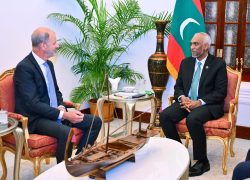
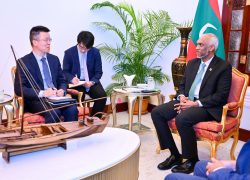
During the visit, President Muizzu and Prime Minister Anwar held a private meeting at the President’s Office before leading official talks between delegations from the two countries. The discussions reflected the expanding scope of Maldives–Malaysia relations, covering trade and investment, financial cooperation, defence, Islamic affairs, healthcare, tourism, education, natural resources and issues affecting Maldivians residing in Malaysia.
Among the most significant economic developments announced during the visit was Malaysia’s agreement in principle to support a proposed USD 100 million financial facility requested by the Maldives. The proposed arrangement could further strengthen financial cooperation between the two countries and support the Maldives as the government continues to pursue economic development, investment and fiscal sustainability.
The President’s Office described the proposed arrangement as a currency swap facility to be implemented through Bank Negara Malaysia and the Maldives Monetary Authority. Prime Minister Anwar later told Malaysian journalists that the Maldives had requested a form of concessional financing that would be channelled through the two monetary authorities.
The detailed structure of the proposed USD 100 million facility has not yet been finalised. Prime Minister Anwar said the relevant authorities would examine the mechanism, terms and applicable government guarantees before implementation. The announcement therefore represents an agreement in principle, with further technical discussions required before a financing arrangement is formally concluded or funds are made available.
Prime Minister Anwar also said he had contacted the Governor of Bank Negara Malaysia and requested that work relating to the proposed facility be accelerated, demonstrating the importance attached by both governments to advancing the financial cooperation under discussion.
Energy and natural resources also featured prominently during the bilateral talks, with President Muizzu welcoming potential cooperation with PETRONAS, Malaysia’s state-owned energy company, in exploring opportunities relating to minerals and natural resources in the Maldives.
Prime Minister Anwar said the Maldivian side had proposed that PETRONAS consider examining the possibility of oil exploration and indicated that he would discuss the proposal with the company. The proposal remains at an exploratory stage, with PETRONAS yet to announce any programme, survey, investment commitment or exploration timetable.
No oil exploration agreement was signed during the State Visit, and no specific exploration areas or financial commitments were announced. Nevertheless, the discussions have opened an additional area of potential economic cooperation between the Maldives and Malaysia as the Maldivian government explores opportunities to diversify the economy and develop new sectors.
Trade was another major focus of the visit, with the two governments agreeing to begin negotiations towards a Preferential Trade Agreement. Such an agreement could provide reduced tariffs or other preferential trading arrangements for selected products and help create stronger commercial opportunities for businesses in both countries.
Malaysian Investment, Trade and Industry Minister Johari Abdul Ghani and the relevant Maldivian authorities are expected to examine the products and sectors that could potentially be covered by the proposed trade arrangement.
Prime Minister Anwar said Malaysia is the Maldives’ second-largest trading partner within ASEAN. Malaysian exports to the Maldives exceed USD 184.1 million, while imports from the Maldives amount to approximately USD 1.3 million, highlighting considerable potential to further expand and diversify bilateral trade.
The Maldives also invited Malaysian investors to explore opportunities across several priority sectors, including renewable energy, digital infrastructure, construction and Islamic finance. Discussions additionally covered opportunities for greater cooperation in tourism, the halal industry, technology, artificial intelligence, cybersecurity and the blue economy.
The broad investment discussions reflect the Maldives’ efforts to attract international capital and expertise into sectors that can contribute to economic diversification, infrastructure development, digital transformation and sustainable growth.
Two Memoranda of Understanding covering defence cooperation and Islamic affairs were also exchanged during the State Visit. Defence Minister Hassan Rasheed exchanged the defence cooperation agreement with Malaysian Investment, Trade and Industry Minister Johari Abdul Ghani, while Minister of Islamic Affairs and Endowments Dr Mohamed Shaheem Ali Saeed exchanged the Islamic affairs agreement on behalf of the Government of Maldives.
According to information released in connection with the Malaysian delegation’s visit, the defence cooperation framework is expected to support collaboration in areas including maritime security, military and naval training and the defence industry. Prime Minister Anwar also said the Maldives could consider Malaysian-manufactured small vessels as part of future maritime cooperation.
The Memorandum of Understanding on Islamic affairs provides a framework for strengthening cooperation in Islamic education, religious administration, halal certification and development, waqf, Hajj, training and human resource development.
The Islamic affairs partnership is expected to facilitate greater institutional engagement, professional exchanges and knowledge sharing between the Maldives and Malaysia, two Muslim-majority countries with long-standing social, educational and cultural links.
The full texts of the two agreements have not yet been publicly released, and detailed implementation arrangements, financial commitments and timelines associated with the agreements have therefore not been announced.
Malaysia also agreed to include the Maldives in its Graduate Pass Scheme, creating greater opportunities for eligible Maldivian graduates to remain in Malaysia following the completion of their studies.
Education remains an important component of relations between the two countries, with more than 2,000 Maldivian students currently studying in Malaysia, according to Prime Minister Anwar. The two governments discussed expanding scholarship opportunities and addressing visa and administrative challenges faced by Maldivian students and their families.
Special attention was given to difficulties experienced by parents seeking to accompany children studying or receiving medical treatment in Malaysia, including children with disabilities or special needs. Prime Minister Anwar said the Malaysian government would review the relevant administrative arrangements.
Healthcare cooperation was also discussed, including access to medical services for a small number of Maldivian patients and opportunities for broader collaboration in healthcare and human development.
The large Maldivian community travelling to Malaysia for education, healthcare, business and tourism has contributed to strong people-to-people connections between the two countries. Improving administrative arrangements for students, patients and accompanying family members is therefore expected to remain an important area of bilateral engagement.
To ensure systematic follow-up on the agreements and proposals discussed during the State Visit, Prime Minister Anwar proposed holding the first Malaysia–Maldives Joint Commission meeting in Kuala Lumpur before the end of 2026.
The proposed Joint Commission would bring together the foreign ministries and relevant government agencies from both countries to review existing cooperation, resolve outstanding matters and advance new initiatives.
Key matters expected to receive further attention include the proposed USD 100 million financial facility, negotiations towards a Preferential Trade Agreement, Malaysian investment opportunities, education and scholarship cooperation, healthcare arrangements and other areas identified during the leaders’ discussions.
Malaysia also agreed to consider allocating land in Putrajaya for the Chancery of the Maldivian High Commission on a reciprocal basis, potentially strengthening the Maldives’ diplomatic presence in Malaysia and supporting the continued expansion of bilateral relations.
President Muizzu and Prime Minister Anwar also discussed climate finance and coordination ahead of COP31, reflecting the importance of international climate financing for vulnerable island nations such as the Maldives.
The leaders discussed continued cooperation through multilateral organisations including the United Nations, the Organisation of Islamic Cooperation and the Commonwealth, while both governments reaffirmed their respective positions in support of Palestine.
The State Visit concluded following a State Luncheon hosted by President Dr Mohamed Muizzu and First Lady Sajidha Mohamed in honour of the Malaysian Prime Minister and his delegation.
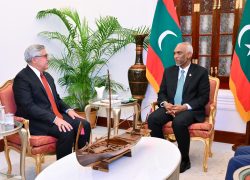
During his visit, Prime Minister Anwar also received separate courtesy calls from Vice President Hussain Mohamed Latheef, Speaker of the People’s Majlis Abdul Raheem Abdulla and Minister of Foreign Affairs Iruthisham Adam.
The visit builds on the renewed momentum in Maldives–Malaysia relations following President Muizzu’s visit to Malaysia in 2025 and expands the bilateral agenda beyond traditional diplomatic ties into financial cooperation, investment, trade, technology, education, healthcare, Islamic affairs, maritime security and potential natural resource development.
With negotiations and technical discussions now expected to continue on several major initiatives, including the USD 100 million facility and the proposed Preferential Trade Agreement, the State Visit has established a broader framework for economic and institutional engagement between the two countries and created additional opportunities for businesses, investors, students and government institutions in both the Maldives and Malaysia.
 advertisment



 advertisment