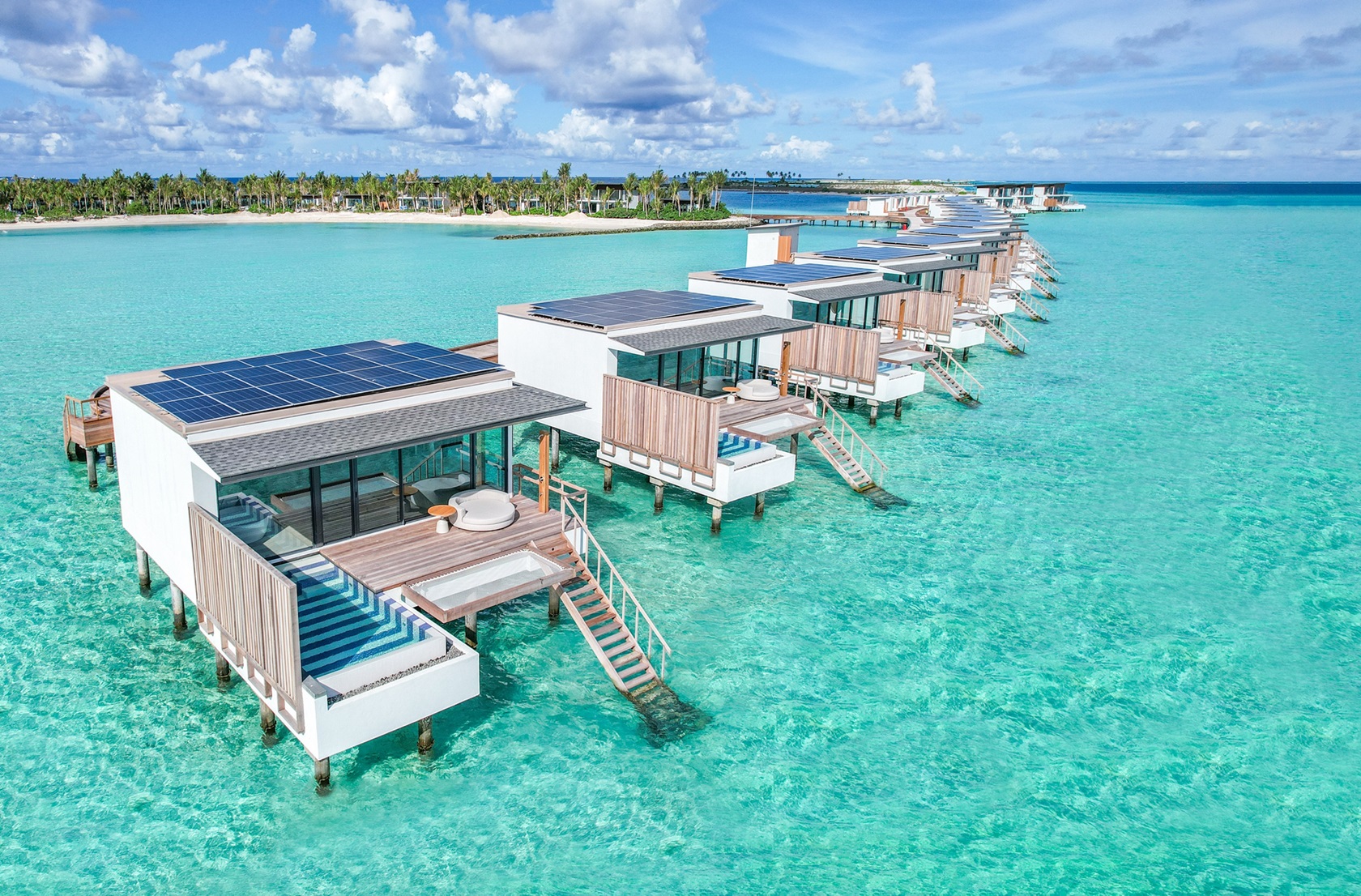

Maldives has doubled its renewable energy generation capacity over the past two years, underscoring the island nation’s commitment to energy independence and environmental sustainability while reinforcing its position as a leading luxury tourism destination. Minister of Tourism and Environment Thoriq Ibrahim announced during a press briefing that renewable output has risen from 53 megawatts (MW) in 2023 to 110 MW today, representing a 100 percent increase in capacity and a major step toward a cleaner, more resilient energy system that directly benefits resort operations and visitor experiences across the archipelago.
This rapid expansion forms a core pillar of the government’s strategy to reduce its heavy dependence on imported fossil fuels, which currently account for 92 percent of the country’s electricity, with just eight percent generated from solar power. Minister Thoriq highlighted the substantial financial burden this creates, noting that Maldives spends approximately USD 577.2 million each year on fuel imports, in addition to USD 149.2 million allocated for electricity subsidies. By strengthening renewable energy infrastructure, the government aims to stabilize power costs, enhance energy security for resorts and local communities, and create a more sustainable foundation for the tourism industry, which relies on uninterrupted, high-quality services across hundreds of island properties.
The government has set an ambitious target of sourcing 33 percent of national electricity consumption from renewable sources by 2028. To reach this goal, a broad portfolio of projects is underway across the country, many of which directly support resort islands and guesthouse communities. According to Minister Thoriq, 102 islands have already been upgraded with modern renewable energy systems, including a 28 MW solar photovoltaic (PV) network and 10 MW of battery storage. These installations are already saving an estimated 13 million liters of diesel annually and reducing costs by around USD 12.3 million per year. For resorts, these developments translate into more reliable and cleaner power supply, reduced fuel transport costs, and enhanced environmental credentials that are increasingly important to eco-conscious travellers.
The transition is now entering an intensified second phase, with renewable energy systems being installed across an additional 101 islands. This stage includes a planned 164 MW of new solar PV capacity and 158 MW of battery storage, which together are expected to save about 76 million liters of diesel and USD 71.3 million annually once fully operational. As more island communities and resort hubs shift to solar and battery-backed power, the country’s tourism sector stands to benefit from lower operational overheads, reduced vulnerability to global fuel price fluctuations, and a stronger sustainability profile in the eyes of international markets and partners.
A standout element in this transformation is the ‘My Solar’ programme, which allows participants to finance new solar systems through the savings on their electricity bills, potentially cutting costs by up to 90 percent. This model offers strong potential for integration with resort and hotel infrastructure, enabling properties to scale up rooftop solar arrays, optimize energy management, and reinvest savings into guest services, staff facilities, wellness centres and upgraded amenities. Beyond solar, Maldives is also advancing a range of other renewable technologies, including a 100 kW wind energy system, a solar-powered ferry, community ice plants driven by solar energy, and a pioneering 25 kW tidal electricity generation project. Together, these initiatives showcase a comprehensive and innovative approach to sustainable energy that aligns closely with the expectations of global travellers seeking environmentally responsible destinations.
Alongside progress in the energy sector, Minister Thoriq revealed that tourism revenue for the year is poised to exceed initial government projections, adding further momentum to the country’s growth story. Earlier estimates anticipated that 2.24 million tourist arrivals would generate USD 5.45 billion in revenue by year’s end. However, based on the current pace of arrivals, the government now expects tourism revenue to reach around USD 5.55 billion, representing a robust 16 percent year-on-year increase. This performance reinforces Maldives’ reputation as a premier high-end destination, underpinned by strong demand from key source markets and the appeal of its exclusive island resorts, overwater villas and experiential offerings.
The upward trend is supported by solid arrival figures. As of Monday, 2.17 million tourists had already visited Maldives, a 10 percent increase compared with the 1.97 million arrivals recorded during the same period last year. This growth builds on the strong performance of 2024, which closed with a record 2.05 million visitors contributing USD 4.79 billion to the economy. The consistent year-on-year expansion points to sustained confidence in Maldives among travellers seeking privacy, natural beauty and personalized service, and highlights the success of the sector’s efforts to diversify markets, enhance connectivity, and promote new experiences.
To support this expansion and further develop the sector, the government has brought 6,665 new beds online over the past two years and has introduced policies to extend tourism to previously undeveloped regions of the archipelago. These measures create new opportunities for investment in island resorts, eco-resorts and community-based guesthouses, helping to distribute economic benefits more evenly and showcase a wider diversity of atolls and marine environments. For international visitors, this translates into a broader range of choices from ultra-luxury private island hideaways to boutique retreats integrated with local communities all increasingly powered by cleaner, renewable energy.
Looking ahead, the government’s long-term ambition remains to increase annual tourism revenue to USD 6 billion. By coupling strong tourism growth with a decisive shift toward renewable energy, Maldives is positioning its resort industry on a more sustainable and competitive footing. Cleaner power, reduced carbon emissions and lower operating costs are expected to reinforce the country’s appeal in the global hospitality market, ensuring that island resorts can continue to deliver world-class experiences while protecting the delicate marine and island ecosystems that define the Maldivian brand.
 advertisment



 advertisment