
The Ministry of Tourism and Environment has announced detailed requirements and incentives for the development and operation of tourist resorts in 13 lagoons across the three northernmost atolls of the Maldives, underscoring the government’s strategy to channel new investment into regions with fewer existing resorts. The projects, focused on Haa Alifu, Haa Dhaalu and Shaviyani Atolls, are designed to unlock large, contiguous footprints suitable for modern, integrated resorts that can support significant bed capacity and a wide range of guest facilities. At the same time, the Ministry has invited bids for tourism projects in Laamu Atoll and renewed its call for developers interested in resorts operating under a halal tourism model, positioning these offerings as part of a more diversified resort portfolio.
According to the Ministry, 13 lagoons in the northern atolls will be dredged to facilitate resort construction in five designated areas. All but one of these lagoons will be developed across 200 hectares, giving investors space to design master-planned properties with distinct resort zones, multiple villa categories, family and adults-only areas, wellness complexes and marine recreation hubs. Each resort will be required to have a minimum capacity of 150 beds, supporting economies of scale in operations and enabling the introduction of sophisticated service concepts. The lagoons will be leased for 50 years, providing long-term security for capital-intensive projects, and construction must begin within 35 months from the date of land allocation, ensuring that development progresses within a defined investment horizon.
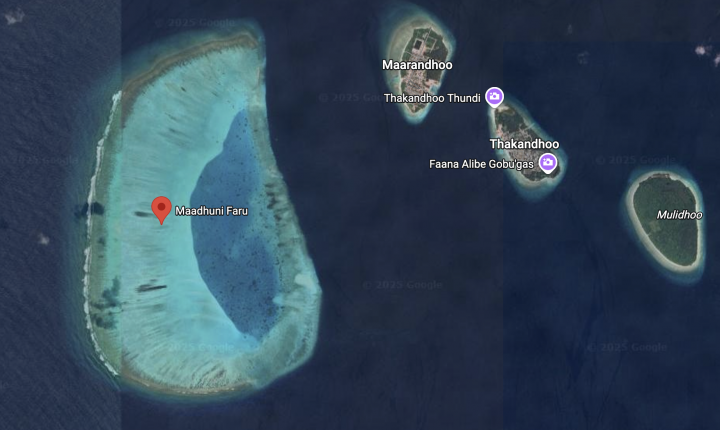
The tender covers a series of prime sites in Haa Alif, Haa Dhaalu and Shaviyani Atolls. In Haa Alif Atoll, the announced plots are HA. Maadhuni Faru 1 (200 hectares), HA. Maadhuni Faru 2 (200 hectares), HA. Maadhuni Faru 3 (200 hectares), HA. Kela Lagoon 1 (156.2 hectares) and HA. Kela Lagoon 2 (169.3 hectares).
In Haa Dhaalu Atoll, the locations are HDh. Makunudhoo Faru 1 (200 hectares), HDh. Makunudhoo Faru 2 (200 hectares), HDh. Maafaru Faru 1 (200 hectares), HDh. Maafaru Faru 2 (200 hectares) and HDh. Maafaru Faru 3 (200 hectares).
In Shaviyani Atoll, the sites comprise Sh. Gona Faru 1, Sh. Gona Faru 2 and Sh. Gona Faru 3, each measuring 200 hectares. These extensive plots give developers the flexibility to incorporate world-class resort features such as overwater and beachfront villas, extensive F&B offerings, spa and wellness villages, water sports centres and event spaces, while preserving generous green buffers and lagoon areas.
To improve project viability and support the substantial upfront costs associated with large-scale resort construction, the Ministry has confirmed that developers will be eligible for duty relief of up to 15 percent on capital investment related to the development of these resorts. This incentive is intended to reduce the cost of importing construction materials, equipment and resort fit-out items, thereby improving project returns. By coupling long leases with fiscal concessions, the government aims to attract both established international resort brands and regional investors seeking to expand their Maldivian footprints into emerging destinations.
Alongside the general resort opportunities, the Ministry has highlighted a dedicated pipeline of five sites earmarked for halal tourism development, signalling strong interest in capturing demand from markets that prioritise Sharia-compliant hospitality. The halal tourism sites include HA. Beenafushi (2.21 hectares) and Kandaalifinolhu (5.05 hectares) in Haa Alif Atoll, HDh. Makunudhoo Faru 1 (200 hectares) in Haa Dhaalu Atoll, Sh. Furifaru (4.34 hectares) in Shaviyani Atoll, and L. Fonagaadhoo (8.18 hectares) in Laamu Atoll. These properties will also be leased for 50 years, with construction required to begin within 36 months from the date of the lease. Land dredging will be undertaken as needed to support the development of fully fledged halal resorts, which are expected to feature alcohol-free environments, halal-certified dining, family-centric facilities and privacy-focused accommodation.
The government has also introduced targeted incentives to support investors in halal tourism projects. For islands leased through open bidding, developers may be allowed to spread acquisition fees and development costs over a period of five to six years, easing cash-flow pressures during the capital-intensive early phases of resort construction. Duty exemptions of up to 20 percent may be granted for halal tourism developments, alongside other benefits outlined by the Ministry. These enhanced concessions are designed to encourage the creation of specialised resorts that cater to high-value Muslim travellers seeking premium, faith-aligned experiences within a fully resort-based setting.
The Ministry underlined that these initiatives are specifically crafted to stimulate investment in underdeveloped regions of the country, while providing developers with improved financial conditions for large-scale tourism projects. Expanding resort capacity in the northern atolls is expected over time to generate new employment, drive infrastructure upgrades, diversify supply chains and support community-level economic activity linked to resort operations, including local sourcing and excursions. Projects in Laamu Atoll, including L. Fonagaadhoo under the halal model, add to the geographic spread of opportunities and open up additional scope for investors to position multi-resort portfolios across both northern and southern parts of the archipelago.
To guide prospective bidders, the Ministry has set out a clear tender schedule. Information sessions will be held virtually on 9 December and 6 January at 9 a.m., allowing interested parties to seek clarifications on technical, financial and environmental requirements. Bid documents will be issued by the Ministry of Tourism from 23 November to 2 February, and application forms will be available on the ministry’s website. The deadline for submission of bids is 3 February at 9 a.m., after which proposals will be evaluated in line with the ministry’s established procedures. With a combination of extensive resort footprints, long lease periods, structured timelines and targeted incentives, the new lagoon and halal tourism opportunities in Haa Alif, Haa Dhaalu, Shaviyani and Laamu Atolls represent a significant addition to the Maldives’ resort development pipeline and a strategic opening for investors focused on long-term participation in the country’s tourism sector.
 advertisment



 advertisment