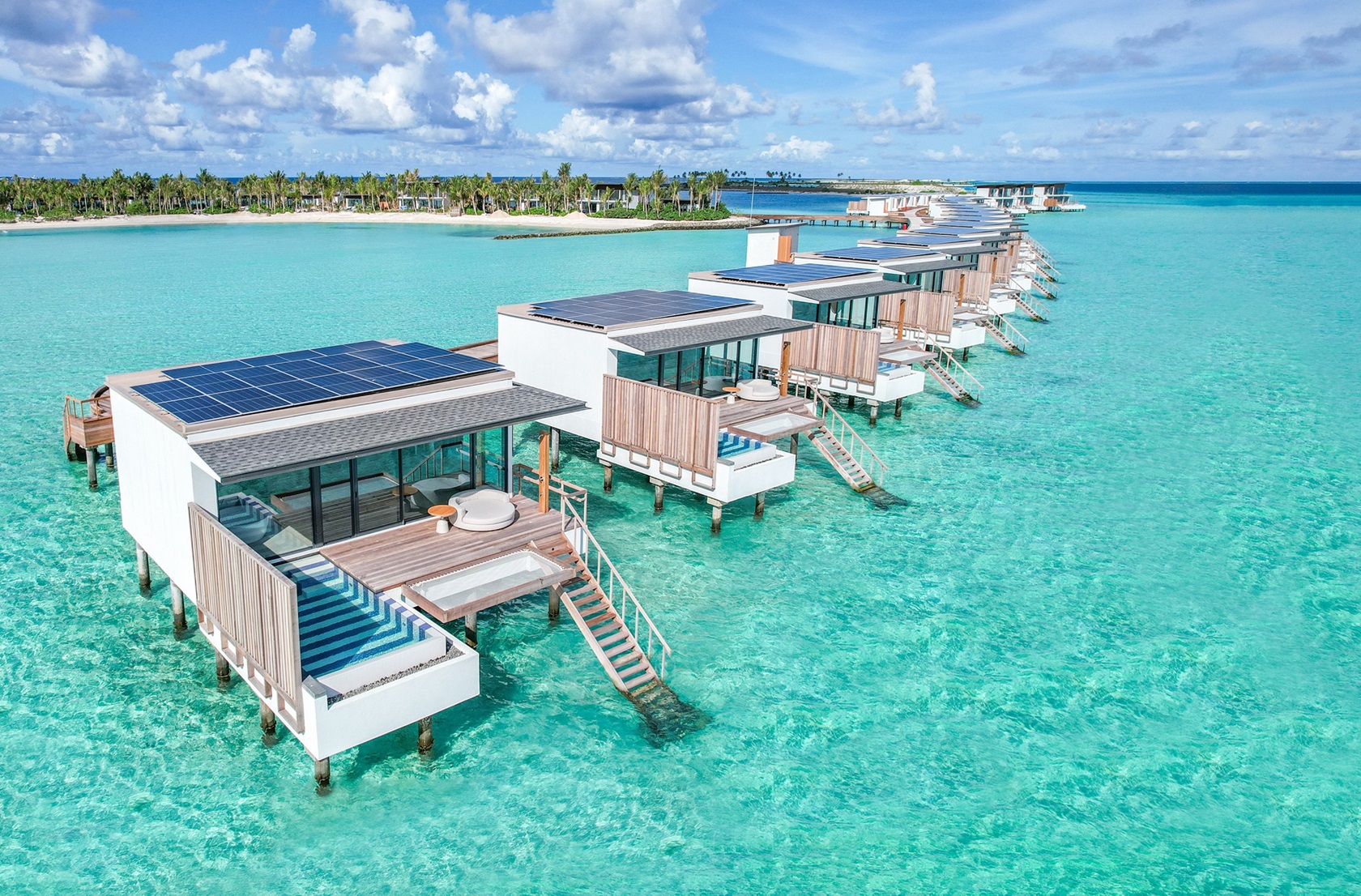

To reshape its investment and tourism landscape, the Government of the Maldives has introduced a legislative amendment to the Special Economic Zone (SEZ) Act that opens the door to multi-million-dollar investments focused on sustainability and integrated development. The amendment, tabled in Parliament by Baarah MP Ibrahim Shujau on behalf of the government, marks the first revision to the SEZ Act since its original enactment in 2014, and is designed to attract large-scale foreign direct investment while championing eco-friendly innovation across the country.
At the core of this initiative is the establishment of Sustainable Townships, self-contained, environmentally responsible communities centered around real estate and integrated tourism. These townships will be developed with comprehensive facilities including residential housing, healthcare, education, and essential public utilities. The government’s proposal defines Sustainable Townships as centrally managed, large-scale developments constructed with infrastructure designed to minimize environmental impact and reduce the nation’s overall carbon footprint.
To qualify for the new investment scheme, developers must commit a minimum of USD 500 million. Each project is required to feature either integrated tourism or major real estate developments, accompanied by internationally accredited institutions such as a hospitality training center or a healthcare facility. By setting these standards, the Maldives aims to attract responsible investment that not only meets commercial objectives but also contributes to national development goals.
The amendment includes robust environmental benchmarks: at least 60 percent of the energy used within each township must come from renewable sources, and developers must ensure complete self-sufficiency in energy generation and waste management. Furthermore, sustainable agricultural or co-agricultural initiatives must be incorporated into the townships to support local food production and reduce reliance on imports. Social infrastructure such as housing, schools, healthcare centers, and recreational spaces must also be built using eco-conscious materials and sustainable design practices.
Investors are expected to benefit from an attractive fiscal framework. A tiered income tax incentive offers a 5% rate for the first 10 years of operation, which increases to 10% for the subsequent decade. After this 20-year period, the tax rate will align with the standard provisions outlined in the national Income Tax Act. Additionally, import duty exemptions will be granted on all capital goods and materials brought in for development within the designated zones.
The proposed bill requires that detailed regulations be published in the Government Gazette within six months following its ratification. Once passed by Parliament and endorsed by the President, the legislation will take effect immediately, laying the legal foundation for the emergence of modern, sustainable investment hubs across the Maldives.
This legislative effort is part of the current administration’s proactive approach to long-term economic growth, environmental protection, and tourism diversification. By redefining the investment environment and aligning it with global sustainability trends, the Maldives continues to demonstrate its commitment to innovation and excellence, ensuring that its pristine islands remain a globally sought-after destination for both leisure and responsible investment.
 advertisment




 advertisment