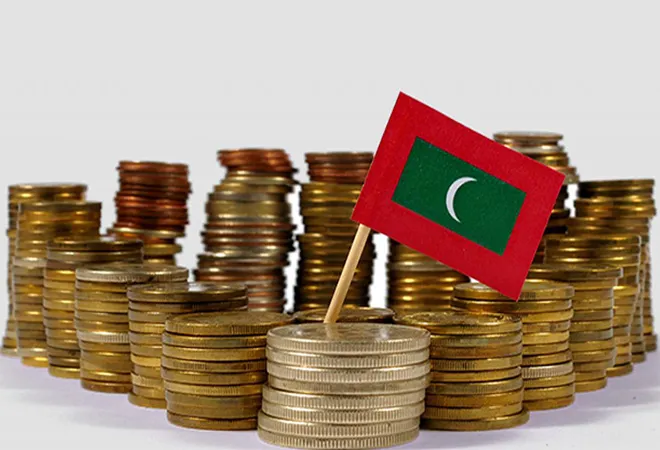

Steady growth in monetary aggregates and robust lending to key economic sectors signal a resilient Maldivian economy, according to the Maldives Monetary Authority’s (MMA) latest Economic Update for June 2025. Despite certain headwinds, the data underscores ongoing fiscal management efforts and effective monetary policy coordination under the current administration.
At the end of May 2025, broad money (M2) registered a notable annual growth of 10%, accelerating from 7% in April. This expansion reflects increased public confidence in the banking system, with higher holdings in local currency demand deposits as well as savings and time deposits in both local and foreign currency. The upturn in money supply was primarily fueled by a rise in domestic credit, supported by increased lending to both the government and private sector entities. Simultaneously, net foreign assets rose, as the accumulation of external assets outpaced the growth in external liabilities, an encouraging trend that contributes to external sector stability.
Meanwhile, credit to the private sector continued to expand, albeit at a slower pace. In May, private sector credit grew by 5% on an annual basis, easing from 7% growth in April. Despite the moderation, credit flows to vital sectors such as tourism, construction, real estate, and commerce remained firm. Particularly notable was the 25% year-on-year growth in personal loans, indicative of stronger consumer confidence and increasing household spending, with a surge in the use of credit cards and loans for consumer durables.
Gross international reserves reached US$815.8 million by the end of May 2025, reflecting a remarkable 66% year-on-year increase. Although reserves dipped slightly by 5% compared to the previous month, the overall trajectory highlights the government’s success in strengthening foreign currency buffers through external inflows and prudent reserve management. These reserves play a critical role in maintaining exchange rate stability and supporting external trade and tourism receipts—key pillars of the Maldivian economy.
Reserve money (M0), however, posted a 3% annual contraction in May, following a similar decline in April. The primary driver was a reduction in net foreign assets, which offset the gains in net domestic assets. This contraction was partly influenced by the US$400 million currency swap agreement with the Reserve Bank of India secured in late 2024. While this arrangement bolstered foreign reserve holdings, it concurrently increased foreign liabilities, contributing to the observed decline in reserve money. Nevertheless, such bilateral financial arrangements reinforce the country’s access to emergency liquidity, enhancing resilience against external shocks.
As of the end of the first quarter of 2025, total government debt stood at MVR 125.3 billion, equivalent to 104% of the nation’s GDP. While fiscal deficits persist, the government continues to implement fiscal consolidation measures aimed at improving long-term debt sustainability. The Ministry of Finance and MMA are closely tracking macro-financial developments to ensure that borrowing is channelled into productive public investment projects that stimulate growth and improve living standards.
The current economic performance reflects a deliberate policy strategy focused on economic diversification, financial sector stability, and investment-driven growth. By maintaining sound monetary expansion and ensuring credit accessibility to strategic sectors, the Maldives continues to create a conducive environment for tourism, infrastructure development, and consumer-driven economic activity.
As international visitors plan their travel, this macroeconomic backdrop provides assurance of a stable financial environment and a government committed to long-term prosperity. The Maldivian economy remains open, resilient, and increasingly well-positioned to support continued tourism-driven growth under the guidance of its proactive fiscal and monetary authorities.