
A new chapter in international cooperation between the Maldives and the Kingdom of Morocco is set to enhance religious education and leadership development in the Maldives. The Ministry of Islamic Affairs has confirmed that an official agreement will soon be signed with the Moroccan government to facilitate Arabic language training for Maldivian imams in Morocco.
This upcoming agreement follows a formal communication initiated by President Dr Mohamed Muizzu, who personally sent a letter to His Majesty the King of Morocco requesting opportunities to strengthen Islamic education and broaden learning avenues for religious scholars from the Maldives. In response, the Moroccan government has offered a specialized educational opportunity for Maldivian imams to study at an institute directly supervised by the King of Morocco.
According to Minister of Islamic Affairs, Dr Mohamed Shaheem Ali Saeed, the Moroccan government has formally notified the Maldivian government of its willingness to admit Maldivian imams into its esteemed Arabic language training program. The institute offers comprehensive support for international students, including full accommodation and monthly pocket money. The Ministry of Islamic Affairs has received the final draft of the agreement, which is expected to be signed in the near future.
The institute in Morocco is known for its structured Arabic language training designed specifically for imams and Khatheebs, and plays a central role in the Kingdom’s efforts to promote sound religious education rooted in traditional Islamic scholarship. The inclusion of Maldivian imams in this program is expected to significantly enhance their Arabic proficiency and religious competence, enabling them to deliver sermons, lead prayers, and interpret Islamic texts with greater clarity and confidence.
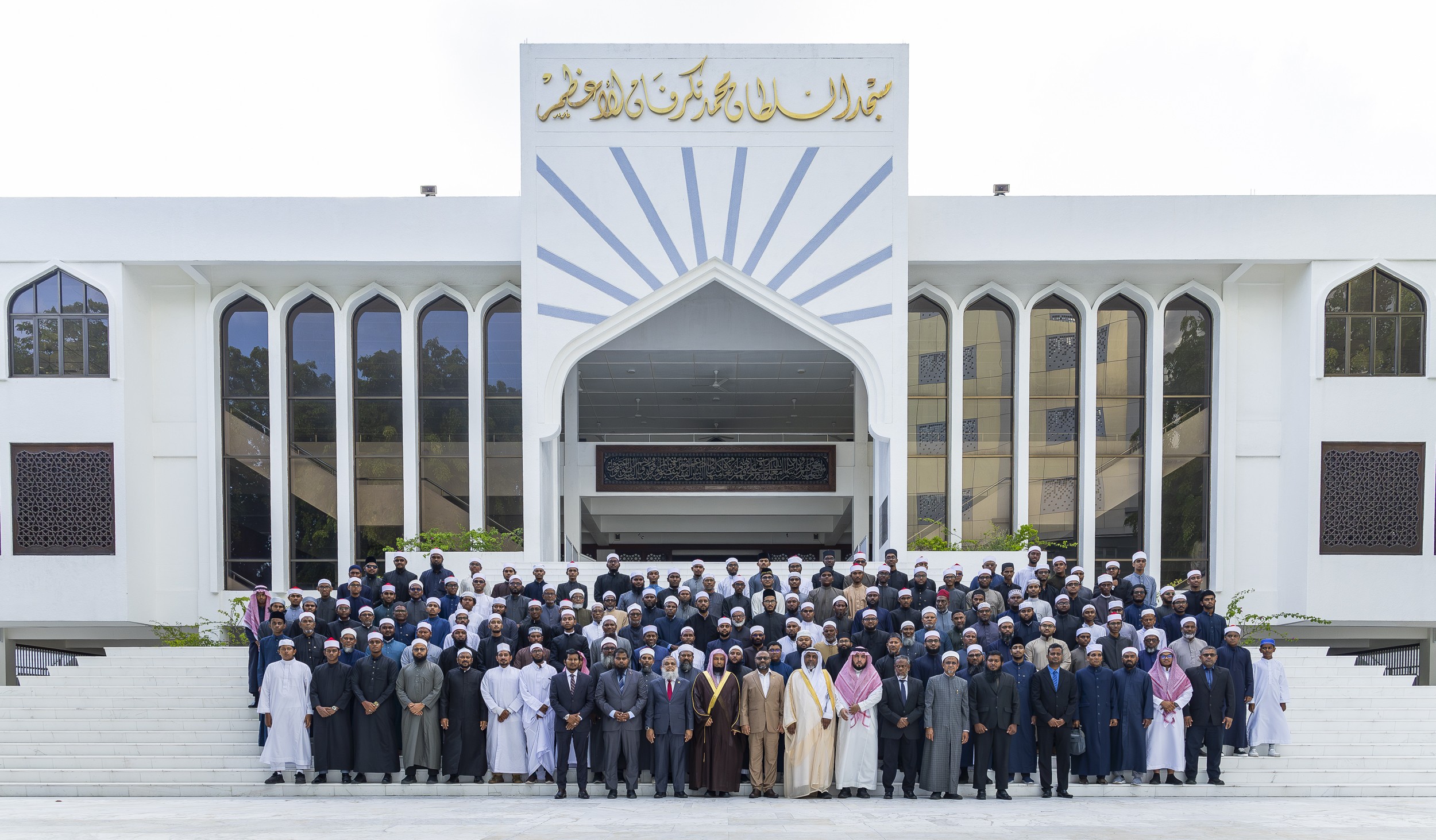
This initiative reflects the broader policy direction of the Government of Maldives, which has placed a strong emphasis on the development of Islamic scholars and the strengthening of religious institutions. The Ministry of Islamic Affairs has outlined imam training as a central priority, and over the past year alone, more than 800 imams have completed various training programs both domestically and internationally. In addition, the Maldives successfully hosted its first national seminar for imams last year, addressing themes such as the evolving role of imams in society, new educational opportunities, and professional challenges they face.
Furthering these efforts, the Ministry has also facilitated international training placements in several countries, building a network of global academic collaboration to benefit local religious leaders. The agreement with Morocco is expected to strengthen these ties and elevate the quality of religious service in the Maldives.
This strategic cooperation not only underscores the Maldives’ commitment to enhancing religious education but also reflects the country’s deepening ties with the Arab-Islamic world. As this partnership progresses, the Maldives will gain access to more structured, culturally rich educational experiences, ultimately supporting the national vision for a well-informed and capable religious leadership that aligns with both traditional values and contemporary challenges.
 advertisment




 advertisment