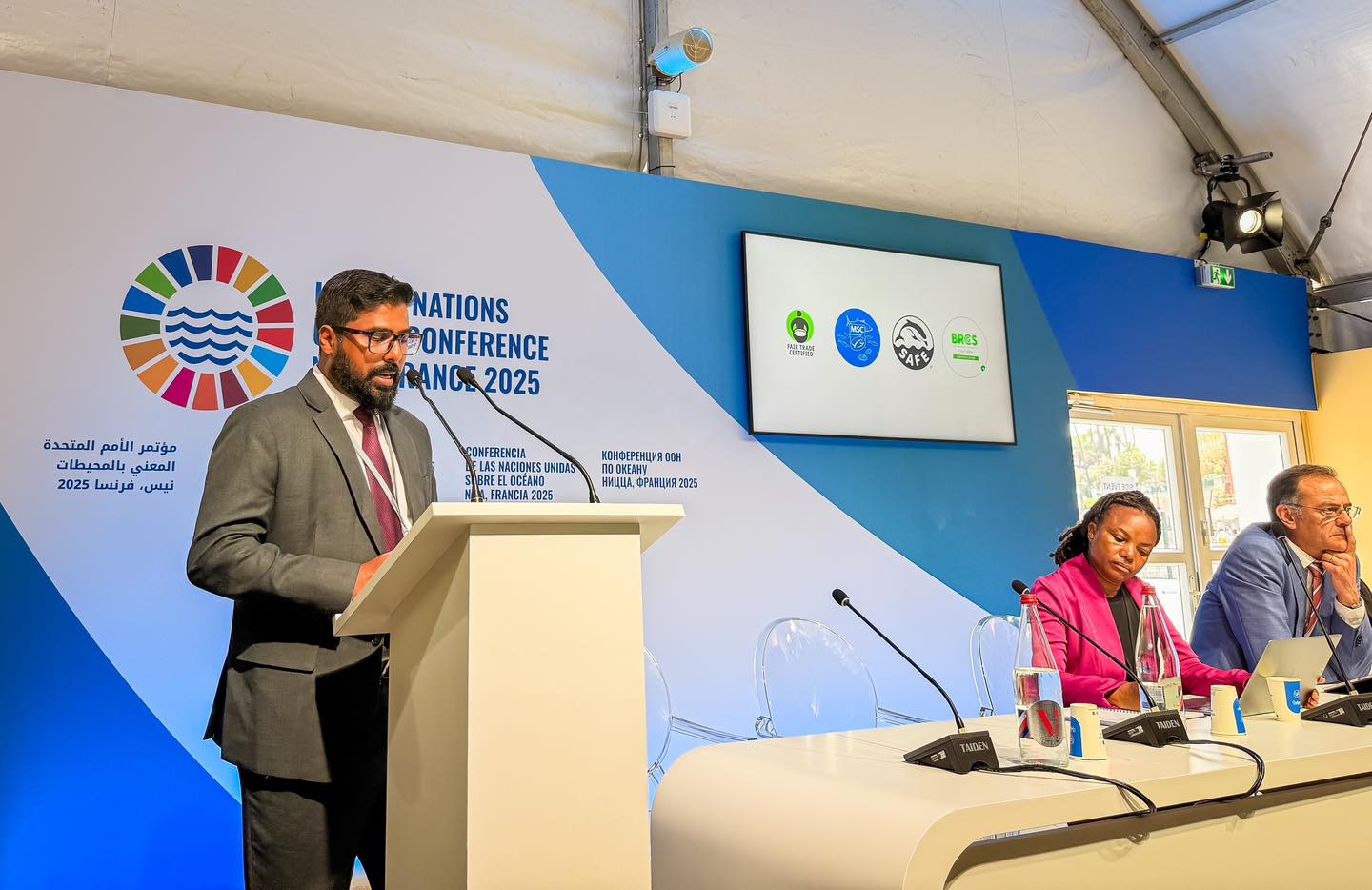

During the Third United Nations Ocean Conference (UNOC3) held in Nice, France, the Maldives reaffirmed its position as a global leader in sustainable fisheries by announcing major steps toward fully digitising its national fisheries data collection systems. Representing the Maldives at several high-level panels and side events, State Minister for Fisheries and Ocean Resources, Ms. Aminath Hussain Shareef, delivered powerful remarks highlighting how the country is combining tradition with technology to secure the future of its marine-based economy.
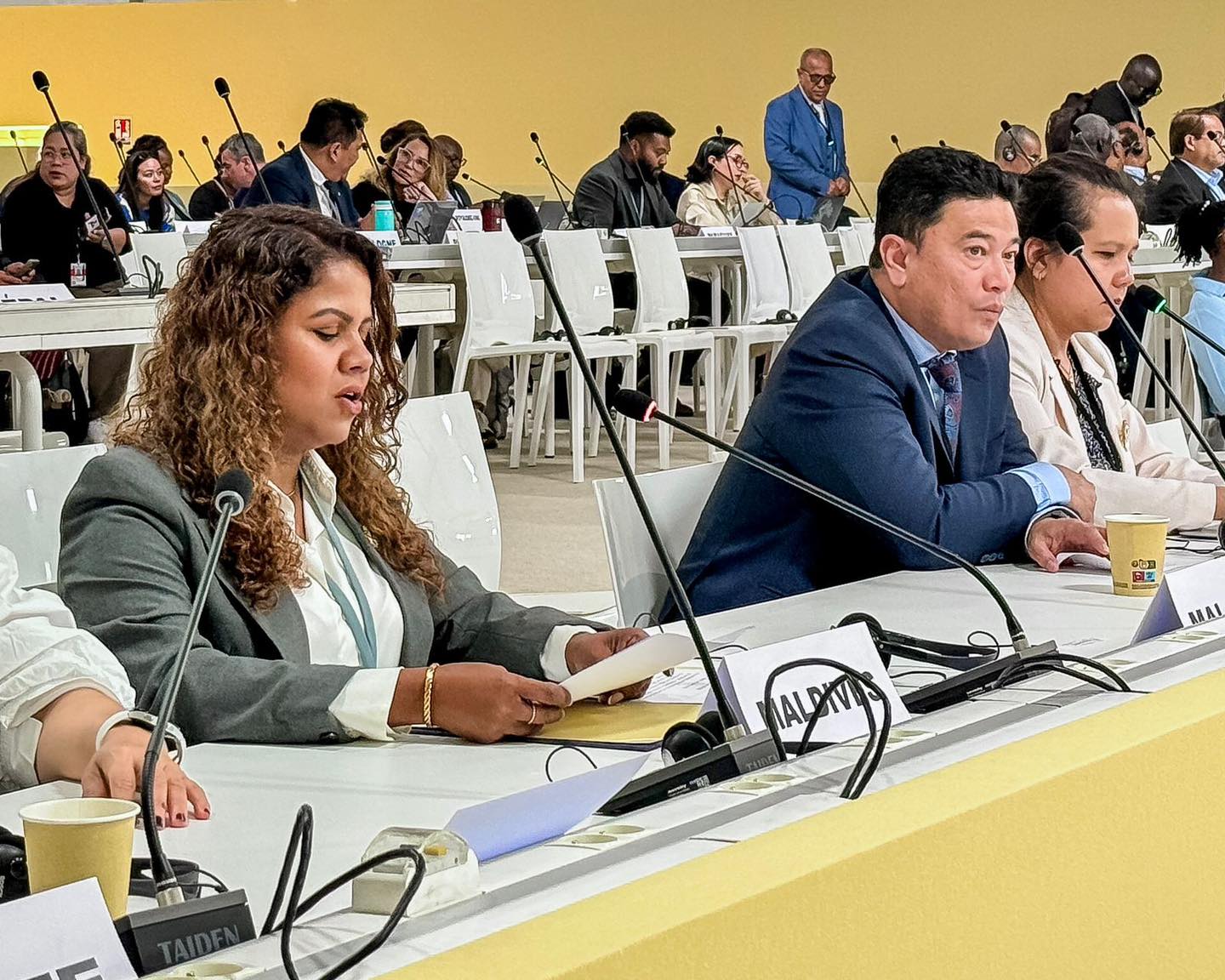
With fisheries contributing 90% of the Maldives’ total exports and employing 11% of the national workforce, the sector remains vital to both livelihoods and national food security. Recognizing this, the Maldives is now accelerating its transition toward a fully digital fisheries data collection network, allowing for near real-time reporting and enhanced monitoring of marine resources. “We are expanding our national fisheries information system to fully digitise data collection,” stated the State Minister, explaining that these reforms will improve transparency, traceability, and sustainability within the sector.
At the event “Advancing Equity in Small-Scale Fisheries: Multi-Stakeholder Strategies for Preferential Access in Africa and Asia,” Ms. Aminath spotlighted the real-world challenges small-scale fishers face, especially in the context of climate change and increasing competition for marine space. She emphasized the importance of Preferential Access Areas (PAAs) in protecting traditional fishing grounds and ensuring equitable access. “Preferential Access Areas are not just about space; they’re about safeguarding traditions, livelihoods, and our ability to adapt to a changing ocean,” she said.
The Maldives is utilizing legal tools, spatial planning, environmental policy, and fisheries-dependent data to strengthen protections for small-scale fishers. Ms. Aminath also announced that the country will begin drafting a National Plan of Action for Small-Scale Fisheries (SSF), to formally integrate the FAO SSF Guidelines into national policy and practice.
The Maldives delegation also took part in the side event “From Treaty to Action: Multi-Stakeholder Cooperation for the High Seas,” which focused on implementing the BBNJ Agreement (Biodiversity Beyond National Jurisdiction). As one of the first South Asian Small Island Developing States (SIDS) to ratify the treaty, the Maldives reiterated its dedication to transparent, inclusive, and science-based ocean governance. The session emphasized collaboration across governments, science communities, civil society, and coastal populations to ensure that high seas governance works for all, particularly those whose lives are most intertwined with the ocean.
Director General Dr. Hussain Sinan joined the discussions, presenting the Maldives’ longstanding commitment to equitable and sustainable fisheries governance, especially in the tuna sector. He highlighted the country’s robust historical catch records—dating back to the 1950s—and the continued shift toward digital systems as key to ensuring responsible fisheries management and fairer distribution of benefits. He also emphasized the Maldives’ commitment to a state-led approach to tuna fisheries governance that prioritizes market access, equity, and sustainability.
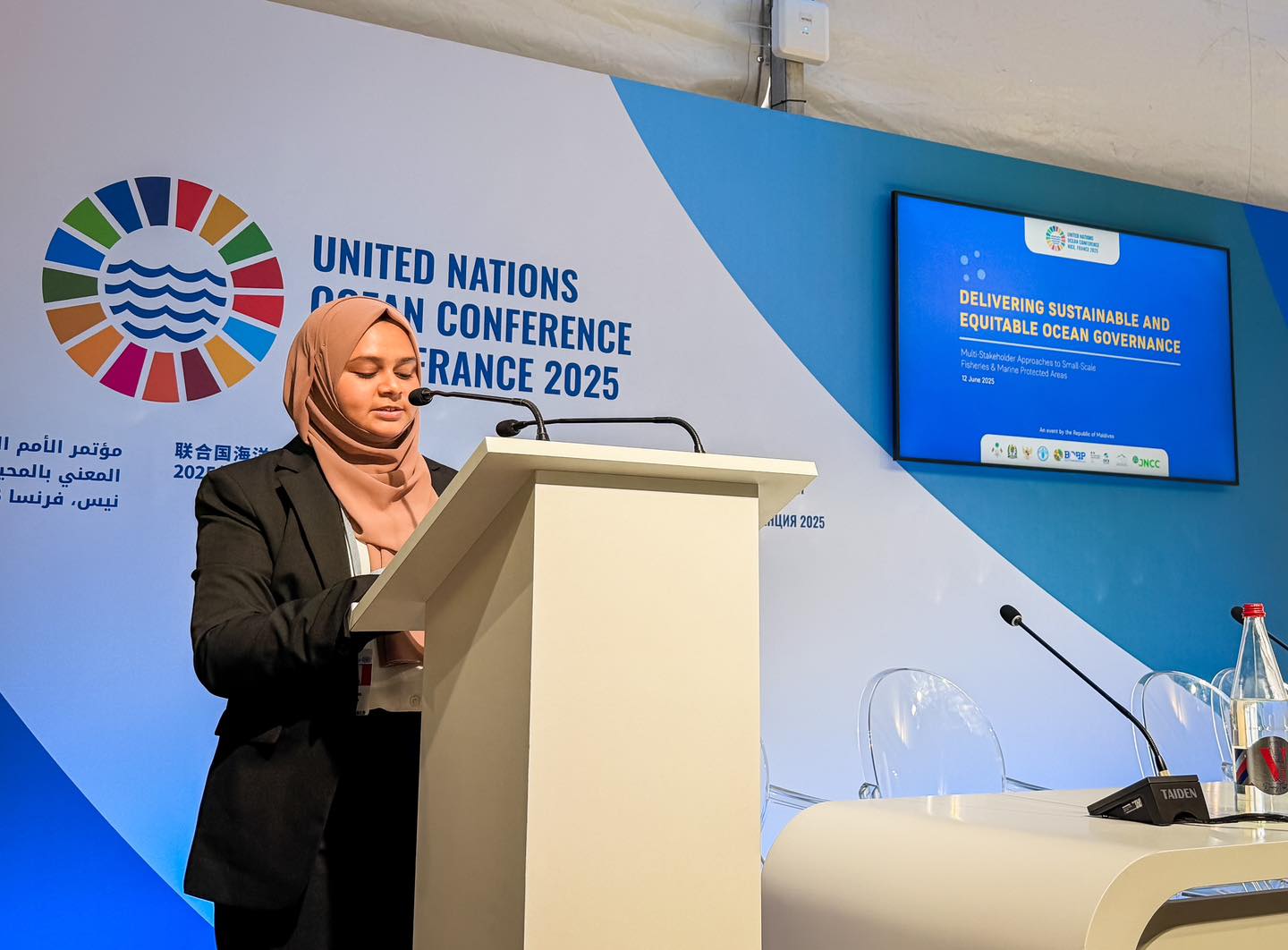
These efforts are part of the Maldives’ broader strategy to modernize its fisheries sector under the vision of President Dr. Mohamed Muizzu. This includes transitioning to a new generation of Refrigerated Sea Water (RSW) fishing vessels, which have already shown improvements in fish quality and operational efficiency. “The future belongs to those who fish smarter, not harder,” said Ms. Aminath, stressing the need for innovation, regional cooperation, and science-based decision-making in building ocean resilience.
For international visitors, these developments demonstrate more than marine policy, they reflect a destination that deeply respects and protects its ocean heritage. As travelers enjoy world-class diving, fresh seafood, and the beauty of Maldivian waters, they also support a nation actively working to preserve its marine ecosystem through cutting-edge sustainability and inclusive economic development.
 advertisment



 advertisment