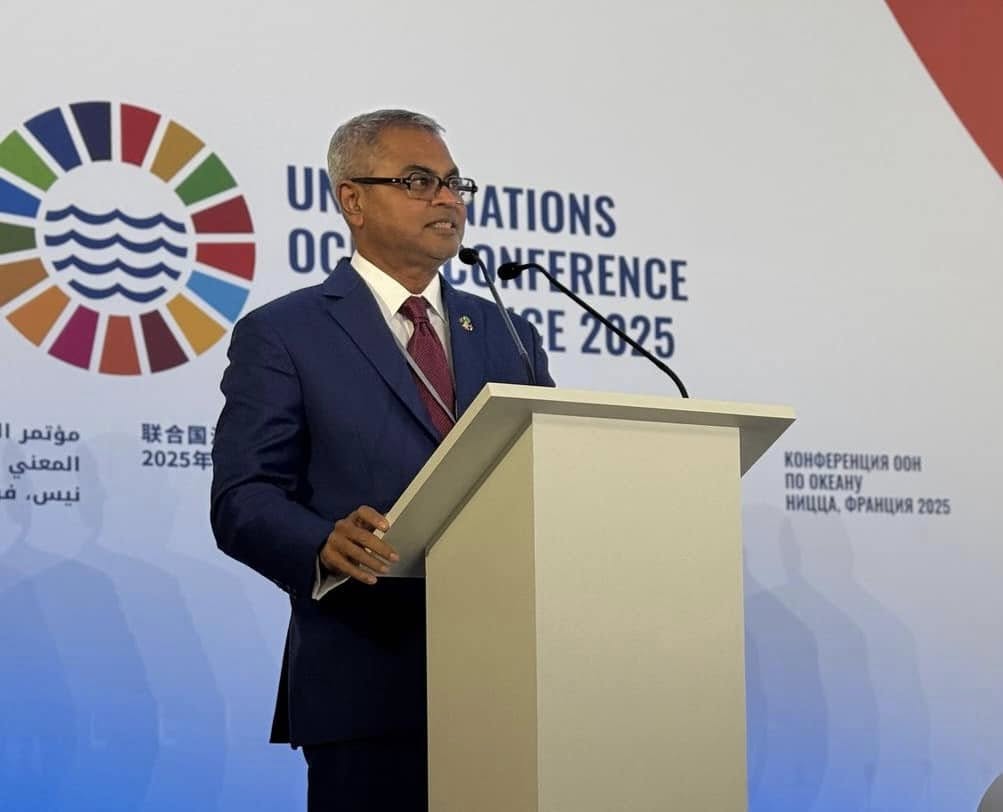

At the ongoing Third United Nations Ocean Conference (UNOC3) in Nice, France, Minister of Tourism and Environment, Hon. Thoriq Ibrahim, continues to actively represent the Maldives in key discussions shaping the future of ocean sustainability. Through a series of strategic interventions, bilateral meetings, and high-level panels, the Minister is reinforcing the Maldives’ strong environmental leadership and calling for international collaboration to protect the world’s oceans, particularly in support of Small Island Developing States (SIDS).
At the side event titled “Celebrating High Seas Action,” co-hosted by the Maldives, Minister Thoriq spoke on the country’s progress since becoming one of the first nations to ratify the BBNJ Agreement (Biodiversity Beyond National Jurisdiction). He reaffirmed the Maldives’ commitment to the agreement’s implementation and emphasized the critical importance of recognizing the unique needs and vulnerabilities of SIDS within global marine governance frameworks. The BBNJ Agreement is central to ensuring marine biodiversity is protected in areas beyond national jurisdiction, waters that are essential for ecological balance and long-term sustainability.
Minister Thoriq also participated in the Ocean Action Panel: Mobilizing Finance for Ocean Actions in Support of SDG14, where he underlined the importance of sustainable ocean finance mechanisms. He advocated for inclusive financing strategies that can support the development and application of ocean accounts, structured systems that help countries track and assess their marine ecosystems in alignment with national development goals. In his remarks, the Minister stressed the urgent need for collective international action to ratify and operationalize the BBNJ Agreement to deliver measurable outcomes for ocean health.
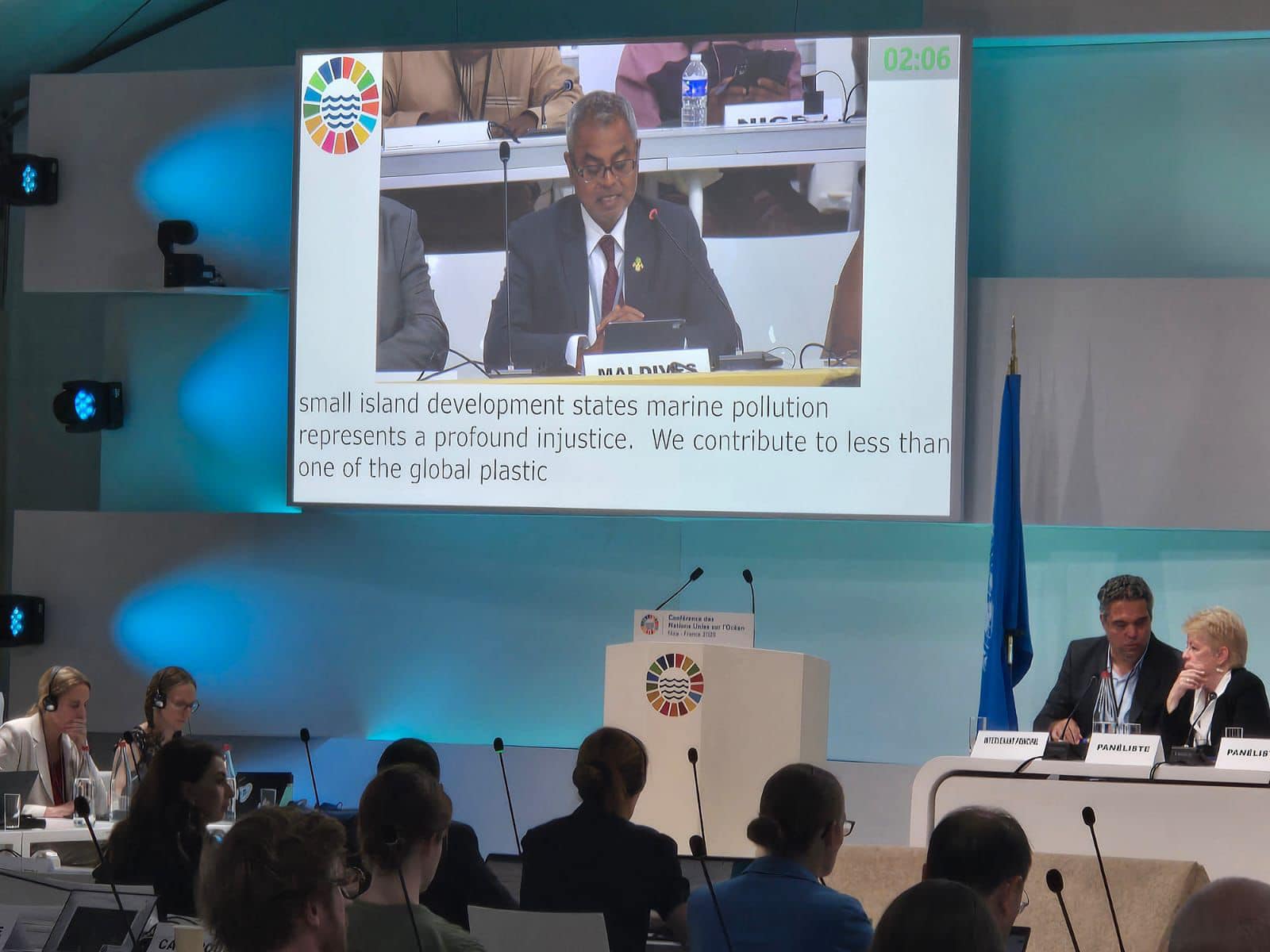
Representing the Alliance of Small Island States (AOSIS) at Ocean Action Panel 4, Minister Thoriq delivered a strong message on the threat of marine pollution. He highlighted the disproportionate impact of pollution from land-based activities on small island nations, urging the international community to take bold and strategic steps to protect oceans and seas. “The ocean is the lifeline of the planet,” he stated, “and it must be respected and safeguarded for the well-being of current and future generations.”
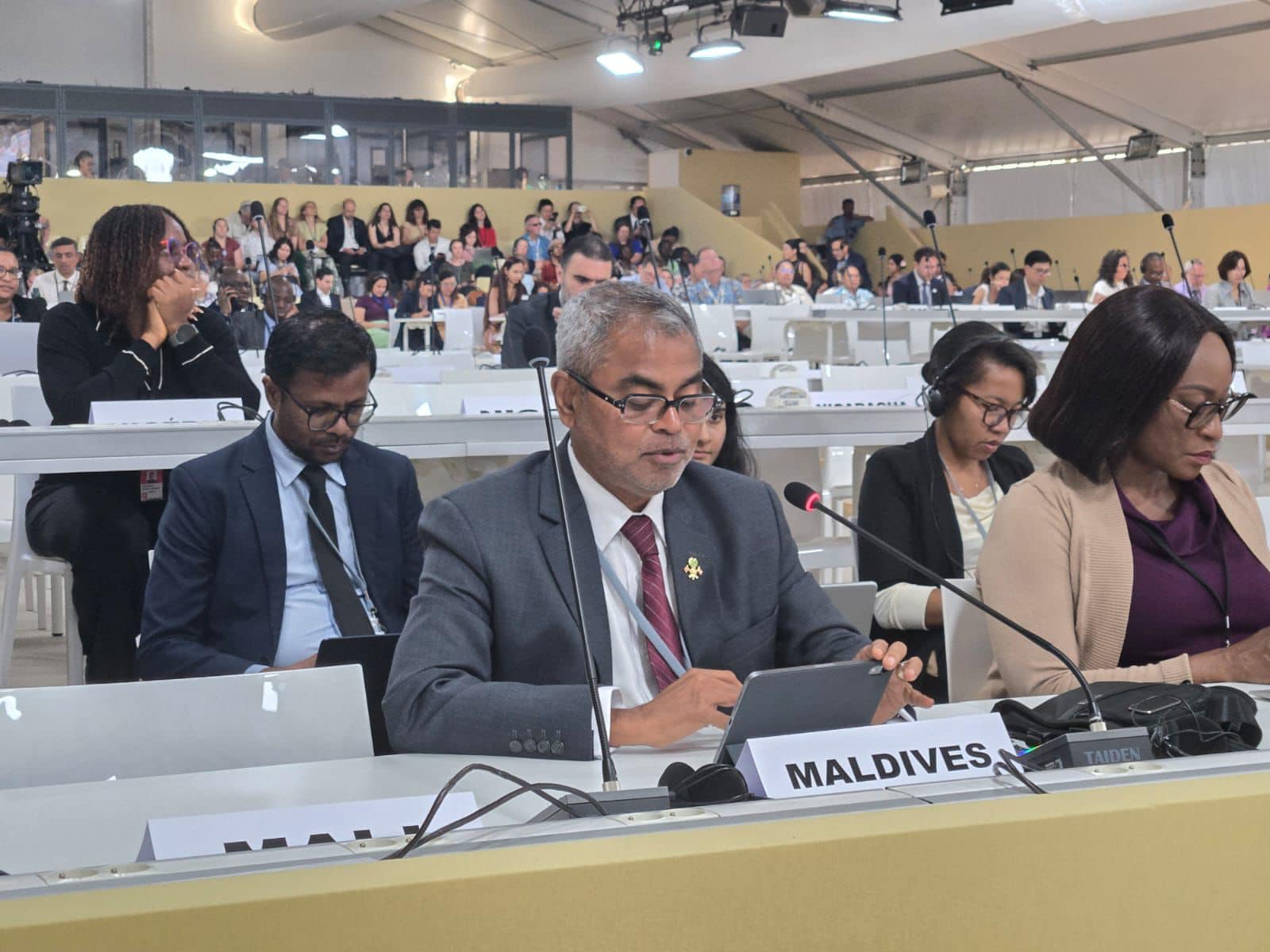
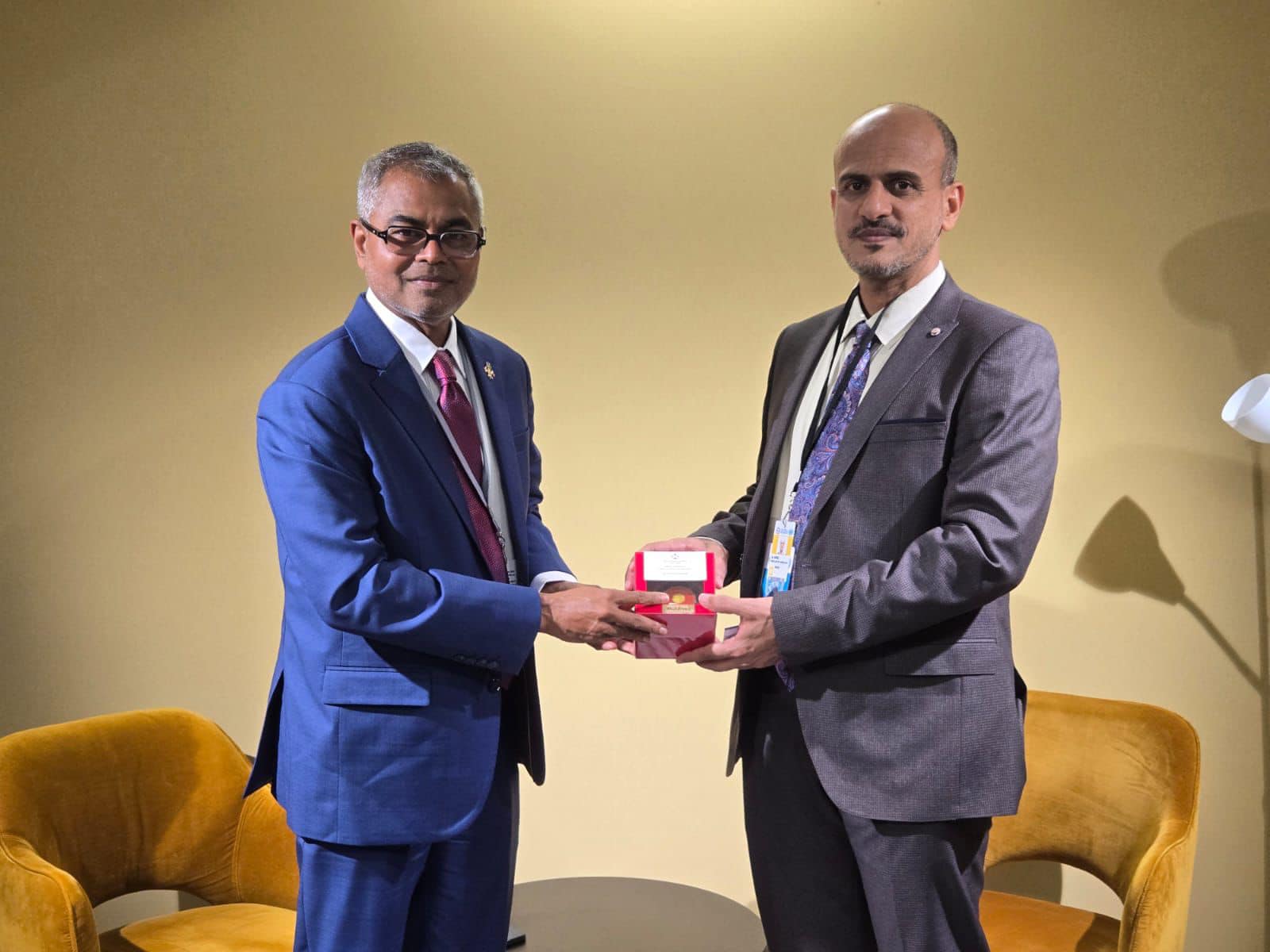
In addition to his public engagements, Minister Thoriq met with several international leaders to explore opportunities for environmental cooperation. On the margins of UNOC3, he held bilateral talks with H.E. Dr. Abdullah Bin Ali Al-Amri, Chairman of the Environment Authority of the Sultanate of Oman and President of the United Nations Environment Assembly (UNEA). During the meeting, both sides discussed strengthening environmental collaboration between the Maldives and Oman. Minister Thoriq expressed the Maldives’ support for Dr. Al-Amri’s leadership at UNEA and reiterated the shared interest in advancing sustainable environmental policies.
The Minister also met with Ms. Ruth Davis, the UK’s Special Representative for Nature. He thanked the Government of the United Kingdom for its ongoing support in the areas of protected area management and capacity building, particularly in helping the Maldives enhance its conservation capabilities and environmental monitoring frameworks.
During the Ministerial Event on the Intergovernmental Negotiating Committee (INC) on Plastic Pollution, Minister Thoriq urged delegates to remain strategic and united in the final phases of negotiations. With INC5.2 approaching, he emphasized the need to maintain political momentum and finalize outcomes that will meaningfully address the global plastic pollution crisis. He noted that time is limited, but with focused action, a successful resolution is still within reach.
The Maldives’ robust presence at UNOC3 reflects its enduring commitment to ocean stewardship and marine resilience. With ocean health forming the foundation of its economy, particularly tourism and fisheries, the country continues to lead by example. For international visitors, this reinforces the Maldives’ image as a destination that values and protects the very ecosystems that make it extraordinary: crystal-clear waters, thriving coral reefs, and a marine environment nurtured by a nation committed to sustainability.
 advertisment



 advertisment