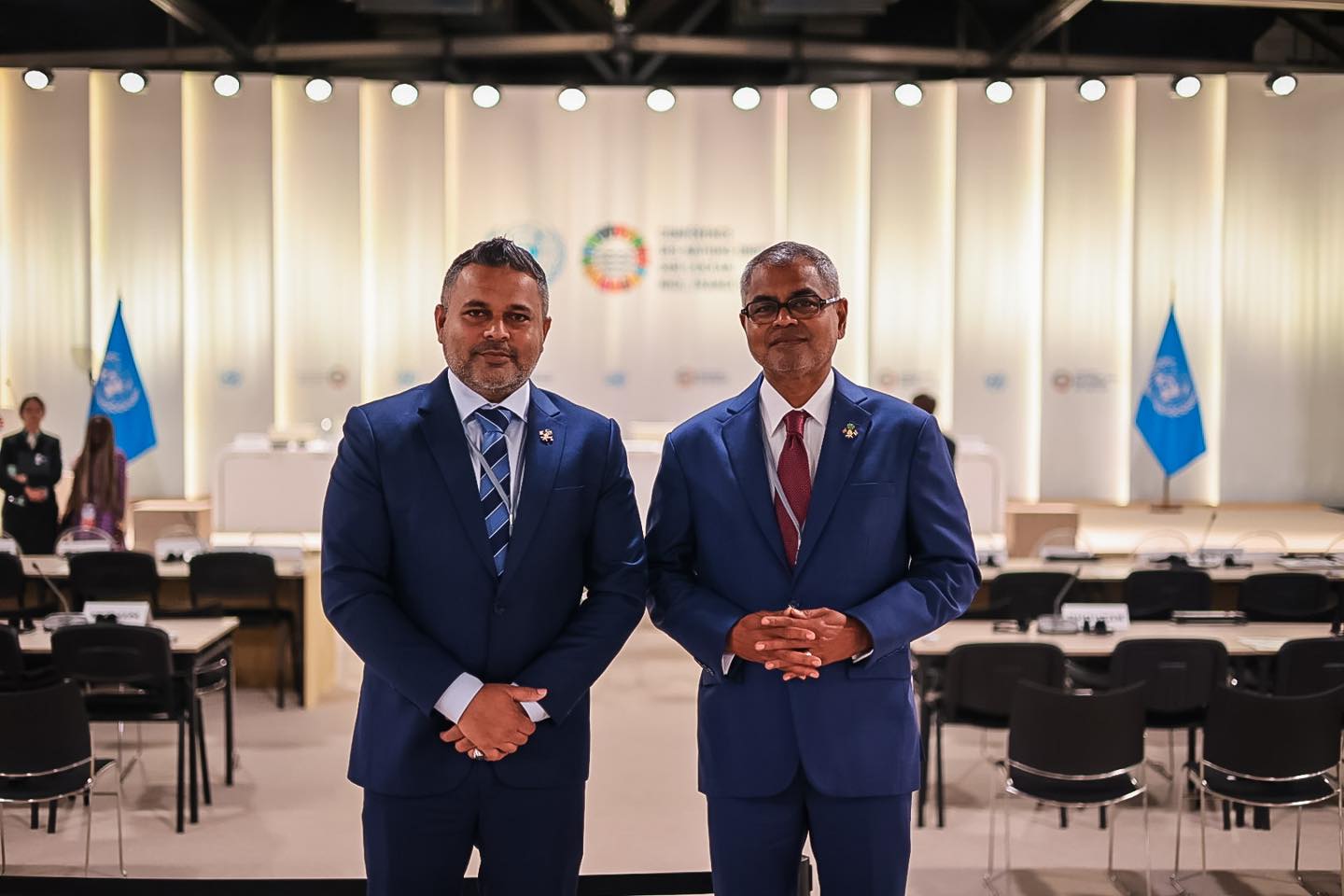

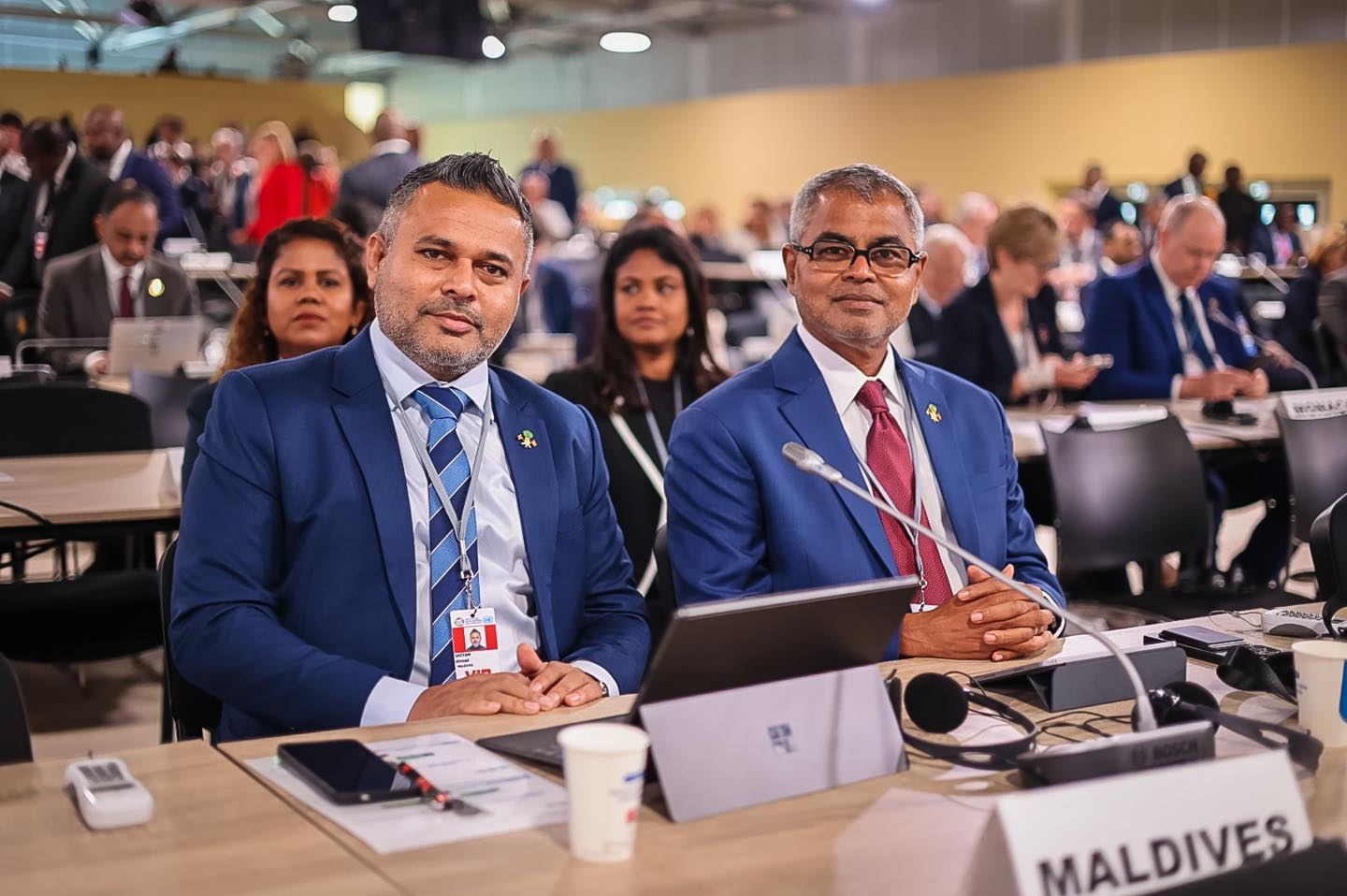
Minister of Fisheries and Ocean Resources, Hon. Ahmed Shiyam, is leading the Maldives delegation at the Third United Nations Ocean Conference (UNOC3), currently underway in Nice, France. Accompanied by Minister of Tourism and Environment, Hon. Thoriq Ibrahim, the Maldives is actively participating in high-level discussions, reaffirming its commitment to ocean sustainability and responsible marine governance. Throughout the conference, the Maldives has announced critical pledges that aim to safeguard the ocean, an ecosystem that underpins the country’s culture, economy, and way of life.
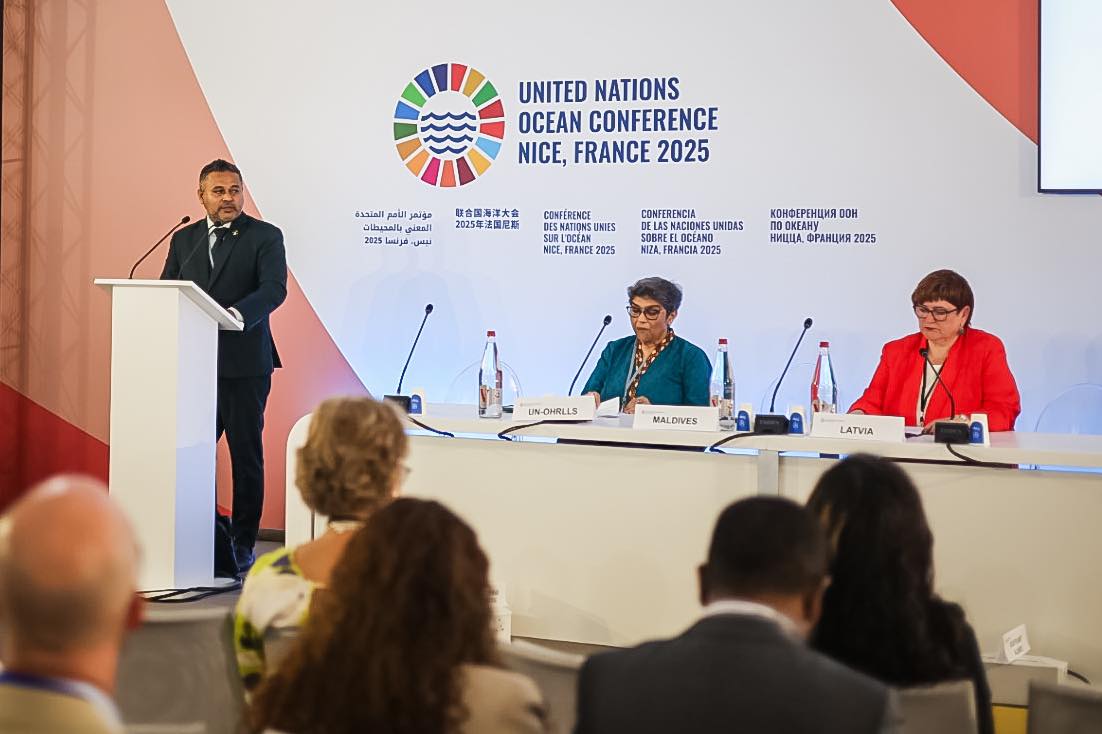
Representing one of the world’s most ocean-reliant nations, Minister Shiyam delivered key remarks during the SIDS Ministerial Roundtable for Ocean Action, emphasizing the centrality of marine resources to Small Island Developing States (SIDS). “For SIDS, the ocean is not a sector, it is the entire economy,” he noted, calling for increased investment in ocean-positive solutions and stronger partnerships that empower island nations as equal players in shaping the future of marine conservation.
In a bilateral meeting on the sidelines of UNOC3, Minister Shiyam met with Dr. Qu Dongyu, Director-General of the Food and Agriculture Organization (FAO). The Minister expressed gratitude for FAO’s swift support in implementing the anchored Fish Aggregating Devices (FADs) project, which was launched just months after the initial request. Their discussion focused on expanding collaboration in ocean governance, particularly through the development of a comprehensive Oceans Act for the Maldives, boosting investment in mariculture, and establishing a dedicated FAO office in the country. Dr. Qu reaffirmed FAO’s commitment to supporting these initiatives, underscoring the organization’s partnership with the Maldives in fisheries and blue economy development.
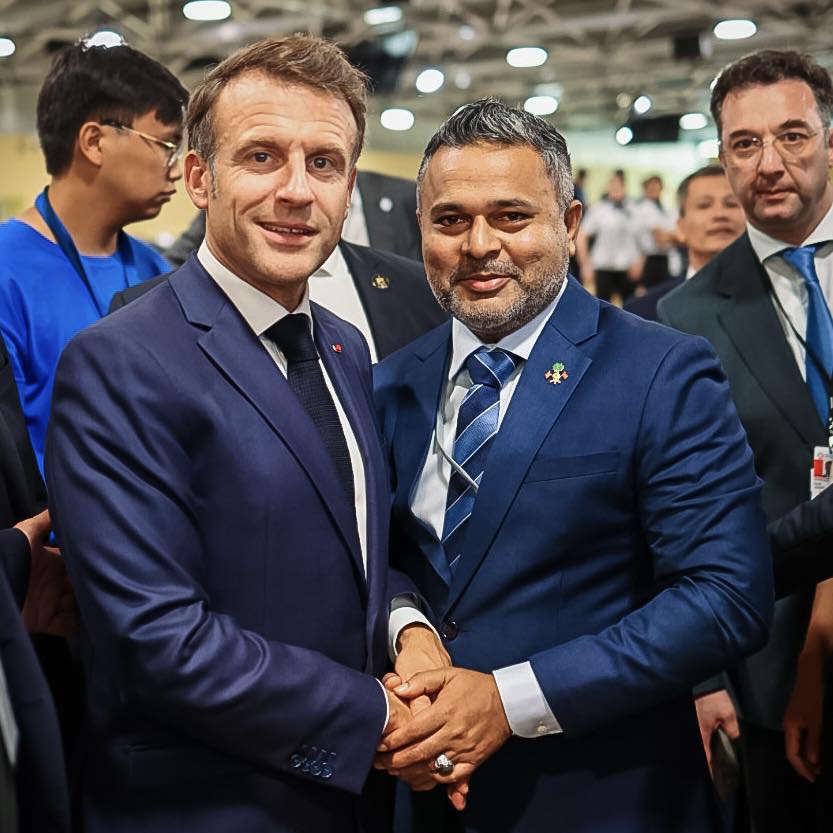
During a special event hosted by H.E. President Emmanuel Macron to celebrate countries that have ratified the BBNJ Agreement (Biodiversity Beyond National Jurisdiction), Minister Shiyam proudly highlighted the Maldives as one of the first ten nations to ratify the treaty. This milestone agreement advances the global effort to protect marine biodiversity beyond national waters. Minister Shiyam reinforced the Maldives’ dedication to inclusive, science-driven governance of the high seas, noting that a healthy ocean is crucial to the nation’s economic stability and ecological future.
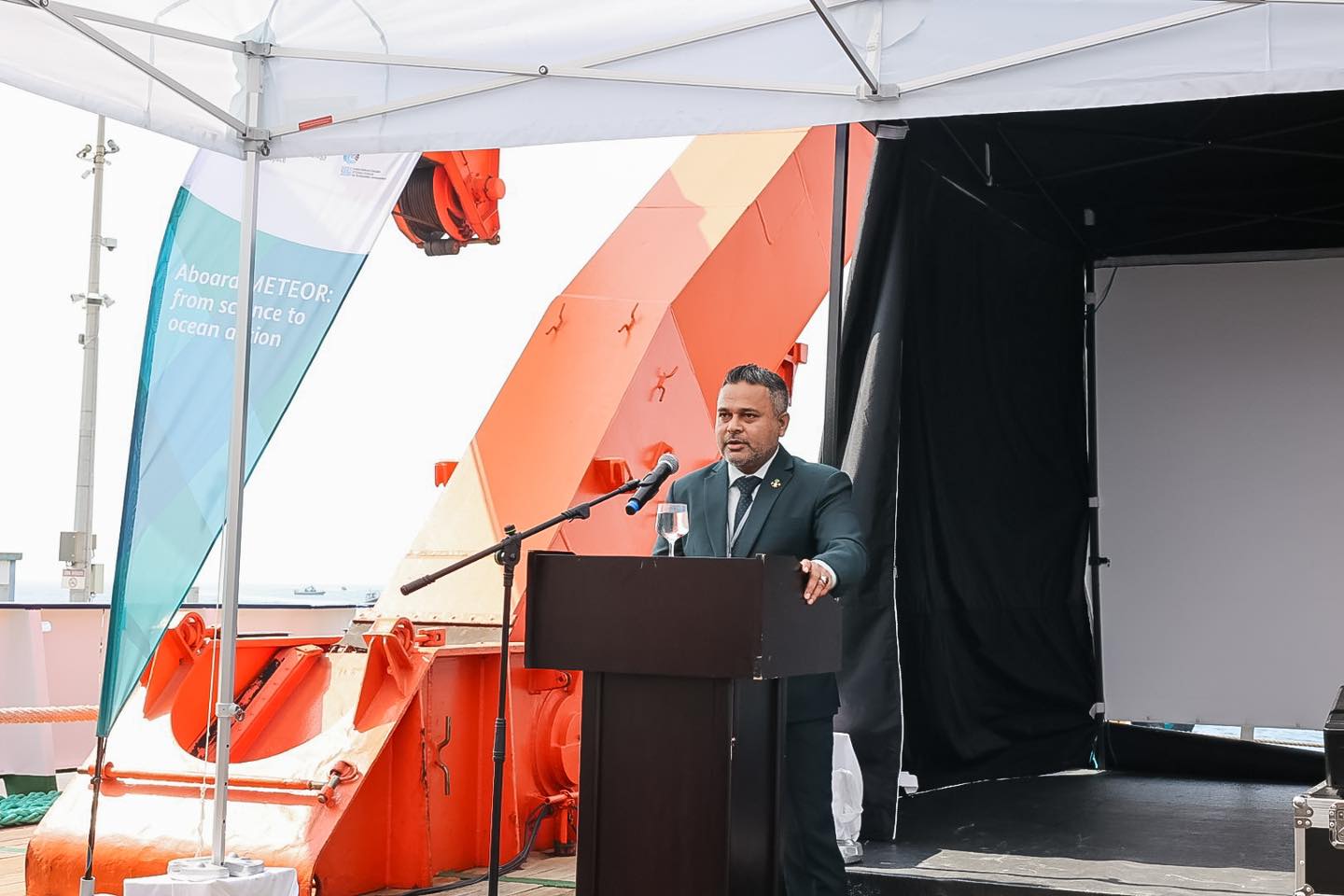
The Maldives also took part in key side events at UNOC3. At a session hosted by the Environmental Justice Foundation aboard the research vessel METEOR, Minister Shiyam outlined the Maldives’ efforts to modernize fisheries governance through full digitalization. He highlighted initiatives underway to ensure traceability, transparency, and public access to vessel ownership data. “Reliable, accessible, and well-managed data is the most powerful tool in our arsenal,” he stated, underlining the Maldives’ strategy to enforce laws and build stakeholder trust. He confirmed that under the leadership of President Dr. Mohamed Muizzu, the entire fisheries value chain will be digitized by the end of the year to combat illegal, unreported, and unregulated (IUU) fishing and hidden ownership at sea.
Minister of State for Fisheries and Ocean Resources Ms. Aminath Hussain Shareef also contributed to the conference by addressing the challenges of small-scale fisheries at a side event hosted by the International Pole and Line Foundation (IPNLF). She shared insights into the Maldives’ efforts to reform regulations at the Indian Ocean Tuna Commission (IOTC) to meet international certification standards. She urged for a fairer, more inclusive ecolabelling system, noting that no small island state should shoulder such reforms alone. She welcomed FAO’s initiative to revise global ecolabelling guidelines to better reflect the realities of small-scale fisheries.
Furthering its role in promoting ocean-based economies, Minister Shiyam participated in the “Leveraging Partnerships to Advance Ocean-Based Economies in SIDS” event, co-sponsored by the Maldives’ Permanent Mission to the UN in New York and other international stakeholders. He emphasized the need for innovative financing mechanisms, ecosystem-based approaches, and nature-based solutions to build resilient coastal economies. He urged for stronger global collaboration to unlock the full potential of SIDS as frontrunners in blue economy innovation.
The Maldives also reaffirmed its leadership within the Commonwealth Blue Charter initiative during the Ministerial Steering Committee meeting. As co-champion of the Sustainable Coastal Fisheries Action Group, alongside Kiribati, the Maldives shared progress on advancing ocean sustainability, supporting coastal communities, and strengthening collaboration across all action groups under the Blue Charter.
Through its active role at UNOC3, the Maldives continues to stand out as a champion of marine sustainability. For international travelers, the country not only offers unparalleled natural beauty and world-class tourism experiences, but also serves as a model of environmental stewardship, where every visit supports a nation deeply invested in protecting the ocean that sustains us all.
 advertisment



 advertisment