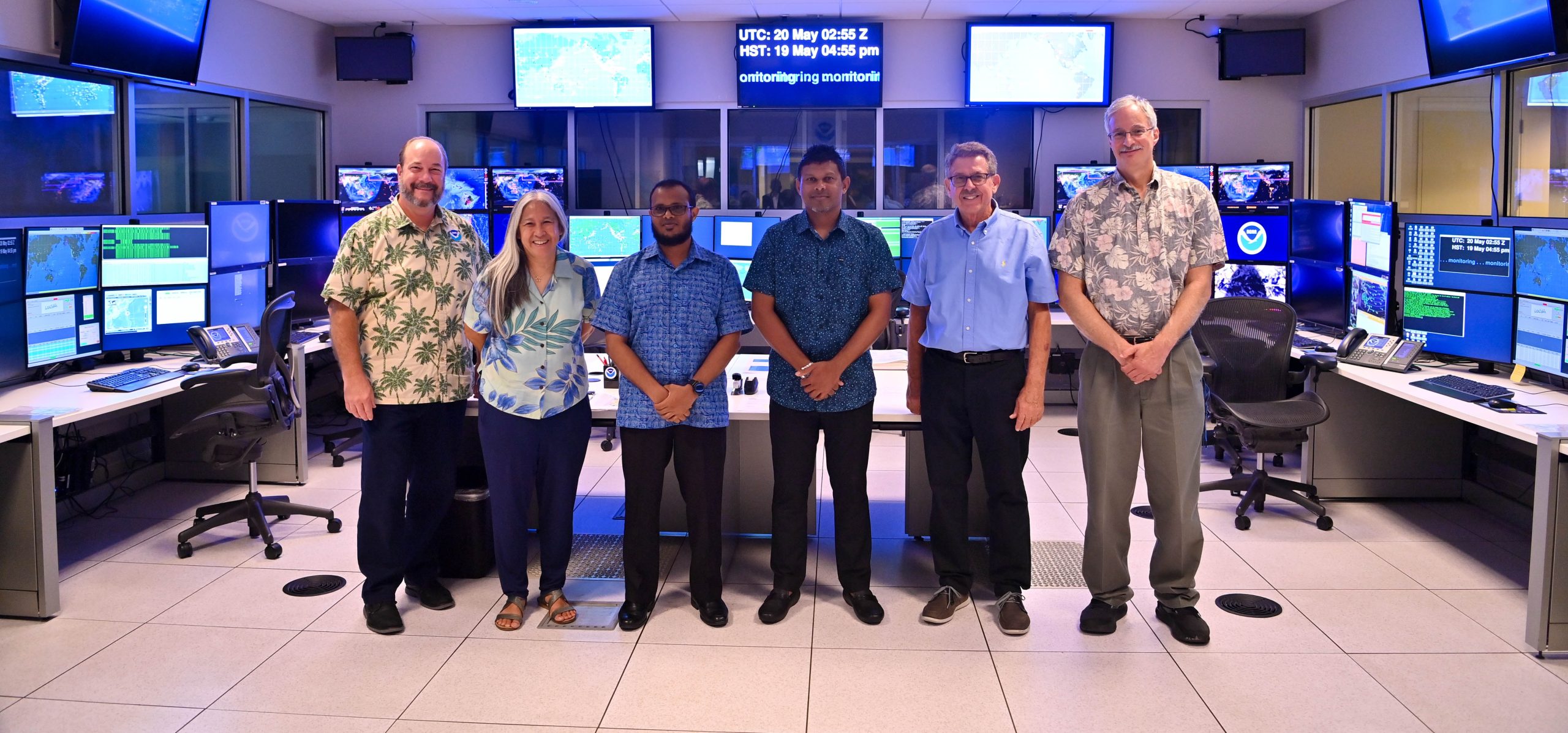

Vice President Uz. Hussain Mohamed Latheef paid a visit to the National Oceanic and Atmospheric Administration (NOAA) Inouye Regional Center in Honolulu, Hawaii, marking the first official visit by a Maldivian Vice President to the facility. Located on the historic grounds of Mokuʻumeʻume (Ford Island), the NOAA Inouye Regional Center serves as a leading hub for oceanic and atmospheric research and coordination in the Pacific region.
During the visit, the Vice President was given a comprehensive briefing on the operations of two of NOAA’s key agencies: the International Tsunami Information Center (ITIC) and the Pacific Tsunami Warning Center (PTWC). These centers play a vital role in global disaster monitoring and early warning systems, especially for island and coastal communities vulnerable to seismic sea wave events.
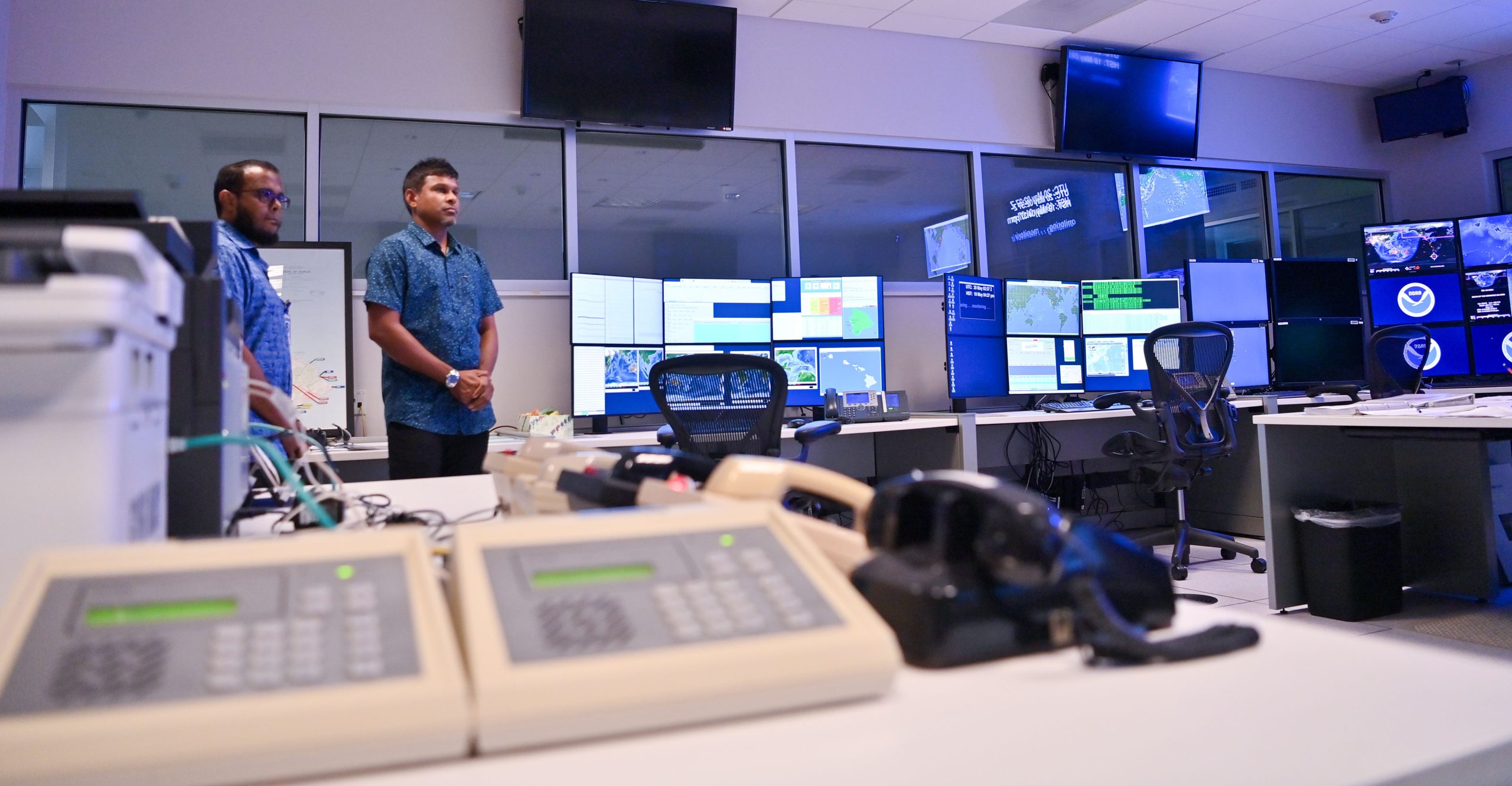
The Vice President toured the advanced facilities and commended both institutions for their longstanding contributions to international tsunami preparedness. He expressed sincere appreciation for the critical support provided to the Maldives, particularly in the aftermath of the 2004 Indian Ocean tsunami, when both ITIC and PTWC were instrumental in capacity building, public awareness, and the development of local and regional warning infrastructure.
The Pacific Tsunami Warning Center, operated under the U.S. National Weather Service (NWS), functions as the principal international tsunami forecast and warning center under the framework of the Intergovernmental Oceanographic Commission of UNESCO. Meanwhile, the ITIC continues to collaborate globally with scientific institutions, civil defense agencies, and public stakeholders to enhance tsunami awareness and reduce disaster risk through education and preparedness initiatives.
Vice President Latheef acknowledged the enduring partnership between NOAA and the Maldives, recognizing the valuable knowledge exchange and technical assistance that has supported the country’s disaster resilience efforts. He underscored the Maldives’ ongoing commitment to strengthening its national emergency response systems, and noted the importance of such international partnerships in safeguarding coastal nations through shared science, expertise, and innovation.
The visit highlighted the Maldives’ deepening engagement with global scientific communities and reaffirmed its proactive approach to disaster risk management—an area of critical importance for a nation comprised of over a thousand coral islands across the Indian Ocean. This cooperation contributes to the Maldives’ broader strategy to ensure the safety of its people and visitors alike, enhancing the reputation of the country not only as a premier travel destination but also as a responsible and resilient island nation.
 advertisment



 advertisment