
The Maldives Monetary Authority (MMA) has called for a transition towards a targeted electricity subsidy framework, highlighting the importance of reducing government expenditure while strengthening fiscal sustainability and protecting the country from potential external economic shocks.
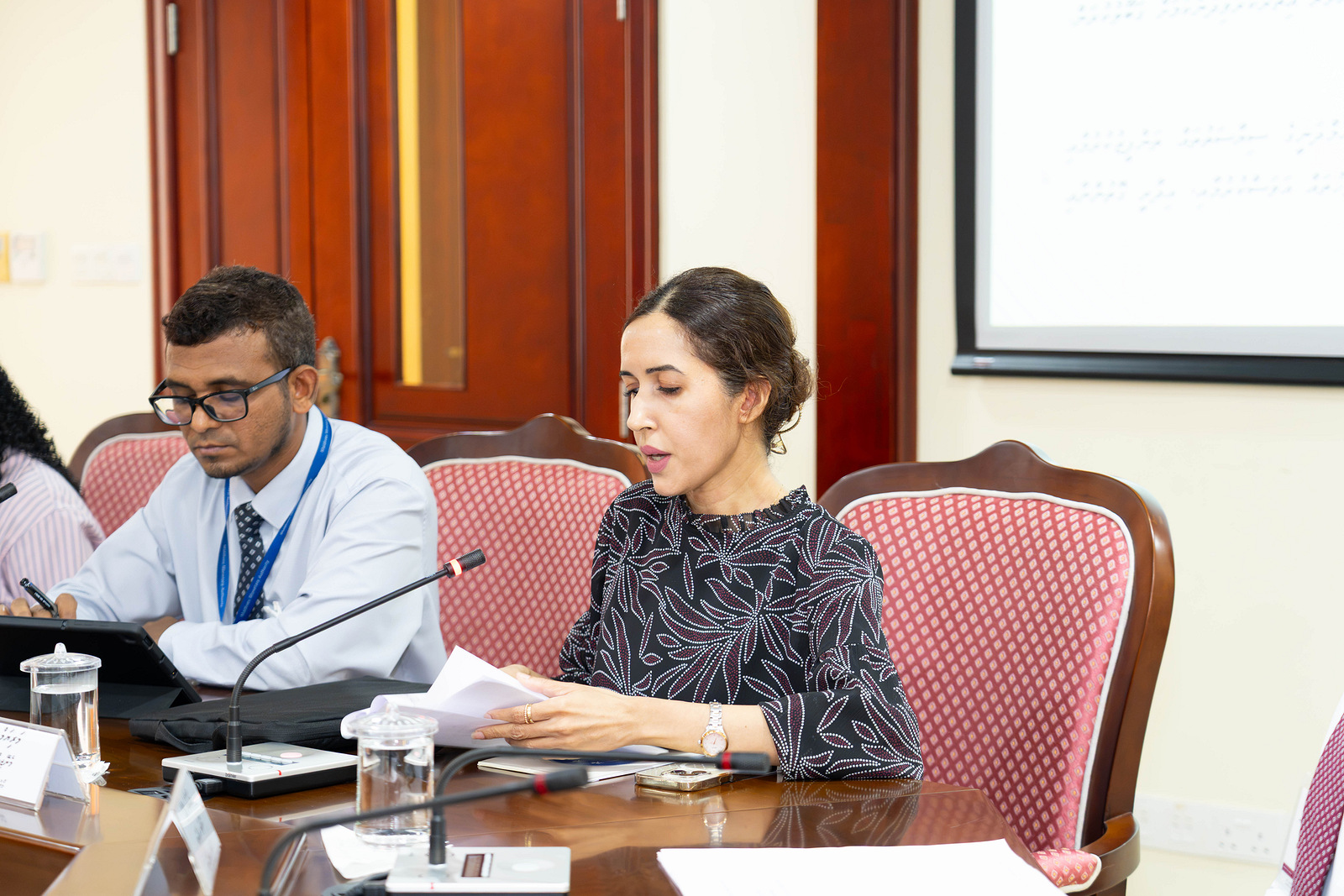
The recommendation was presented as part of the central bank’s formal assessment of the Government’s proposed 2027 national budget to the Budget Review Committee of the People’s Majlis. Presenting the MMA’s observations, Managing Director Mariyam Rashfa noted that although spending on fuel and electricity subsidies is expected to decline next year, uncertainties surrounding developments in the Middle East continue to pose risks to international oil prices.
Rashfa cautioned that a renewed increase in global oil prices could raise the Government’s expenditure on fuel and electricity subsidies while also increasing the foreign currency required to finance fuel imports. Such a development could place additional pressure on the Maldives’ official foreign exchange reserves and increase the country’s reliance on external financing.
Against this backdrop, the MMA has recommended strengthening fiscal preparedness and reviewing the existing electricity subsidy policy to ensure that government support is delivered in a more efficient and sustainable manner. The central bank has specifically proposed moving towards a targeted subsidy system designed to reduce unnecessary expenditure while continuing to protect households that require financial assistance.
The recommendation comes as subsidy expenditure continues to remain a significant component of public spending. Latest figures released by the Ministry of Finance show that government expenditure on fuel and staple food subsidies has reached MVR 4.3 billion, exceeding the MVR 2.89 billion originally allocated in the annual budget. The increase reflects the financial pressures associated with maintaining broad-based subsidies at a time when the Maldives is pursuing wider fiscal consolidation and economic reform.
Minister of Finance Hassan Zareer, while presenting details of the proposed 2027 national budget on 29 October, also acknowledged the considerable increase in fuel subsidy expenditure required to maintain affordable electricity for Maldivian households. The Minister said fuel subsidy expenditure is projected to reach MVR 3.8 billion by the end of 2026.
However, the Government expects international oil prices to ease during 2027, which could help reduce fuel subsidy expenditure to approximately MVR 3.2 billion in the coming fiscal year. The anticipated reduction is expected to provide some relief to public finances and support the Government’s broader efforts to strengthen expenditure management.
The MMA nevertheless stressed that long-term fiscal resilience will require structural improvements to the subsidy framework rather than relying entirely on favourable movements in international commodity prices. A more targeted system could enable the Government to direct financial assistance towards households and individuals who need support most, while improving the efficiency of public spending.
Subsidy reform has previously featured among the Government’s fiscal consolidation measures. The 2025 budget included proposals to replace universal subsidies on electricity and essential food commodities with a more targeted assistance mechanism. President Dr. Mohamed Muizzu later decided not to proceed with the proposed reforms, reaffirming the Government’s commitment to ensuring that existing benefits and assistance provided to citizens would not be reduced.
The MMA’s latest assessment therefore highlights the importance of developing a carefully balanced subsidy policy that supports the Government’s commitment to affordable essential services while strengthening fiscal sustainability. The proposed approach is intended to improve expenditure efficiency, safeguard foreign exchange reserves, reduce vulnerability to global oil price movements and ensure that public assistance continues to benefit those who need it most.
 advertisment





 advertisment