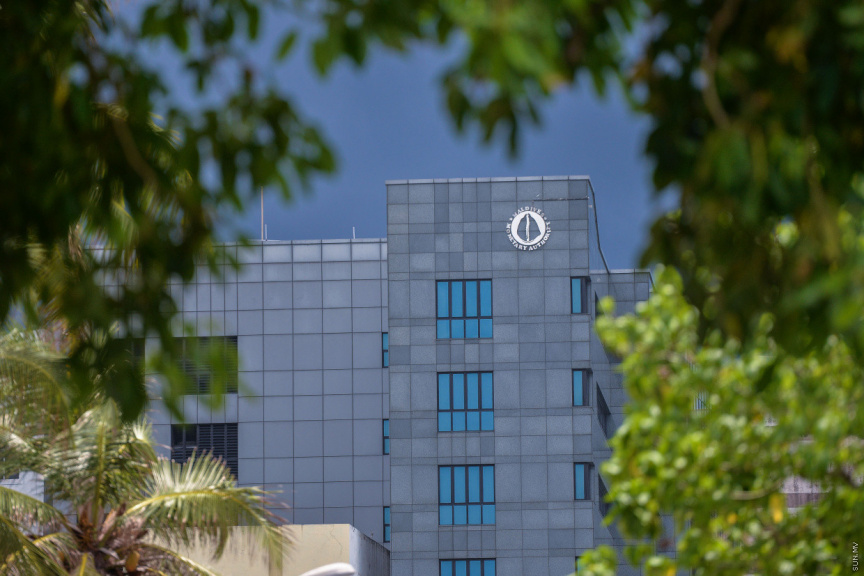

The Maldives Monetary Authority (MMA) has called for stronger public financial management, improved revenue mobilisation and disciplined government spending as key priorities for safeguarding the Maldives’ macroeconomic and fiscal stability, while supporting the Government’s broader efforts to strengthen the country’s economic foundations.
The recommendations were outlined in the MMA’s advisory assessment of the Government’s proposed budget for the forthcoming fiscal year, which totals MVR 59.7 billion. The Authority highlighted the importance of maintaining momentum on fiscal reforms, improving expenditure efficiency and strengthening revenue administration to support the Government’s medium-term fiscal objectives and build greater resilience across the economy.
The proposed budget projects a fiscal deficit of MVR 9.4 billion, equivalent to approximately 7% of Gross Domestic Product. According to the MMA, comprehensive fiscal reforms and careful management of public expenditure will remain important in reducing fiscal pressures while ensuring that essential public services, social programmes and national development priorities continue to receive appropriate support.
A significant portion of the proposed budget is allocated to recurrent expenditure, with MVR 42.7 billion expected to be spent on commitments including public sector salaries and employee benefits, pensions and social assistance for elderly citizens, as well as government subsidy programmes. The MMA noted that the scale of recurrent spending reinforces the importance of improving expenditure controls and ensuring that public resources are used as efficiently as possible.
Among its recommendations, the Authority proposed a more targeted approach to electricity subsidies so that assistance can be directed more effectively towards households and individuals requiring the greatest support. It also encouraged faster implementation of renewable energy projects, which could help reduce long-term energy costs, strengthen national energy security and ease pressures associated with imported fuel expenditure.
The MMA also highlighted the importance of effectively implementing fiscal reform measures within the healthcare sector and prioritising essential development projects in accordance with prevailing economic conditions. Such an approach would allow the Government to direct available resources towards projects offering the greatest economic and social value while maintaining greater discipline over overall public spending.
Economic diversification was identified as another important pillar of long-term stability. The Authority encouraged continued efforts to broaden the country’s revenue base, strengthen revenue-generating sectors and improve the institutional and administrative frameworks supporting economic activity.
Particular emphasis was placed on ensuring the long-term sustainability of the Maldives’ tourism industry, which remains the country’s principal economic engine and a major contributor to foreign exchange earnings, government revenue, employment and private investment. Continued investment in tourism infrastructure, destination competitiveness and high-quality resort development remains important for attracting international travellers and sustaining the Maldives’ position as one of the world’s leading luxury destinations.
The country’s diverse resort portfolio, expanding hospitality investments and continued development of tourism infrastructure have provided a strong platform for economic growth, while the Government continues to pursue policies aimed at strengthening connectivity, investment opportunities and economic diversification. Maintaining a resilient tourism sector alongside the development of additional revenue-generating industries would further strengthen the Maldives’ capacity to respond to external economic pressures.
The MMA reiterated that coordinated and sustainable fiscal reforms will be essential to improving the Government’s fiscal position and addressing structural economic challenges over the medium and long term. Continued fiscal consolidation, stronger revenue administration and efficient allocation of public resources are expected to play an important role in maintaining macroeconomic stability while supporting the Government’s development agenda and the Maldives’ long-term economic growth.
 advertisment





 advertisment