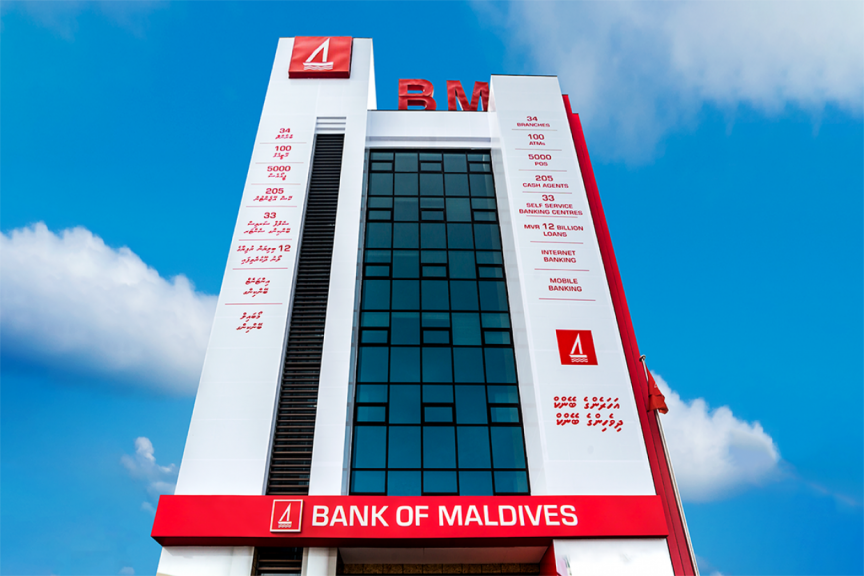

Bank of Maldives (BML) has strengthened its international standing after being included in Forbes’ inaugural World’s Top Performing Banks ranking for 2026, providing a significant global benchmark for the financial performance of the Maldives’ largest bank and reflecting the growing strength of the country’s banking sector.
Compiled by Forbes in collaboration with international market research firm Statista, the 2026 ranking features 500 banks from 89 countries. BML was placed in Tier 6, comprising financial institutions with total assets ranging from USD 3 billion to USD 10 billion. Banks were grouped according to asset size before performance scores were calculated, enabling institutions to be assessed against peers operating at a broadly comparable scale.
The recognition is particularly significant for a bank operating within a relatively small island economy whose growth is closely linked to tourism, international trade and foreign currency flows. BML’s inclusion demonstrates how the bank’s profitability, capital position, funding base, efficiency and asset quality compare with financial institutions of a similar size internationally.
The Forbes assessment places a 30% weighting on profitability, 20% on growth and earnings quality, 25% on capital and funding resilience, and a further 25% on asset quality and operational efficiency. Measures considered include return on assets, operating costs, earnings stability, deposit growth and the relationship between lending and deposits. Eligible banks were also required to have published accounts for the latest fully available audited financial year and at least three consecutive years of financial data, placing emphasis on sustained financial performance rather than short-term results.
BML’s latest financial results further reinforce the strength highlighted by the international ranking. Profit after tax reached MVR 1.93 billion during the first nine months of 2026, representing an increase of 26% compared with the corresponding period of the previous year. Profit for the third quarter alone rose by 36% to MVR 647.2 million.
The bank also recorded continued growth in its core operations. Net interest income increased by approximately 20% during the third quarter compared with the same period a year earlier, while operating profit before provisions rose by around 14%. At the same time, charges relating to bad and doubtful debts declined substantially from MVR 140 million to MVR 23.9 million, supporting stronger overall profitability.
Operational efficiency remained another notable strength, with BML reporting a cost-to-income ratio of 28%. This indicates that approximately MVR 28 of every MVR 100 generated in operating income was absorbed by operating expenses, leaving a substantial proportion available to meet credit costs, taxation requirements and profitability objectives. The figure compares favourably with many international banking markets, where considerably higher cost-to-income ratios are common.
The bank also maintained a strong capital position. Its capital adequacy ratio stood at 38% at the end of September 2026, substantially above the regulatory minimum of 12%. A strong capital buffer provides additional resilience against potential financial pressures and strengthens the bank’s ability to support customers and economic activity during periods of uncertainty.
BML continued expanding lending while maintaining a solid funding base. Net loans and advances increased to MVR 32.9 billion from MVR 25.2 billion at the end of December 2025, while customer deposits grew by 14% to MVR 42.36 billion. The bank reported a loan-to-deposit ratio of 77.6%, indicating that lending remained well supported by customer deposits and reflecting a prudent approach to balance-sheet management.
Asset quality also improved as lending expanded. BML’s Stage 3 loan ratio, which measures the proportion of credit-impaired loans, declined from 6% at the end of 2025 to 4.8% by September 2026. The reduction demonstrates an improvement in the quality of the loan portfolio at a time when the bank was significantly increasing financing to businesses and individuals.
The strength of the country’s largest commercial bank has wider importance for the Maldivian economy. A well-capitalised and profitable banking institution is better positioned to finance businesses, support household needs, facilitate investment and continue lending during periods of external economic pressure. This capacity is particularly important for the Maldives as the Government continues pursuing policies aimed at strengthening economic resilience, expanding investment opportunities and supporting sustainable national development.
BML also continues to play an important role in facilitating the international financial transactions required by the country’s import-dependent economy and globally connected tourism industry. During the first nine months of 2026, the bank processed USD 2.86 billion in outward foreign currency payments. It also supplied USD 722.1 million to customers against Maldivian rufiyaa during the period, almost matching the amount supplied throughout the whole of 2025.
BML’s inclusion in Forbes’ World’s Top Performing Banks ranking therefore provides more than international recognition for the institution. It highlights the strength of a major pillar of the Maldivian financial system at a time when the country is seeking to enhance economic stability, expand access to financing and strengthen confidence among businesses, investors and international partners. Supported by strong earnings, substantial capital reserves, growing deposits and improving asset quality, the bank enters the final quarter of 2026 from a position of considerable financial strength.
 advertisment




 advertisment