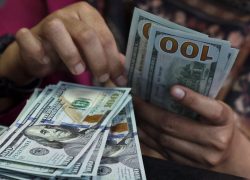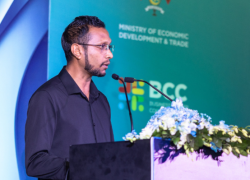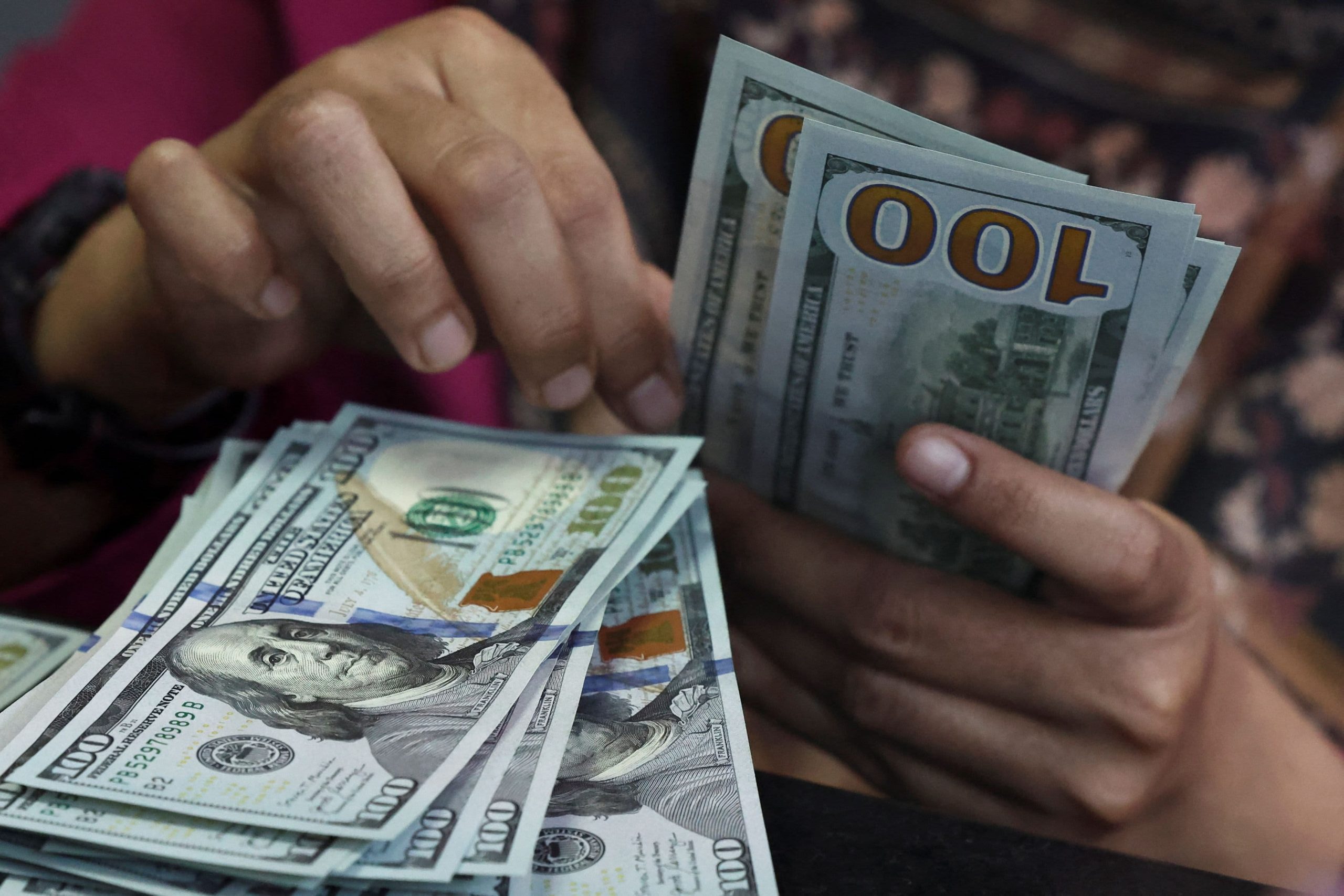

The Bank of Maldives (BML) has allocated nearly USD 2 billion over the past 30 months to meet the Maldives’ growing foreign exchange requirements, reflecting a significant expansion in the supply of US dollars through official banking channels, according to Minister of Economic Development, Transport and Trade Mohamed Saeed.
Speaking at the government’s “Ahaa” public forum, Minister Saeed highlighted the administration’s ongoing efforts to strengthen foreign exchange availability, support businesses and households, and improve access to dollars at official exchange rates. He said the increased disbursement by BML forms part of a broader national approach aimed at addressing longstanding pressures in the foreign exchange market while improving the flow of foreign currency through the formal financial system.
According to the Minister, approximately USD 3 billion was released at official bank rates between 2021 and the projected figures for 2026. Of this amount, nearly USD 2 billion was disbursed by BML during the most recent two-and-a-half-year period alone, demonstrating the scale of the bank’s expanding contribution to the country’s foreign exchange requirements.
Minister Saeed said the amount of foreign currency made available for telegraphic transfers and broader market requirements has increased by approximately 63 per cent. The expansion has been largely driven by growing commercial demand, as businesses continue to require foreign currency for imports, services, overseas payments and other international transactions essential to economic activity.
BML provided approximately USD 130 million for trade-related telegraphic transfers at the official exchange rate in 2022. This figure stood at USD 122 million in 2023 before increasing substantially to USD 213 million so far in 2026. The rise represents a considerable strengthening of official foreign exchange support available to the commercial sector and is expected to assist businesses in meeting overseas payment obligations more efficiently.
Monthly allocations for telegraphic transfers have also increased considerably. Minister Saeed said the average monthly allocation has risen from approximately USD 10 million to USD 27 million, strengthening access to dollars through regulated banking channels. Foreign currency allocations for international card transactions have similarly expanded, increasing from USD 161 million in 2022 to USD 304 million in 2026.
The figures indicate a broader effort by the government, BML and the Maldives Monetary Authority to increase the availability of foreign currency within the formal financial system. Improving access to official-rate dollars remains particularly important for an import-dependent economy such as the Maldives, where businesses rely heavily on international payments for food, construction materials, equipment, consumer goods and a wide range of services.
Minister Saeed also highlighted recent foreign exchange policy measures introduced by the Maldives Monetary Authority. The mandatory foreign exchange surrender requirement applicable to tourism businesses has been increased from 20 per cent to 40 per cent, with the policy designed to bring a greater share of foreign currency earnings generated by the tourism industry into the domestic banking system.
The Minister said encouraging market developments had already been observed following the introduction of the initial 20 per cent requirement. He added that the broader impact of the revised 40 per cent requirement is expected to become clearer later this month as additional foreign currency enters regulated channels.
Tourism remains the Maldives’ principal source of foreign exchange earnings, and stronger circulation of tourism-generated dollars through the banking system is expected to contribute to improved liquidity, support commercial transactions and enhance the availability of foreign currency for individuals and businesses.
Alongside commercial requirements, BML continues to provide official-rate US dollar allocations for essential personal needs. Minister Saeed noted that these include overseas higher education expenses, international medical treatment and foreign currency requirements for Maldivians travelling for Hajj and Umrah. Maintaining such allocations is aimed at ensuring that important educational, healthcare and religious obligations can continue to be supported through official channels.
The Minister further confirmed that the government has settled approximately USD 1.4 billion in foreign debt, describing it as the largest foreign debt repayment undertaken in the country’s history. The repayment comes as the administration continues efforts to manage external obligations while strengthening the country’s broader fiscal and foreign exchange framework.
Minister Saeed said the Ministry of Economic Development, Transport and Trade continues to work closely with the Maldives Monetary Authority to support stability across the national foreign exchange system. The coordination is focused on expanding official dollar availability, supporting businesses and consumers, strengthening confidence in regulated financial channels and maintaining a sustainable environment for economic growth.
The significant increase in foreign exchange allocations through BML, together with regulatory reforms and closer coordination between government institutions, reflects the administration’s continued emphasis on improving dollar accessibility and strengthening the resilience of the Maldivian economy. As tourism revenues, commercial activity and international transactions continue to expand, the government’s efforts to channel more foreign currency through the formal banking system are expected to play an increasingly important role in supporting businesses, households and the country’s long-term economic development.
 advertisment




 advertisment