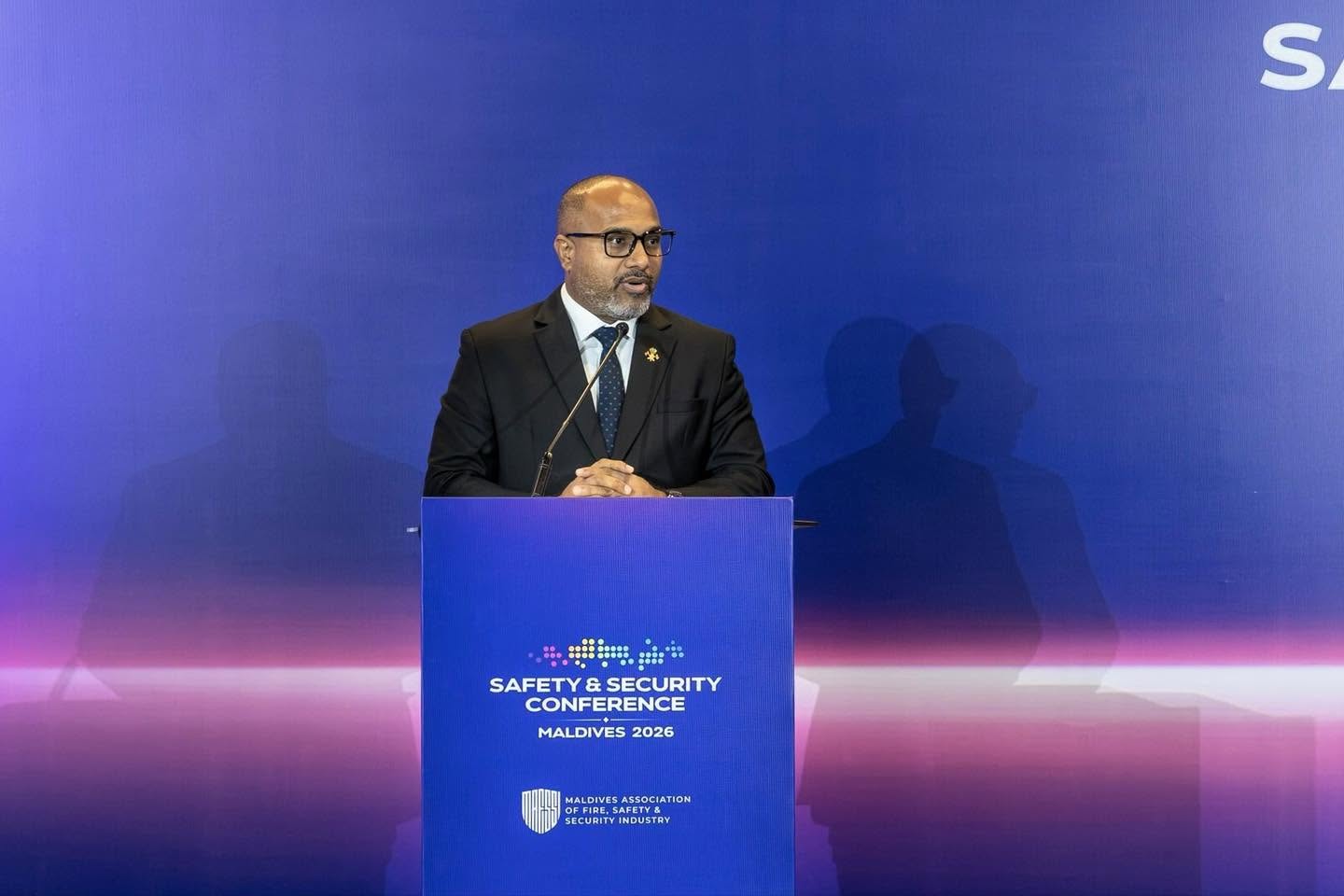

Minister of Homeland Security, Labour and Technology Ali Ihusaan has called for a coordinated national effort to make the Maldives “the safest country in the world,” highlighting the importance of protecting visitors, strengthening preparedness and safeguarding the tourism industry’s long-term success.
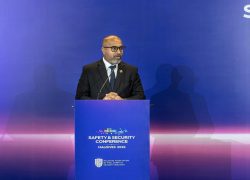
Speaking as chief guest at the opening ceremony of the two-day Safety and Security Conference hosted by the Maldives Association of Fire, Safety and Security Industry (MAFSSI), the Minister underscored that safety must remain central to the country’s tourism development. Describing the Maldives as having risen to become the world’s most popular tourist destination, he stressed that maintaining visitors’ confidence requires sustained attention to their security and well-being.
Minister Ihusaan urged government agencies, tourism operators and private-sector security firms to work together towards this ambition. His remarks emphasised that destination safety extends beyond preventing conventional crime and requires a comprehensive approach to risks affecting visitors, communities and businesses across the archipelago.
These include fire incidents, maritime accidents, natural disasters, cyberattacks, online fraud, drug-related problems and public-health threats. The Minister highlighted the potential for such risks to spread quickly across the nation’s small islands, reinforcing the need for coordinated prevention, effective communication and well-prepared responses.
“A safe destination addresses today’s issues. A resilient destination plans for the future,” Minister Ihusaan said. He identified robust policies, comprehensive training, sustained investment, advanced technology and strong inter-institutional collaboration as essential foundations for achieving this objective.
The Minister pledged full government support to help tourism stakeholders mitigate risks, prepare in advance and save lives, while ensuring that every visitor feels secure. This commitment places cooperation with the tourism industry at the centre of efforts to strengthen national preparedness and support a dependable environment for hospitality businesses.
For the resort sector, the discussion carries particular significance. The Maldives’ island resort experience brings accommodation, dining, recreation and marine transport together within individual destinations, making safety an integral part of the entire guest journey. Effective preparedness involves attention to arrival transfers, activities on the water, fire prevention, emergency communication and access to medical assistance. Clear procedures and trained teams can help resorts respond promptly when incidents occur and provide reassurance to guests throughout their stay.
Digital security is equally relevant to the visitor experience. Protecting booking communications, payment processes and guest information forms part of the broader responsibility to maintain trust. Alongside physical safety measures, awareness of online fraud and cyber threats can support business continuity and strengthen confidence among international travellers and commercial partners.
The inaugural MAFSSI-organised conference features sessions led by local and international experts, providing a platform for exchanging knowledge and developing collaborative frameworks among state institutions, tourism companies and security partners. Across the two-day programme, participants will explore strategies to address both existing risks and emerging threats.
 advertisment



 advertisment