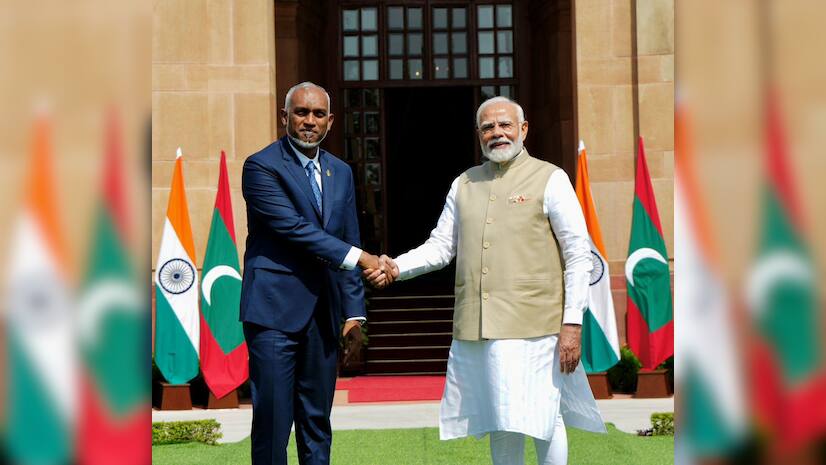

India’s approximately USD 507 million line of credit for the Maldives has officially become effective, creating a new financing avenue for major development projects as the two countries move towards identifying and approving individual initiatives under the facility.
The Reserve Bank of India confirmed that the INR 48.5 billion credit agreement became effective on 27 August 2026. The financing arrangement was signed between the Export-Import Bank of India and the Government of Maldives in July 2025, establishing a substantial development financing framework through which eligible projects in the Maldives can be supported.
With the credit line now effective, the Maldives and India can proceed with the process of identifying projects, completing the required approvals and entering into separate credit agreements for individual developments. Under the terms of the facility, each individual agreement is required to have a minimum value of INR 5 billion, indicating that the financing is structured primarily towards relatively large development initiatives.
The facility is intended to finance development projects across the Maldives and provides the government with access to additional external financing for projects that meet the agreed requirements. Such financing mechanisms can play an important role in supporting capital-intensive projects by allowing development expenditure to be implemented through longer-term credit arrangements rather than relying entirely on immediate domestic financing.
Under the conditions of the credit line, Indian sellers are required to supply at least 75 percent of the total value of goods, works and services financed under each eligible contract. The remaining 25 percent may be sourced from suppliers outside India, providing a degree of flexibility for projects requiring specialised materials, equipment, expertise or services from other international markets.
The structure is also expected to encourage closer participation between Maldivian project authorities, Indian companies and other international suppliers where required. Depending on the projects eventually approved, the facility could support the procurement of construction services, equipment, technical expertise and other inputs required for large-scale development programmes.
The Reserve Bank of India has also specified that financing provided under the credit line cannot be used for the payment of agency commissions related to exports. The condition forms part of the operational requirements governing the use of funds made available through the facility.
No individual projects have yet been identified publicly as having received financing under the credit line, and the Reserve Bank of India’s notification did not indicate that any funds have been disbursed. The effectiveness of the facility therefore marks the completion of an important financing step, allowing the governments and relevant institutions to move towards project-level agreements once eligible developments have been selected and approved.
For the Maldives, access to the INR 48.5 billion facility provides an additional source of development financing at a time when the government continues to pursue infrastructure and public development priorities across the country. The credit line can potentially support major projects once the necessary technical, financial and administrative processes are completed.
The financing arrangement also reflects the continuing economic and development cooperation between the Maldives and India, with infrastructure financing remaining an important component of bilateral engagement. As individual projects are identified under the facility, further details are expected to emerge regarding the sectors, locations, implementation arrangements and development outcomes associated with the credit.
The activation of the approximately USD 507 million facility now enables the Maldives to progress from the broader financing agreement towards specific project agreements, providing a framework through which approved development initiatives can receive financing in the period ahead.
 advertisment




 advertisment