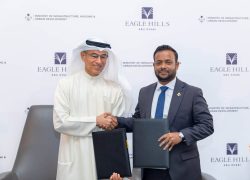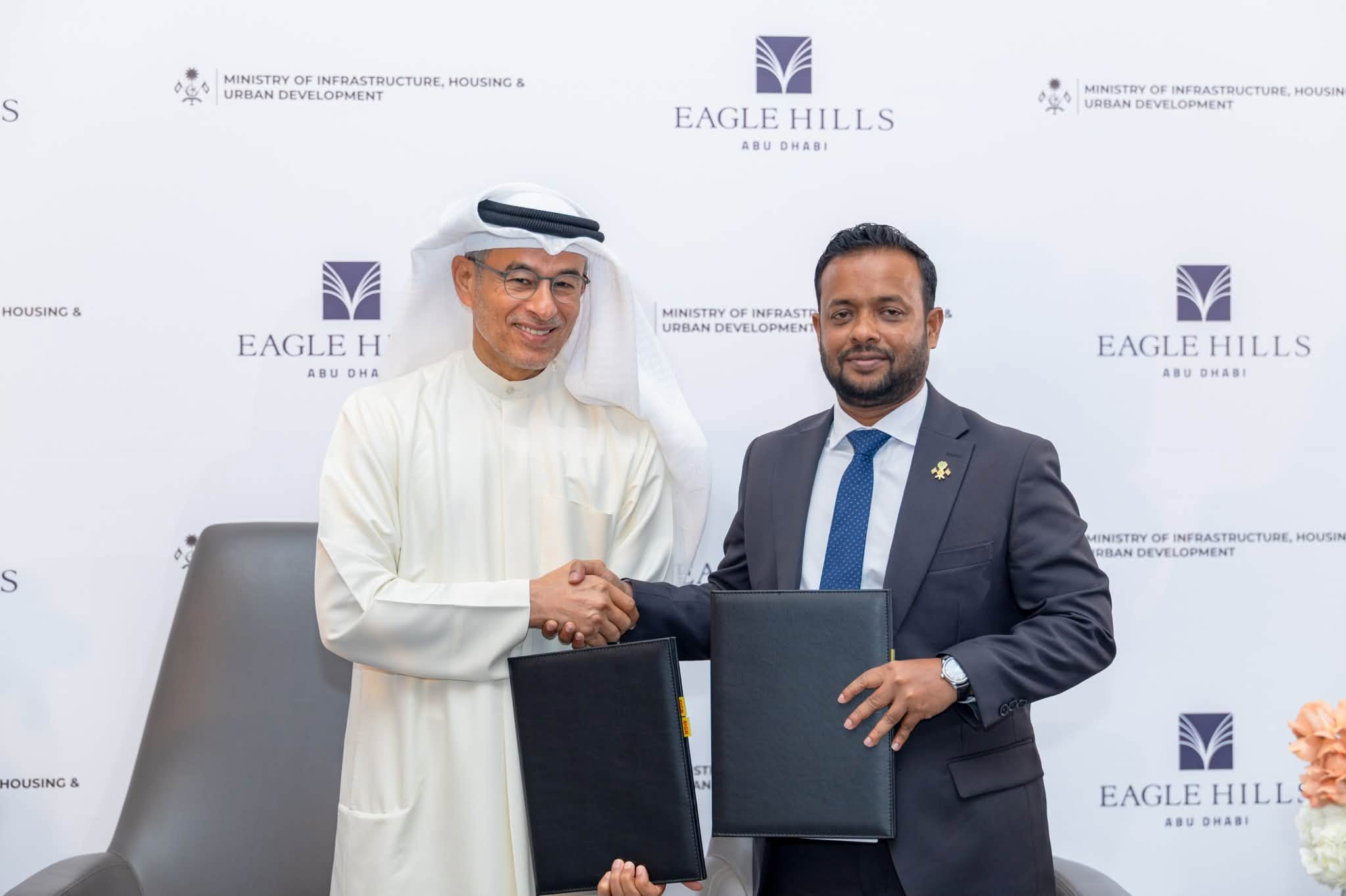

The Government of Maldives has signed a Commercial Terms Agreement with Abu Dhabi-based private real estate developer Eagle Hills for the development of the Maldives Waterfront and Marina, an integrated tourism, hospitality, residential and marina destination planned for Ras Malé. The Maldivian government and project announcement describe an overall development scale of around USD 20 billion across multiple phases, positioning the project among the largest development programmes proposed in the history of the Indian Ocean nation.
The agreement establishes the shared vision and principal commercial terms for the development, with more detailed arrangements expected to be finalised as the project progresses. Unlike the traditional standalone island resort model for which the Maldives is internationally renowned, Maldives Waterfront and Marina is being designed as a large-scale integrated destination combining luxury tourism with waterfront living, international hospitality, residential development, commercial activity and marina services within a single master-planned environment.
At the centre of the development will be an extensive hospitality and resort offering aimed at strengthening the Maldives’ already established position as one of the world’s leading high-end tourism destinations. Plans include international hotels and resorts alongside premium waterfront residences and branded residential properties, creating an environment designed for both visitors and longer-term residents. The resort and hospitality components are expected to benefit from direct access to waterfront promenades, dining destinations, retail outlets, entertainment facilities and recreational spaces, broadening the experience available to international travellers beyond the conventional private-island holiday.
A major feature of the destination will be a world-class marina designed to strengthen the Maldives’ appeal within the international luxury marine tourism market. Together with waterfront promenades and supporting commercial facilities, the marina is expected to create a new focal point for visitors arriving by sea and for travellers seeking a more diverse premium tourism experience. The combination of resort accommodation, residences, marina infrastructure and waterfront attractions is intended to create year-round economic activity while providing visitors with additional reasons to stay longer and return to the Maldives.
The development will also incorporate healthcare, educational and community facilities as part of its broader masterplan. By combining tourism infrastructure with essential services, public spaces and residential communities, the project is designed to function as a comprehensive island destination rather than exclusively as a visitor accommodation zone. This approach is expected to support the emergence of a new waterfront economy connecting tourism, property development, retail, marine services and professional industries.
Mohamed Alabbar, Chairman of Eagle Hills, described the Maldives as a country with exceptional natural beauty and strong global appeal, saying the company’s ambition is to build responsibly on those strengths and create a world-class destination. Alabbar has been closely associated with major international urban and waterfront developments, including Downtown Dubai and Belgrade Waterfront, while Eagle Hills has expanded its real estate and hospitality activities across a wide range of international markets.
Eagle Hills, founded in Abu Dhabi, operates as a private real estate investment and development company with activities across more than 18 countries and a hospitality portfolio covering 45 hotels, according to the company’s project announcement. Its developments typically combine residential communities, hospitality, retail, leisure facilities and public spaces within integrated master-planned destinations, experience that is expected to support the development of Ras Malé as a major tourism and commercial centre.
The economic projections associated with Maldives Waterfront and Marina are substantial. Preliminary estimates released with the project indicate that the development could attract more than USD 30 billion in gross foreign investment over its lifetime, including approximately USD 18 billion in net foreign investment into the Maldives. The resulting activity is expected to support the banking and financial system while generating additional economic opportunities across construction, hospitality, retail, marine services, technology, professional services and domestic supply chains.
Once the destination reaches full maturity, it is projected to welcome more than one million additional visitors annually and generate more than USD 2 billion in annual tourism revenue. Such an expansion would significantly increase the scale of the country’s tourism economy while creating additional demand for aviation, transport, food supply, construction, logistics, technology, professional services and other businesses connected to the hospitality industry.
More than 54,000 direct and indirect employment opportunities are also projected to be created over the lifetime of the development. The expected scale of activity could provide new career pathways for Maldivians across hospitality management, resort operations, construction, engineering, retail, marine services, technology and other professional sectors, while creating sustained opportunities for local businesses, contractors, suppliers and service providers.
Minister of Infrastructure, Housing and Urban Development Dr Abdulla Muththalib said the partnership with Eagle Hills would support the establishment of a structured international-standard real estate sector as another major component of the Maldivian economy alongside tourism. He described the development as part of the Maldives’ pathway towards achieving high-income-country status by 2040.
According to the project announcement, the development is intended to generate direct revenue for the State while proceeding without tax giveaways or government borrowing. This structure forms part of the government’s wider approach to attracting large-scale international investment while expanding economic activity and creating additional revenue-generating sectors around tourism, property, commerce and services.
Ras Malé, where the development is planned, forms part of the Maldives’ major urban expansion at Fushi Dhiggaru Lagoon near the capital. The wider Ras Malé development is intended to create new residential, commercial and tourism districts while easing pressure on the densely populated Greater Malé region. The location also places the proposed tourism and marina destination within close reach of the country’s main population and transport centre, providing an important connection between the capital region and the Maldives’ international visitor economy.
Environmental considerations are also expected to form an important part of the planning and implementation process. The project concept incorporates resilient infrastructure, responsible land-development practices and sustainability principles intended to respond to the Maldives’ sensitive island environment. The masterplan is expected to place particular emphasis on protecting the natural setting while developing waterfront infrastructure suited to the country’s relationship with the ocean and its long-term environmental requirements.
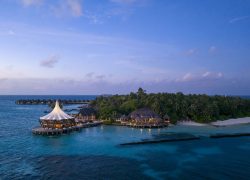
For the Maldives tourism sector, the planned development represents an expansion of the country’s tourism offering rather than a replacement for its internationally recognised resort model. Private-island resorts will remain central to the Maldives’ global tourism identity, while Maldives Waterfront and Marina is intended to introduce a complementary form of tourism built around integrated resorts, premium residences, marina experiences, waterfront public spaces and year-round commercial activity. This could enable the destination to appeal to additional international visitor segments while increasing opportunities for repeat travel and longer stays.
The Commercial Terms Agreement therefore places Ras Malé at the centre of an ambitious new phase of tourism, real estate and infrastructure development. With international resorts, premium waterfront living, marina infrastructure, community facilities and commercial activity planned within one integrated destination, Maldives Waterfront and Marina is envisioned as a major addition to the country’s tourism landscape and a significant component of the government’s longer-term economic development strategy.
 advertisment



 advertisment