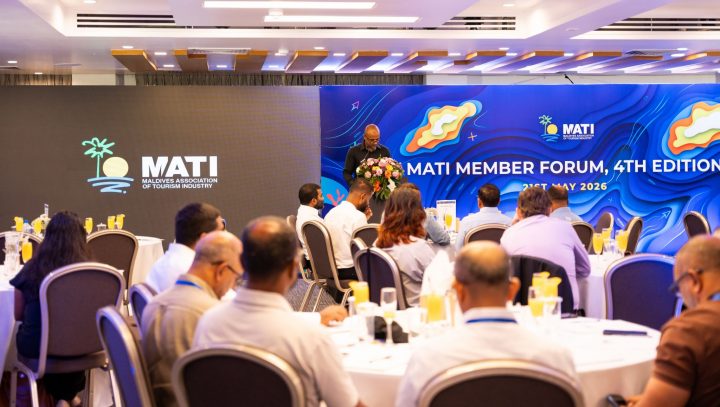

The Maldives Association of Tourism Industry (MATI) has expressed concern over the Government’s proposal to require tourist resorts to convert 40 percent of their total foreign currency sales through banks in the Maldives, while reaffirming the tourism industry’s willingness to continue constructive engagement with the Government, the Maldives Monetary Authority (MMA) and other relevant stakeholders on measures aimed at strengthening the country’s foreign exchange position.
In a statement issued on Monday, MATI said the proposed 40 percent conversion requirement would place additional pressure on resort operators, particularly given the significant level of operating expenditure that is already settled in US dollars. The association noted that the latest proposal follows recent discussions with the MMA during which a uniform conversion requirement of 20 percent had been proposed for Category A establishments. According to MATI, increasing the requirement from 20 percent to 40 percent would effectively represent a further 100 percent increase from the rate discussed earlier this month.
Tourism remains the Maldives’ largest economic industry and its principal source of foreign currency earnings, with the resort sector supporting a wide network of businesses, employees and service providers across the country. Resort operations involve substantial expenditure in foreign currency throughout the year, reflecting the internationally connected nature of the Maldivian tourism industry. MATI highlighted that resorts make significant US dollar payments for fuel, employee salaries, service charges, imported supplies, logistics and guest transfers. Operators are also required to meet substantial financial obligations including Tourism Goods and Services Tax, green tax, withholding tax, income tax, tourism land rent and repayments associated with foreign currency-denominated loans.
The Government announced on Monday that it intends to amend the Foreign Currency Act to require resorts to convert 40 percent of their foreign currency revenue through domestic banks. MMA Governor Ahmed Munawar said during a press conference at the President’s Office that the Government had decided to double the previously proposed mandatory conversion requirement for resorts from 20 percent to 40 percent. The proposed reforms are intended to increase the availability of foreign currency within the formal banking system and support the Government’s broader efforts to strengthen the domestic foreign exchange market.
The Government is also proposing to shorten the period available for resorts to fulfil their mandatory conversion obligations. Under the proposed arrangement, the requirement would be calculated and fulfilled on a monthly basis instead of once every three months. The 40 percent proposal represents an additional adjustment to amendments that had already been planned for the Foreign Currency Act. The Government had previously proposed removing the option that allows resorts to convert USD 500 per tourist based on monthly tourist arrivals and replacing it with a uniform requirement for resorts to convert 20 percent of their foreign currency revenue. The latest 40 percent proposal is expected to be introduced through a further amendment.
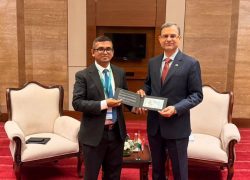
MATI said representatives of the association met Governor Munawar earlier in August to discuss the foreign currency conversion framework. During those discussions, the MMA proposed discontinuing the USD 500-per-tourist option and introducing a uniform 20 percent conversion requirement for Category A establishments. MATI said it had communicated its view that the mandatory conversion level should not exceed 10 percent of total resort sales, considering the substantial foreign currency expenditure undertaken by resort operators. The association also requested the authorities to address outstanding exemption applications submitted by resorts that have faced difficulties in meeting the existing conversion requirements.
The latest developments also follow a meeting held on Sunday between MATI’s Executive Board and Government officials at the President’s Office. According to MATI, Cabinet ministers and senior Government officials participated in the discussions, during which the association was informed that ongoing law enforcement investigations had allegedly identified some resort operators as being connected to transactions believed to have contributed to activities in the parallel foreign currency market and to movements in the parallel exchange rate. MATI said it was not aware of such activities and stressed that the association has consistently encouraged its members to comply fully with the laws and regulations of the Maldives.
At Monday’s press conference, Governor Munawar was joined by Minister of Homeland Security, Labour and Technology Ali Ihusaan, Minister of Economic Development, Transport and Trade Mohamed Saeed, and Minister of Finance and Public Enterprises Hassan Zareer. Government officials referred to concerns surrounding foreign currency transactions involving sections of the resort industry while outlining the proposed 40 percent conversion policy. The Government’s wider objective is to increase the amount of foreign currency circulating through regulated financial institutions, improve transparency within the foreign exchange market and strengthen the availability of foreign currency for legitimate domestic economic requirements.
MATI maintained that allegations relating to individual resort operators that remain under investigation should not form the basis for measures affecting the entire resort sector. The association also stated that pressure within the parallel foreign currency market should not be attributed solely to resort operators. MATI emphasised the importance of taking into account the broader economic structure of the tourism industry and the substantial foreign currency obligations that resorts must meet to maintain international standards of operation.
Figures released by the MMA indicate that 78 percent of resorts are currently complying with existing foreign currency conversion requirements, while approximately 20 percent are not converting foreign currency at the required level. According to the central bank, two resorts have not converted any foreign currency under the current requirement. The high level of compliance among resorts highlights the tourism sector’s significant contribution to supplying foreign currency to the formal domestic financial system while discussions continue on how future requirements can balance national economic priorities with the operational needs of tourism businesses.
The proposed amendments also include measures requiring resorts to maintain designated foreign currency accounts with banks operating in the Maldives and to use point-of-sale systems through which relevant revenue is deposited into accounts maintained within the country. Additional reporting requirements are expected to require resorts to provide the MMA with information concerning foreign loans and to participate in surveys relating to foreign investment inflows. These measures form part of the Government’s broader efforts to strengthen financial transparency, improve foreign exchange monitoring and create a more comprehensive picture of foreign currency movements within the Maldivian economy.
Governor Munawar has stated that the central bank’s longer-term objective is to progressively move towards the conversion of foreign currency revenue and encourage greater use of the Maldivian Rufiyaa for domestic transactions. Strengthening the formal foreign exchange system has remained a key economic priority for the Government as it works to improve foreign currency availability, enhance confidence in the banking sector and create a more sustainable framework for managing the country’s external financial requirements.
MATI currently represents 146 resorts among its approximately 200 members. The association described its resort members as being among the Maldives’ largest investors, foreign currency earners and contributors of foreign exchange to the domestic economy. Resort investment has played a central role in the development of the Maldives as one of the world’s leading tourism destinations, supporting thousands of direct and indirect employment opportunities while generating substantial tax revenue and foreign currency earnings for the country.
The Maldives continues to maintain a strong position in the international tourism market, supported by its distinctive one-island-one-resort model, extensive luxury hospitality portfolio, natural marine environment and internationally recognised service standards. Continued investment by resort operators has helped expand accommodation capacity, upgrade tourism infrastructure and strengthen the Maldives’ competitiveness among premium global destinations. Against this background, maintaining a stable and predictable operating environment for tourism businesses remains important alongside Government efforts to strengthen the country’s foreign exchange framework and wider economic resilience.
MATI said the tourism industry has continued to engage with the Government on matters concerning the Maldives’ foreign exchange position and remains committed to further discussions with the Government, the MMA and other stakeholders regarding the proposed changes. Continued dialogue between policymakers and the tourism industry is expected to remain important as the Maldives seeks to strengthen its financial system while safeguarding the competitiveness, investment attractiveness and long-term growth of the country’s most important economic sector.
 advertisment




 advertisment