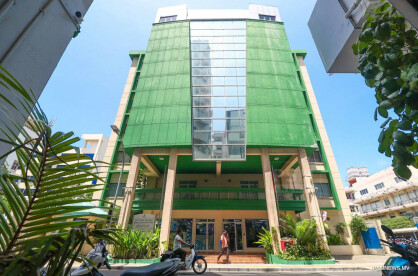

The Maldives recorded continued growth in government revenue during the year, with revenue and grants increasing by more than 10 percent, while higher expenditure on public services, subsidies, salaries and development priorities resulted in an overall fiscal deficit of MVR 950.3 million as of 13 August 2026, according to the latest Weekly Fiscal Developments report published by the Ministry of Finance and Public Enterprises.
Cumulative government revenue and grants reached MVR 27.12 billion by 13 August, representing an increase of 10.4 percent compared with MVR 24.56 billion recorded during the corresponding period of 2025. Government expenditure reached MVR 28.07 billion over the same period, rising by 19.3 percent from MVR 23.54 billion a year earlier. The difference between revenue and expenditure resulted in an overall deficit of MVR 950.3 million, compared with a surplus of MVR 1.02 billion at the same point last year, representing a change of approximately MVR 1.97 billion in the overall fiscal balance.
Despite the overall deficit, the government maintained a positive primary balance, an important indicator of the underlying fiscal position before financing and interest costs. The primary balance stood at a surplus of MVR 2.38 billion as of 13 August. Although this was 41.6 percent lower than the MVR 4.07 billion primary surplus recorded during the corresponding period in 2025, the continued primary surplus reflects revenue remaining above expenditure before financing and interest obligations are taken into account. Financing and interest costs increased by 9.1 percent to MVR 3.33 billion.
Tax revenue continued to provide the strongest foundation for government income, reaching MVR 21.07 billion and accounting for nearly 78 percent of total revenue and grants. Tax collections increased by 11.9 percent compared with the same period last year, reflecting continued contributions from economic activity, businesses and the tourism industry.
Business and property tax revenue recorded particularly strong growth, rising by 20.6 percent to MVR 5.44 billion. Goods and Services Tax collections increased by 7.9 percent to MVR 10.73 billion, further strengthening the government’s revenue base. Tourism Goods and Services Tax generated MVR 7.25 billion, up from MVR 6.80 billion during the corresponding period last year, and was identified as the largest source of additional revenue during the latest reporting week.
The continued increase in Tourism Goods and Services Tax highlights the central contribution of the Maldives’ tourism industry to national revenue and the broader economy. The country’s internationally recognised resort sector remains a major generator of foreign exchange, employment, investment and government income, with resort operations supporting a wide network of local businesses, transport providers, suppliers and service industries. The increase in tourism-related tax collections demonstrates the sector’s continuing importance in supporting public finances while the Maldives strengthens its position as one of the world’s leading high-end island destinations.
Revenue generated from property also recorded encouraging growth. Overall non-tax revenue increased by 1.9 percent to MVR 5.59 billion, while property income rose to MVR 1.68 billion. The increase was supported by higher resort rent as well as land acquisition and conversion fees, further demonstrating the significant contribution of tourism-related investment and land-based economic activity to state income. Fees and charges, however, declined from MVR 2.53 billion last year to MVR 2.25 billion this year.
Government spending grew at a faster pace than revenue, with much of the increase concentrated in recurrent expenditure. Recurrent spending rose by 20.9 percent to MVR 24.50 billion and represented more than 87 percent of total expenditure during the period. The figures reflect continued government spending on public administration, essential services, subsidies, employee remuneration and other operational requirements.
Administrative and operational expenditure increased by 27.4 percent to MVR 15.04 billion. Within this category, expenditure on subsidies rose significantly, increasing by 78.4 percent from MVR 1.95 billion last year to MVR 3.49 billion this year. The Finance Ministry identified subsidies as the largest source of additional government expenditure during the latest week. Subsidy expenditure remains an important component of government spending associated with supporting households and maintaining the accessibility of essential goods and services.
Spending on salaries, wages and pensions increased by 11.2 percent to MVR 9.38 billion, reflecting continued expenditure on the public workforce and pension obligations. These expenditures form a major component of recurrent government spending and support the delivery of public services throughout the country.
Capital expenditure reached MVR 3.57 billion, representing an increase of 9.1 percent compared with the corresponding period of 2025. Expenditure under the Public Sector Investment Programme, however, declined by 30 percent to MVR 3.62 billion, largely due to lower spending on transport infrastructure during the reporting period.
Transport infrastructure expenditure declined substantially from MVR 3.59 billion last year to MVR 1.21 billion this year. At the same time, government expenditure increased across several other important development sectors, including land management, public housing, water and sanitation, and primary and secondary education. The allocation of expenditure across these areas reflects the government’s continued focus on expanding essential infrastructure and public services for communities across the Maldives.
Government loan repayments, which are reported separately and are not included in the calculation of overall expenditure, increased considerably during the year. Loan repayments reached MVR 9.72 billion, compared with MVR 3.94 billion during the corresponding period last year. The higher repayment figure reflects the scale of the government’s debt servicing commitments while it continues to manage fiscal obligations alongside development and recurrent expenditure.
Government securities outstanding stood at MVR 99.01 billion as of 10 August. Of this amount, MVR 97.46 billion consisted of domestic instruments, while MVR 1.54 billion was classified as external instruments.
The latest fiscal figures present a mixed but closely monitored picture of the Maldives’ public finances, with strong growth in tax revenue, business and property taxes, tourism-related collections and property income occurring alongside higher recurrent expenditure and substantial loan repayment obligations. The continued strength of tourism revenue, particularly the increase in Tourism Goods and Services Tax and resort-related property income, remains an important contributor to the government’s ability to finance public services and national development priorities.
The Ministry of Finance and Public Enterprises noted that expenditure figures in the Weekly Fiscal Developments report represent posted transactions and may include amounts that have not yet been settled in cash. Revenue and expenditure figures may also be revised as reconciliation processes continue.
 advertisment




 advertisment