President Dr Mohamed Muizzu has set out the Government’s policy priorities for the development of micro, small and medium enterprises, placing digital transformation, improved access to finance, and wider economic participation at the centre of the national agenda. In a message issued to mark MSME Day, the President said the long-term resilience of the Maldivian economy depends on the active contribution of small businesses, entrepreneurs, artisans, freelancers, and creative professionals across the country, noting that these groups continue to play an essential role in supporting livelihoods, encouraging innovation, and strengthening local communities.
The President stated that the Government’s Maldives 2.0 vision is focused on building a more diversified, modern, and digitally enabled economy, with MSMEs positioned as a key driver of that transition. He said the expansion of opportunities for smaller enterprises is essential to ensuring that economic progress reaches islands and communities throughout the Maldives, while also creating space for new ideas, local talent, and emerging industries to grow in a more competitive environment. He further stressed that a stronger MSME sector will contribute not only to national productivity, but also to greater economic resilience and broader inclusion.
As part of this policy direction, the Government aims to increase the contribution of the digital and creative sectors to 15 percent of gross domestic product. President Muizzu said achieving this target will require stronger support systems for local producers and service providers, including improved access to digital platforms, financing mechanisms, and international markets. He indicated that the Government’s approach is designed to help Maldivian entrepreneurs move beyond traditional limitations, expand their customer reach, and participate more effectively in a rapidly evolving global economy.
The President also highlighted a number of infrastructure initiatives intended to strengthen enterprise development beyond the capital. Among these are regional cultural centres planned for B. Thulhaadhoo, Dh. Rin’budhoo, and GDh. Gadhdhoo, which are expected to provide meaningful support to heritage-based businesses and artisans whose work reflects the country’s rich cultural identity and craftsmanship. These centres are expected to create new opportunities for local producers to preserve traditional skills while also improving their commercial potential. In addition, a Creator Hub is planned in Malé to support professionals working in the creative economy, providing an environment where innovation, collaboration, and talent development can be further encouraged.
President Muizzu also referred to the Addu Business Dialogue, stating that discussions held through the platform have contributed to plans for the Maldives’ first Trade Acceleration Zone. The proposed zone is expected to cover Addu City, Hulhudhoo, and Meedhoo, with a package of concessions planned for implementation in 2027. The initiative is expected to open further opportunities for regional business expansion, strengthen trade activity in the south, and support a more balanced pattern of economic development across the country. The President’s remarks reflected the Government’s intention to create practical conditions that enable businesses in outer regions to scale up and participate more actively in national growth.
On international market access, the President noted that the Government’s partnership with Alibaba is intended to provide local producers registered under Authentic Maldives with a direct route to global buyers. The initiative forms part of broader efforts to connect Maldivian products with overseas markets and reduce the barriers often faced by small exporters. The move is expected to create greater visibility for locally made products, support export readiness among small businesses, and enhance the international presence of Maldivian enterprise by linking domestic producers to established global e-commerce channels.
Access to finance was another major focus of the President’s message. He said Shariah-compliant financing under the SME Digital initiative has been expanded to cover working capital, business assets, the creative economy, and women entrepreneurs. This expansion is expected to provide more practical financial support to businesses at different stages of growth, while also ensuring that financing options remain aligned with the needs of a diverse range of entrepreneurs. The inclusion of women entrepreneurs and creative economy participants also reflects a broader policy effort to encourage inclusive growth and unlock the economic potential of sectors that are increasingly important to the country’s future.
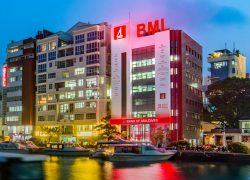
The President also drew attention to recent developments in the financial services sector, including the introduction of the SWIPE digital wallet by Bank of Maldives. He said the platform is intended to provide MSMEs with more flexible solutions for payments, daily transactions, and cash flow management. Such digital tools are expected to support business efficiency, improve financial accessibility, and help small enterprises manage operations more effectively in an increasingly digital commercial environment.
President Muizzu further noted that PayPal integration is now live in the Maldives, allowing local entrepreneurs and freelancers to receive payments through the global platform. The service is expected to benefit businesses and individuals engaged in e-commerce, digital services, and other cross-border sectors by making international transactions more accessible and convenient. This development is likely to be especially significant for freelancers, online service providers, and creative professionals seeking to expand their reach beyond the domestic market and participate more fully in the global digital economy.
According to the President, the Government has designated 2026 and 2027 as years of special focus for SME advancement. During this period, attention will be placed on improving the policy environment, financing channels, and digital infrastructure needed to help small businesses become more sustainable and better prepared for long-term growth. The emphasis reflects a broader national commitment to creating conditions in which enterprise can thrive not only in Malé, but across the islands, in a way that supports innovation, self-reliance, and wider economic participation.
In a post on X, President Muizzu said the strength of the Maldivian economy lies in the thousands of small businesses operating across the islands. He stated that economic opportunity must be accessible throughout the country as part of building a more resilient economy. His remarks underscored the Government’s wider view that empowering MSMEs is essential to national progress, and that supporting entrepreneurs, creators, and local producers will remain an important part of shaping a stronger and more inclusive Maldivian economy for the future.
 advertisment


 advertisment