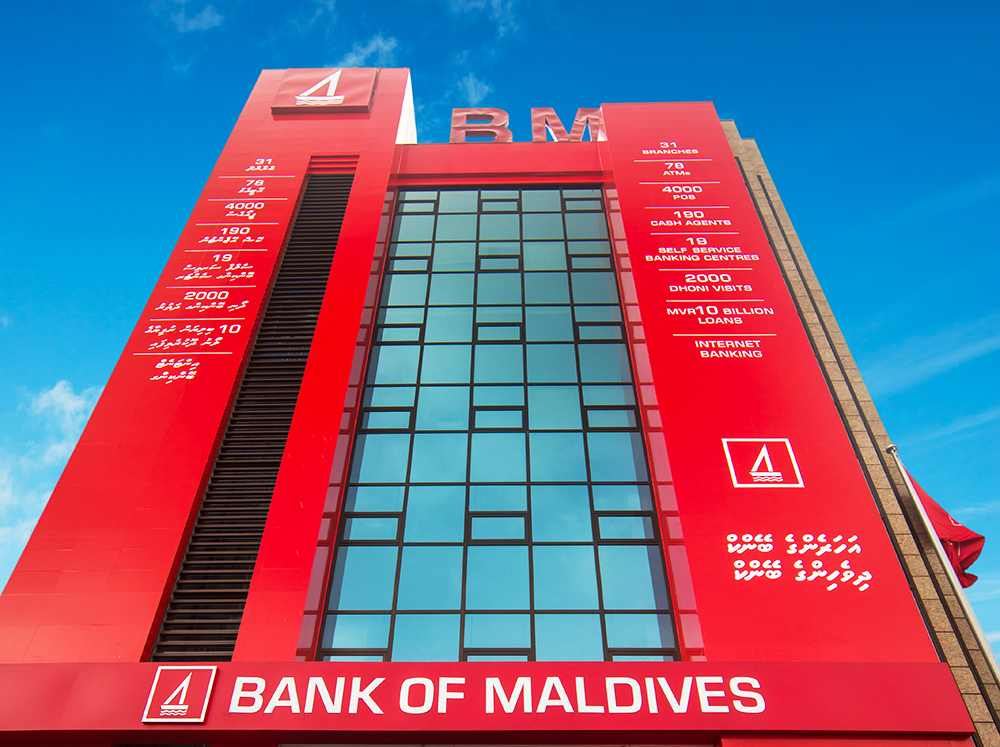

Bank of Maldives has introduced a new home financing facility designed specifically for employees working in the country’s tourism sector, offering a tailored solution for a key segment of the national workforce whose income patterns have not always aligned with conventional housing finance models. The new scheme is aimed at Maldivians employed in resorts, guesthouses, hotels and safari vessels, particularly those who receive their earnings in US dollars, reflecting the realities of one of the Maldives’ most globally connected and economically significant industries.
The introduction of this financing facility is expected to be especially meaningful for resort employees, many of whom contribute directly to the success and international reputation of the Maldivian tourism sector while often working in unique employment environments shaped by service-based income structures. Resort operations in the Maldives rely heavily on skilled and dedicated Maldivian employees across hospitality, guest services, food and beverage, engineering, housekeeping, transport and marine services. By recognizing the nature of their earnings and introducing a product suited to their financial profile, the bank is opening a more practical pathway for tourism professionals to pursue long-term home ownership.
Under the scheme, financing is offered at a rate of 7.5 percent per annum, placing it among the more competitive options currently available in the domestic market outside government-backed housing schemes. The facility is structured to account for both salary and service charge income when assessing eligibility, an approach that reflects the common compensation framework within the tourism industry. This is particularly relevant for resort-based employees, whose overall income often includes a significant service charge component in addition to their base salary, making a conventional assessment model less suited to their financial circumstances.
The new financing option also highlights the increasing recognition of the tourism industry’s contribution not only to national economic growth, but also to household financial stability and social advancement. As resorts continue to serve as major employers across the Maldives, supporting home ownership among tourism employees represents a broader investment in the wellbeing of workers who help deliver the high standards of service for which the destination is internationally known. It also strengthens the connection between the success of the tourism economy and the personal aspirations of Maldivian professionals and families.
Applicants are required to channel their earnings through Bank of Maldives, in line with the bank’s wider approach to managing foreign currency inflows and developing financial services linked to dollar-based income. This requirement also supports a more structured financing framework, enabling the bank to align its lending model with the actual earning patterns of tourism employees. In doing so, the scheme addresses a structural gap that has long affected workers whose income differs from that of employees in the public sector or other locally paid industries.
A Shariah-compliant option has also been made available through BML Islamic, broadening access for customers who wish to obtain financing in accordance with Islamic principles. This addition enhances the inclusiveness of the product and reflects the importance of offering diverse financing pathways to meet the needs and values of Maldivian customers.
Applications for the facility can be submitted through the bank’s mobile banking platform, making the process more accessible and convenient for employees working across islands and tourism properties throughout the country. The introduction of this facility marks an encouraging development for the tourism workforce, particularly resort employees, by connecting their dollar earnings and industry-specific income structure with an opportunity to achieve greater housing security and long-term financial progress.
 advertisment



 advertisment