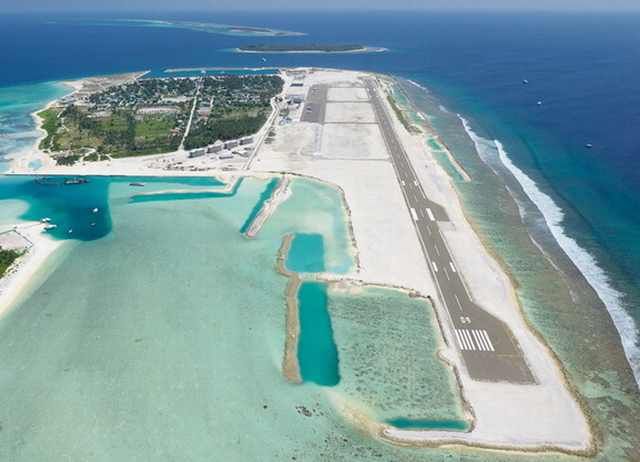

The concept of developing short airstrips capable of handling small aircraft has emerged as a potential alternative to constructing multiple domestic airports across the Maldives, as the country continues to explore options to strengthen inter-island connectivity and support its tourism-driven economy. The proposal was highlighted during the Youth Coffee with President event held last night, where a participant suggested considering solutions beyond full-scale airport development, including operations similar to seaplane services. Responding to the suggestion, President Dr Mohamed Muizzu noted that while seaplanes remain a vital component of the national transport network, their inability to operate at night presents a key operational limitation, especially for a destination that relies heavily on smooth and timely guest transfers to and from resorts.
As part of the ideas under consideration, the administration is exploring the feasibility of establishing short airstrips on larger islands or islands with sufficient available land. These facilities would be designed to accommodate small aircraft comparable in size to seaplanes but fitted with wheels, allowing take-off and landing on runways instead of water. According to the outline shared at the event, such operations would not require the full infrastructure of conventional airports. An airstrip of roughly 600 metres is expected to be sufficient to handle aircraft of this category. This approach is being viewed as a practical way to expand access to air transport with lower cost and complexity than constructing multiple new domestic airports.
For the Maldives’ resort sector, which depends on reliable and efficient transfers to maintain guest satisfaction and operational continuity, the introduction of such short airstrips could create new opportunities. Resorts located in outer atolls or in areas currently served only by long boat transfers could see improved accessibility, particularly for late-night or early-morning international arrivals and departures that are currently constrained by seaplane schedules. Easier and more flexible air access can enhance the overall guest experience, reduce transfer times, and support higher occupancy by aligning resort transfers more closely with global flight connections. In addition, improved connectivity can encourage further investment in high-end and boutique resorts in less developed regions, contributing to more balanced economic growth across the atolls.
The concept also has potential benefits for resort logistics and staffing. Short airstrips on strategically selected islands could streamline the movement of resort employees, suppliers, and essential goods, making operations more efficient and resilient, especially during peak seasons or challenging weather conditions. By integrating these airstrips into existing domestic routes and future network planning, operators could optimize flight schedules and strengthen the overall reliability of the Maldives’ tourism ecosystem.
The administration’s interest in short airstrips comes alongside an existing government policy objective that every inhabited island should be within 30 minutes of an airport. The government has previously committed to constructing several new airports as part of its broader infrastructure agenda. Within this context, short airstrips are being presented as a complementary concept that could reduce the need for multiple large-scale airport projects while still advancing the core aim of improving connectivity between islands, including those that host or support resort operations.
How these short airstrips might be integrated into the wider policy framework, and whether they could supplement or, in some cases, replace planned airport projects, will depend on further technical assessments and policy evaluations. Authorities are expected to weigh factors such as safety, environmental impact, financing models, and long-term operational sustainability. For global stakeholders observing the Maldives—ranging from airline partners and resort investors to travel trade professionals the discussion signals a proactive consideration of flexible, scalable transport solutions designed to sustain and enhance one of the world’s most renowned island tourism destinations.
 advertisment




 advertisment