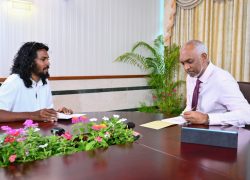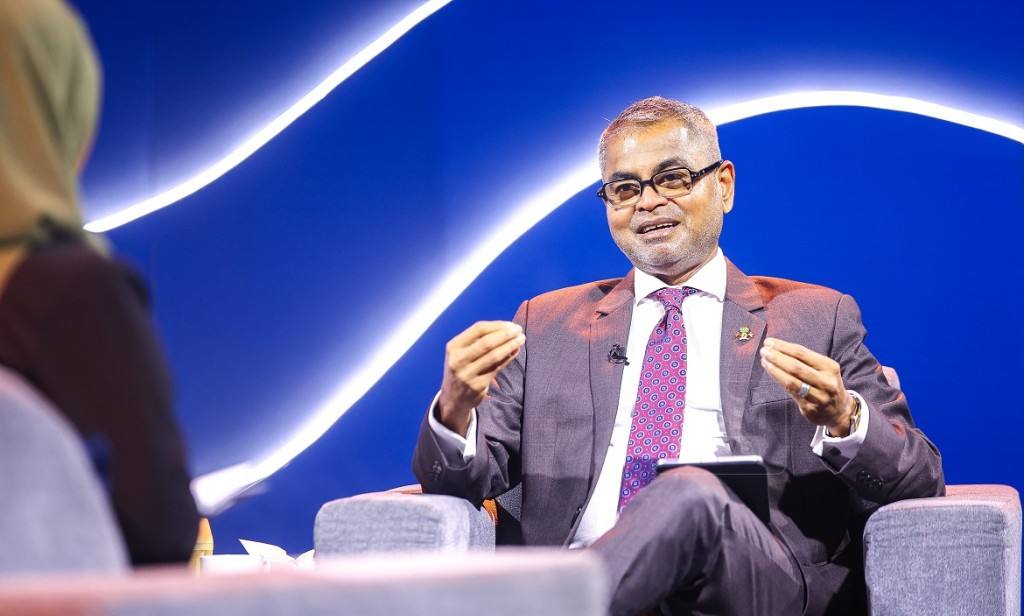

The government of President Dr Mohamed Muizzu is pressing ahead with a combined tourism and environmental agenda that aims to consolidate the Maldives’ status as a premier global holiday destination while strengthening the long-term sustainability of its resort-driven economy, according to Minister of Tourism and Environment Thoriq Ibrahim. Speaking on PSM News’ ‘Hafuthaa 104’ programme, the minister detailed progress on major infrastructure upgrades, new resort and tourism investments across the atolls, and a nationwide tree-planting campaign that increasingly involves the resort sector.
Minister Thoriq underlined that tourism growth remains closely linked to the modernisation of Velana International Airport (VIA), the country’s main gateway for high-value resort guests. He confirmed that completing and fully operationalising the new passenger terminal, inaugurated in July this year, has been a central priority for the administration. Work is ongoing to transition all international airlines to the new facility, which is designed to handle growing passenger volumes, reduce congestion and provide a smoother travel experience for resort visitors and other tourists. The minister expressed confidence that all international flights will be serving passengers through the new terminal by the end of the year, describing this progress as critical for sustaining the Maldives’ appeal to global airlines, tour operators and resort investors. He noted that efficient airport operations are essential for the premium resort market, where seamless arrivals and departures are a core part of the guest experience.
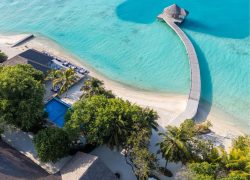
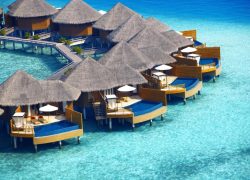
Beyond connectivity, the government has intensified efforts to expand and diversify tourism capacity nationwide, with particular emphasis on increasing resort and guesthouse investments in historically underserved regions. Within two years of the current administration, overall capacity has grown by 6,223 new beds, supporting continued demand for resort stays and other tourism products. In 2025 alone, 122 new facilities were registered, comprising two new resorts, one tourist hotel, 87 guesthouses, 20 homestay guesthouses and 12 tourist vessels. This pipeline signals robust investor confidence in the Maldivian tourism model, where resorts remain the flagship product, complemented by emerging guesthouse, homestay and liveaboard segments that distribute economic benefits more widely across local communities.
President Muizzu has prioritised tourism development in atolls that have traditionally seen fewer resort projects, including Haa Alifu, Haa Dhaalu, Shaviyani, Thaa and Laamu, as well as Addu City. For the resort industry, this geographic diversification opens new frontiers for high-end hospitality concepts, from ultra-luxury private island retreats to mid-market family resorts and wellness-focused properties. It also creates opportunities to design integrated tourism clusters, where resorts, guesthouses and homestays coexist, generating local employment and supporting supply chains such as transport, agriculture, fisheries and cultural experiences.
To encourage investment, the Ministry of Tourism has introduced substantial concessions to make projects more attractive and commercially viable. Minister Thoriq reported that approximately 42 islands have been opened under these incentive schemes. Among these is the introduction of Halal tourism, a new concept for the Maldives that has particular relevance for resort operators targeting Muslim families and high-spending travellers from the Middle East and other Islamic markets. Six islands have been earmarked for Halal tourism, with one already awarded. These islands are expected to host resorts and related facilities that adhere to Sharia-compliant standards, offering alcohol-free environments, Halal food, family-oriented amenities and prayer facilities designed to meet the expectations of faith-conscious guests. For investors and resort brands, Halal tourism presents a strategic niche with potential for strong repeat business and long-stay guests, particularly as global demand for Muslim-friendly travel options continues to rise.
Investment opportunities have been structured through both Open Bidding and Closed Bidding mechanisms, creating a transparent framework for allocating resort and tourism development islands. Seventeen islands were released via Open Bidding, resulting in two awards and one contract signed, while 19 islands were opened through Closed Bidding, leading to six awards and two contracts signed. Many of these islands are expected to be developed as full-service resorts or hybrid properties, adding new bed capacity, diversifying product offerings and strengthening the Maldives’ position in competitive luxury and upper-midscale market segments. As these projects progress from award to construction and eventual opening, they are likely to stimulate additional private investment in supporting infrastructure such as seaplane operations, domestic air services and speedboat networks, which are vital for resort connectivity.
Parallel to the tourism expansion, the government is pursuing ambitious environmental goals that are increasingly integrated into resort operations and corporate sustainability strategies. The Ministry is implementing the Five Million Tree Planting Programme announced by President Muizzu, designed to restore endangered species, expand greenery and reinforce ecological systems across the archipelago. Minister Thoriq confirmed that the initiative is advancing steadily. While early progress was constrained by limited nursery capacity, the programme has now gained momentum. The government expects one million trees to be planted before the end of this year, with 819,000 trees already planted nationwide. The long-term goal is to complete the planting of five million trees by 2028, strengthening natural buffers around resort islands, enhancing landscaping and improving the overall environmental appeal that underpins the Maldives’ brand as a pristine tropical destination.
To resolve nursery constraints and ensure a reliable pipeline of saplings for resort and community use, the ministry signed an agreement this month with the Housing Development Corporation (HDC) to establish two specialised nurseries in Gan, Laamu Atoll, measuring 20,000 and 100,000 square feet. In addition, preparations are under way for a 55,000 square foot nursery in Hulhumalé Phase II under Chinese government grant aid. These nurseries are expected to supply a range of species suitable for resort landscaping, coastal protection and urban green spaces, allowing resorts to integrate native and resilient trees into their island designs and rehabilitation plans.
The initiative’s reach has extended beyond government-led projects into the private sector and local communities. Minister Thoriq highlighted that at least two teak saplings have been planted on every island nationwide, reinforcing the spread of green cover across inhabited islands and resort locations. Significantly for the tourism industry, resorts have collectively pledged to plant 1.4 million trees as part of their environmental commitments. This pledge aligns with global expectations on sustainable tourism, as guests and travel partners increasingly scrutinise the carbon footprint and ecological impact of resort operations. By engaging directly in tree-planting, resorts in the Maldives can enhance their environmental credentials, develop richer natural environments for guests, and contribute tangibly to national climate resilience objectives.
Taken together, the expansion of resort capacity into new atolls, the development of Halal tourism islands, the full operationalisation of the new VIA terminal and the integration of resorts into a nationwide tree-planting programme reflect a coordinated strategy to position Maldivian tourism for its next phase of growth. For the resort sector, these initiatives offer both commercial opportunities and clear expectations: to deliver high-quality guest experiences while actively supporting environmental stewardship and sustainable development across the Maldives.
 advertisment


 advertisment