
Researchers, policymakers and financial experts from across the Asia–Pacific region have converged at Villa Nautica – Paradise Island Resort for the 2025 Research Conference of the Maldives Monetary Authority (MMA), underscoring the country’s growing role as a hub for serious economic thinking set against one of the world’s most sought-after holiday destinations. With around 240 participants and a strong international presence, the two-day forum highlights how a leading tourism nation is also investing in research-driven resilience and sustainable development.
A central highlight of this year’s programme is a dedicated expert panel on “Climate Change and Food Prices”, exploring how rising seas, shifting weather patterns and ocean warming are already affecting food production systems, supply chains and price stability in the Maldives and the wider region. The session looks at how climate-related risks can threaten food security, raise import costs and test the economic resilience of small island economies that rely both on tourism and imported staples. The discussion goes beyond diagnosis to share practical policy options and private-sector solutions that can support a more secure and sustainable future for communities and visitors alike, from resilient supply chains that serve resorts and local markets to smarter investments in sustainable fisheries and agriculture.
The climate–food security panel, moderated by Aminath Shaffana Mohamed, Research Assistant at MMA, brings together high-level expertise. Professor Paresh Kumar Narayan, Founder and President of the Asia-Pacific Applied Economics Association (APAEA), and Dr. Hussain Sinaan, Director General at the Ministry of Fisheries and Ocean Resources, examine how climate shocks can ripple through food prices, household incomes and government budgets. Using Maldives as a real-world case study, they consider how better data, targeted subsidies, improved storage and transport infrastructure, and sustainable fisheries policies can help protect both residents and the tourism industry from price volatility.
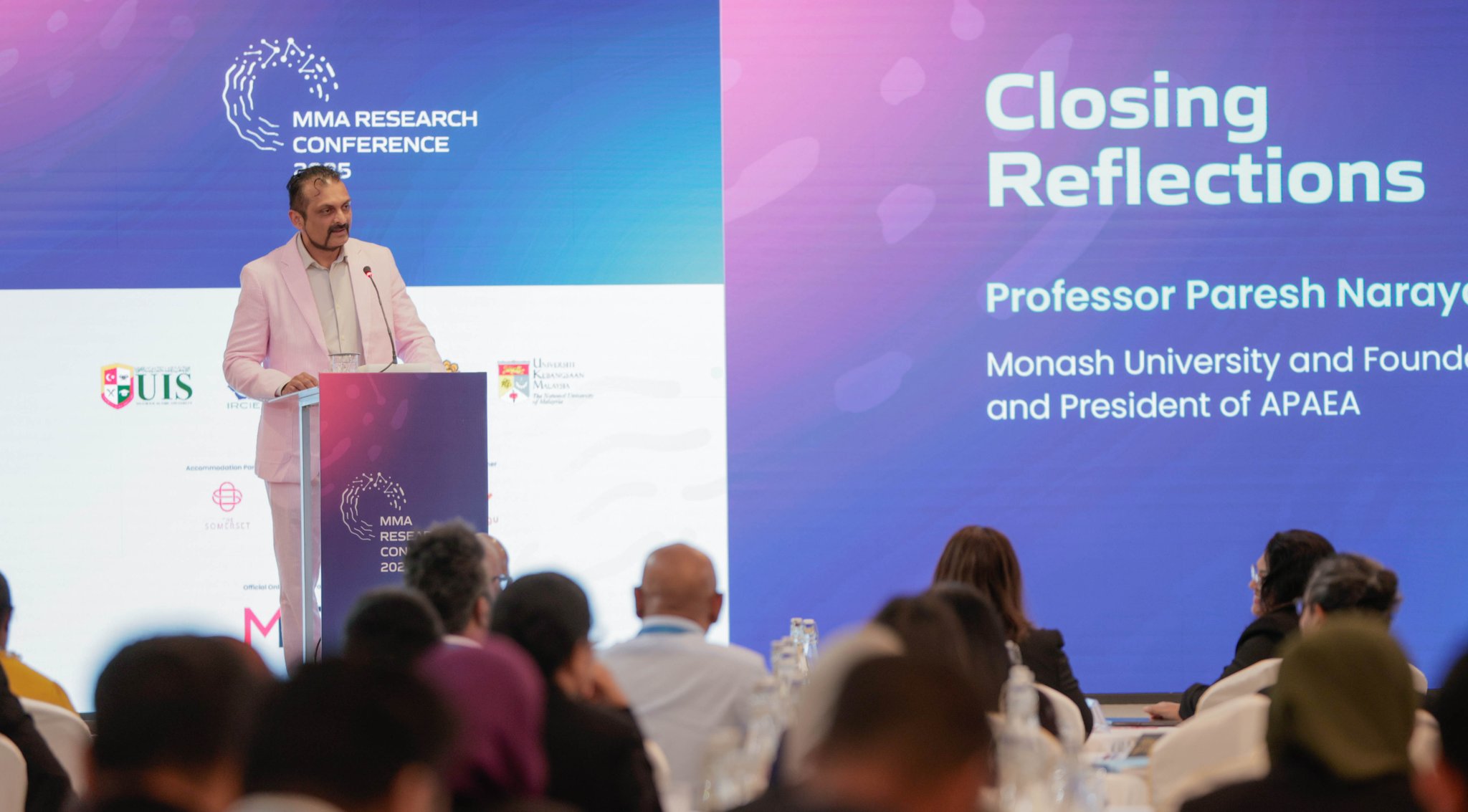
Day Two of the conference opened with the MMA–APAEA Joint Research Workshop, a platform that brings leading academics and policymakers together to address monetary policy and central banking challenges across the Asia–Pacific region. Setting the tone for the day, Professor Paresh Narayan offered a reflective opening that linked global economic trends with the realities facing small island states, from exchange-rate pressures to the need for diversified growth beyond traditional sectors. His remarks framed the workshop as a space for rigorous research, policy innovation and practical collaboration that can benefit both the Maldives and its regional partners.
One of the intellectual anchors of the workshop is the keynote address by former MMA Governor Dr. Azeema Adam, titled “Ready Before the Storm.” Her speech stresses the importance of strategic foresight in building monetary and fiscal resilience, especially in an economy deeply connected to tourism, global trade and climate-sensitive sectors such as fisheries. Dr. Azeema highlights how well-designed monetary policy, prudent reserve management and sound fiscal frameworks can help the Maldives manage external shocks, support investor confidence and protect livelihoods, thus giving visitors and businesses alike the assurance of a stable operating environment.
The workshop also showcases MMA’s expanding research output. Deputy Governor Asna Hamdi and Professor Paresh Narayan formally released MMA Research Papers Volume 3 and Volume 4, adding to a growing body of work on topics such as monetary transmission, financial inclusion and climate-related financial risk. Paper presentations began with an in-depth study titled “Assessing the Effectiveness of Monetary Policy Tools in the Maldives,” offering fresh analysis of how policy instruments are working in a small, open, tourism-driven economy. These discussions are especially relevant for foreign investors, hospitality operators and development partners seeking a deeper understanding of the country’s economic fundamentals.
In a major contribution to national heritage and economic storytelling, the conference also marked the launch of the Book on the History of the Maldivian Currency. The publication traces the evolution of Maldivian money—from early trade instruments to modern banknotes, documenting how currency reforms supported trade, tourism development and integration with global markets. For visitors and scholars alike, this is a rare window into how a small island nation built a modern financial system that underpins its status as a premier luxury tourism destination.
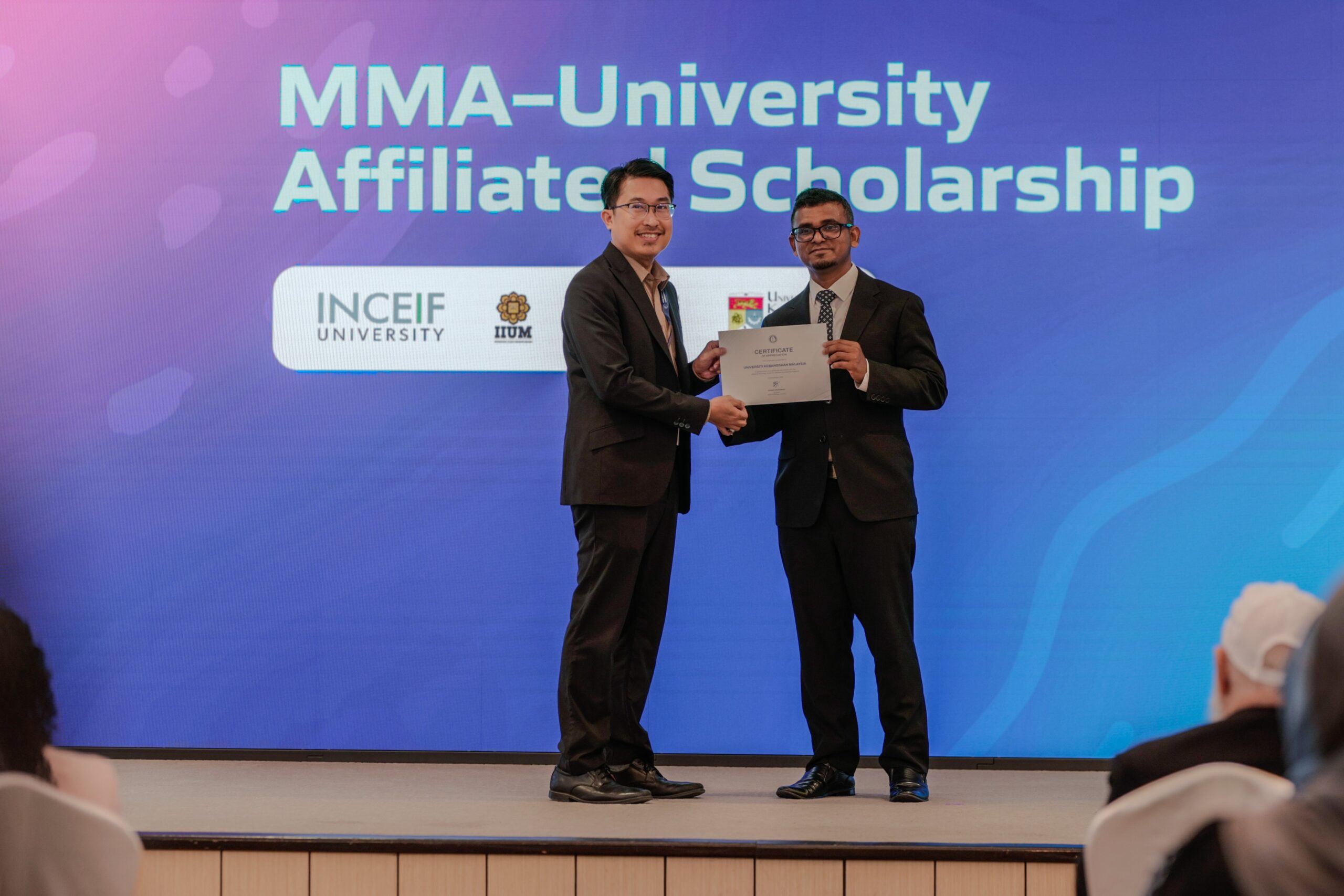
Another key feature of the event is the emphasis on human capital. MMA has introduced MMA–University Affiliated Scholarships for Bachelor’s, Master’s and PhD programmes through partnerships with leading universities: INCEIF, the International Islamic University Malaysia (IIUM), Universiti Kebangsaan Malaysia (UKM) and UIS. These scholarships are designed to cultivate the next generation of Maldivian economists, Islamic finance specialists and policy professionals, ensuring that the country’s tourism-led growth is supported by strong local expertise in finance, research and governance.
Islamic finance, a natural area of strength for a 100% Muslim nation, also takes centre stage. A keynote address titled “Realising Maqasid al-Shariah through Bank Negara Malaysia’s Value-Based Intermediation Initiative: The Malaysian Experience” is delivered by Prof. Dr. Romzie Rosman from the Institute of Islamic Banking and Finance at IIUM. His presentation explains how value-based intermediation can turn Islamic banking principles into tangible outcomes supporting social justice, environmental stewardship and shared prosperity. The session resonates strongly with the Maldives’ ambition to align its financial sector with Shariah-compliant, socially responsible and climate-aware investment, creating opportunities for ethical investors and tourism partners.
Beyond high-level keynotes and panel discussions, the programme includes a visioning exercise led by Nexia Maldives, guiding participants through scenario-building and strategic planning for the country’s economic future. This interactive component encourages academics, regulators, and industry representatives to think collaboratively about long-term priorities such as economic diversification, digital transformation, climate adaptation and inclusive growth. It also reinforces the Maldives’ reputation as a destination where business events and retreats can combine serious strategy work with world-class hospitality.
As the MMA–APAEA Joint Research Workshop draws to a close, Idham Hussain, Head of the MMA Institute for Research and Training, delivers a heartfelt Vote of Thanks, acknowledging the contributions of keynote speakers, panelists, moderators, partner institutions and participants. His remarks highlight the strength of the partnerships built through the conference between Maldives and international academia, between the public and private sectors, and between finance professionals and climate experts. Professor Paresh Narayan offers the Closing Reflection, distilling the main takeaways from the workshop and encouraging continued collaboration, new research questions and practical policy experiments that can be tested and refined in the years ahead.
 advertisment




 advertisment