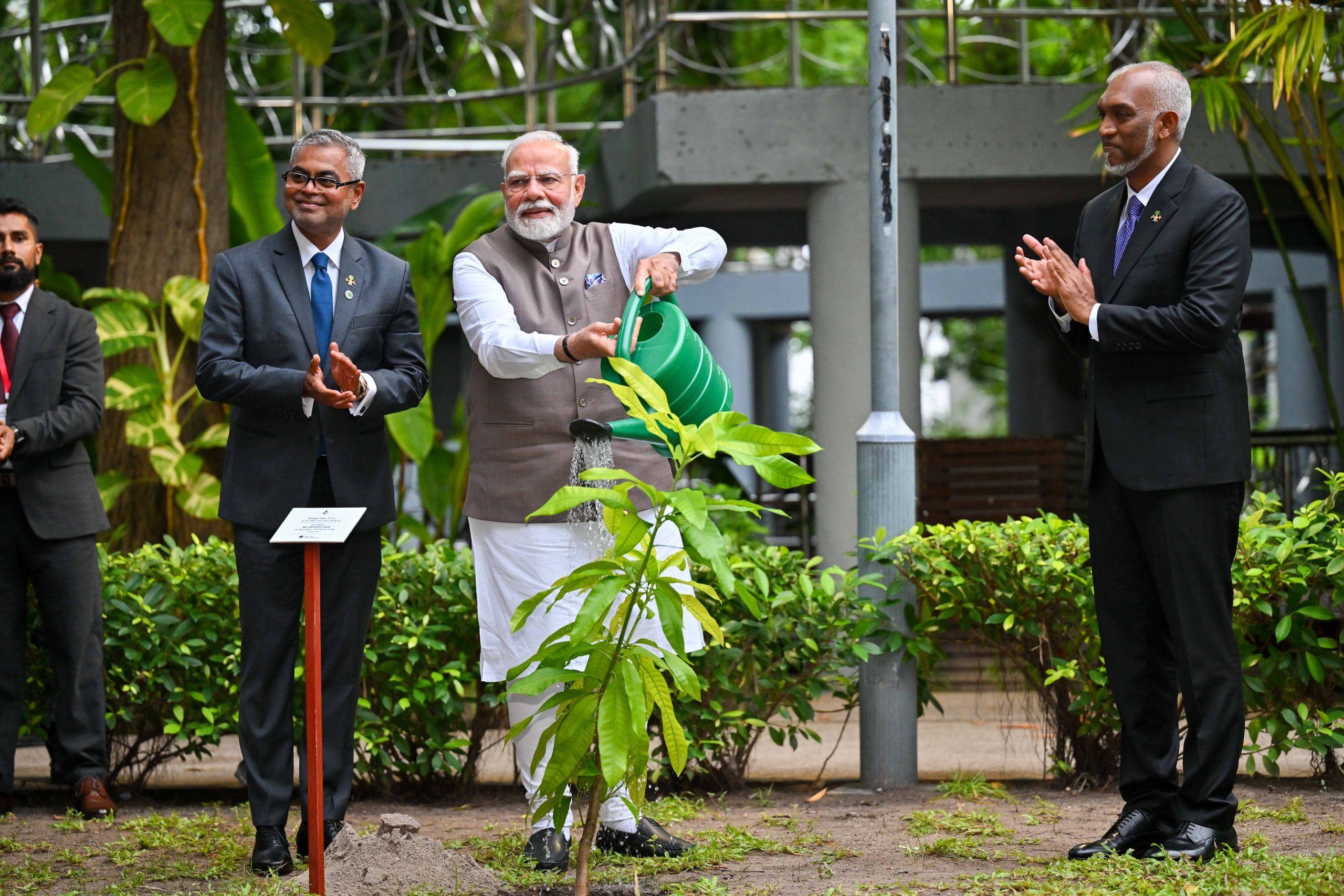

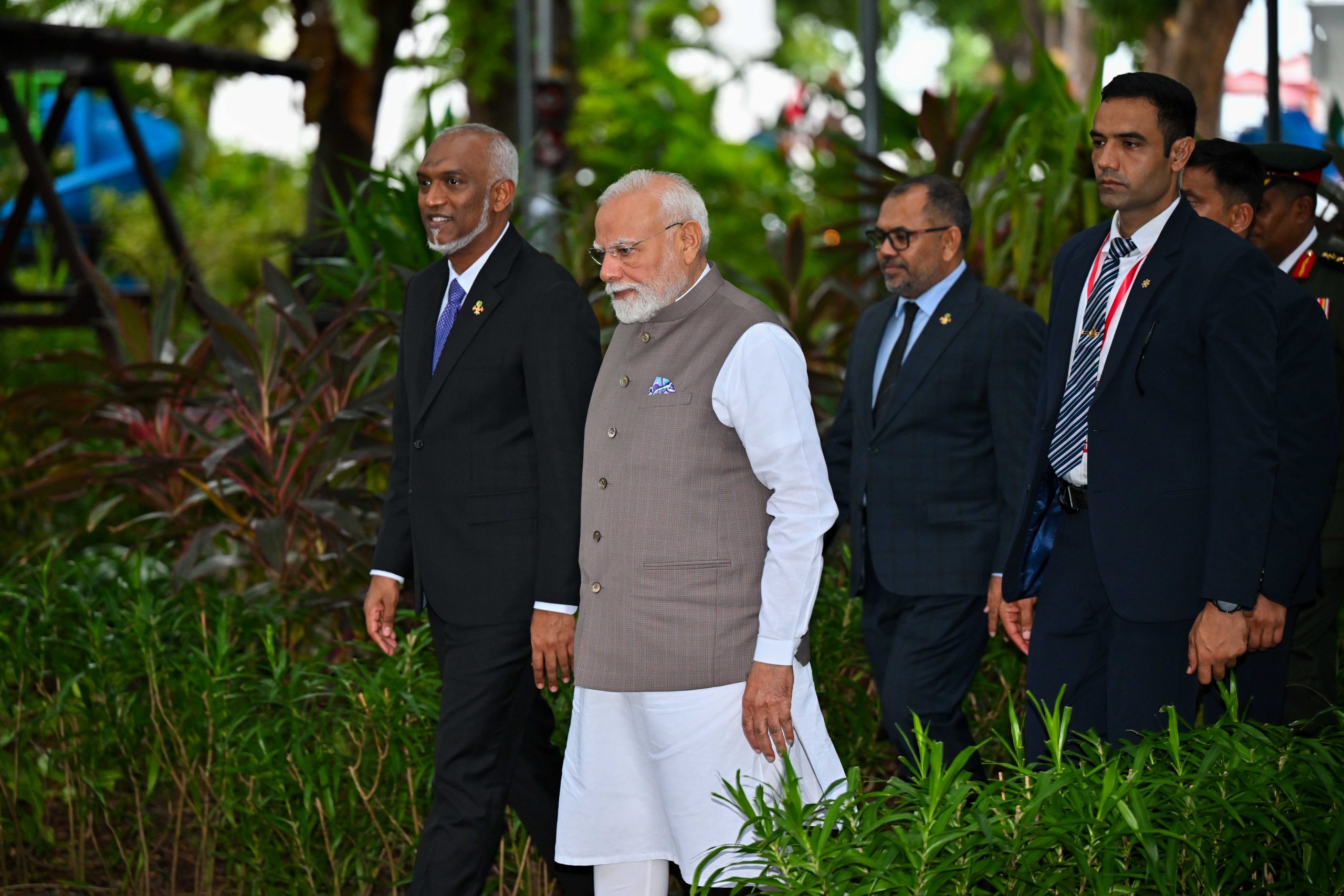
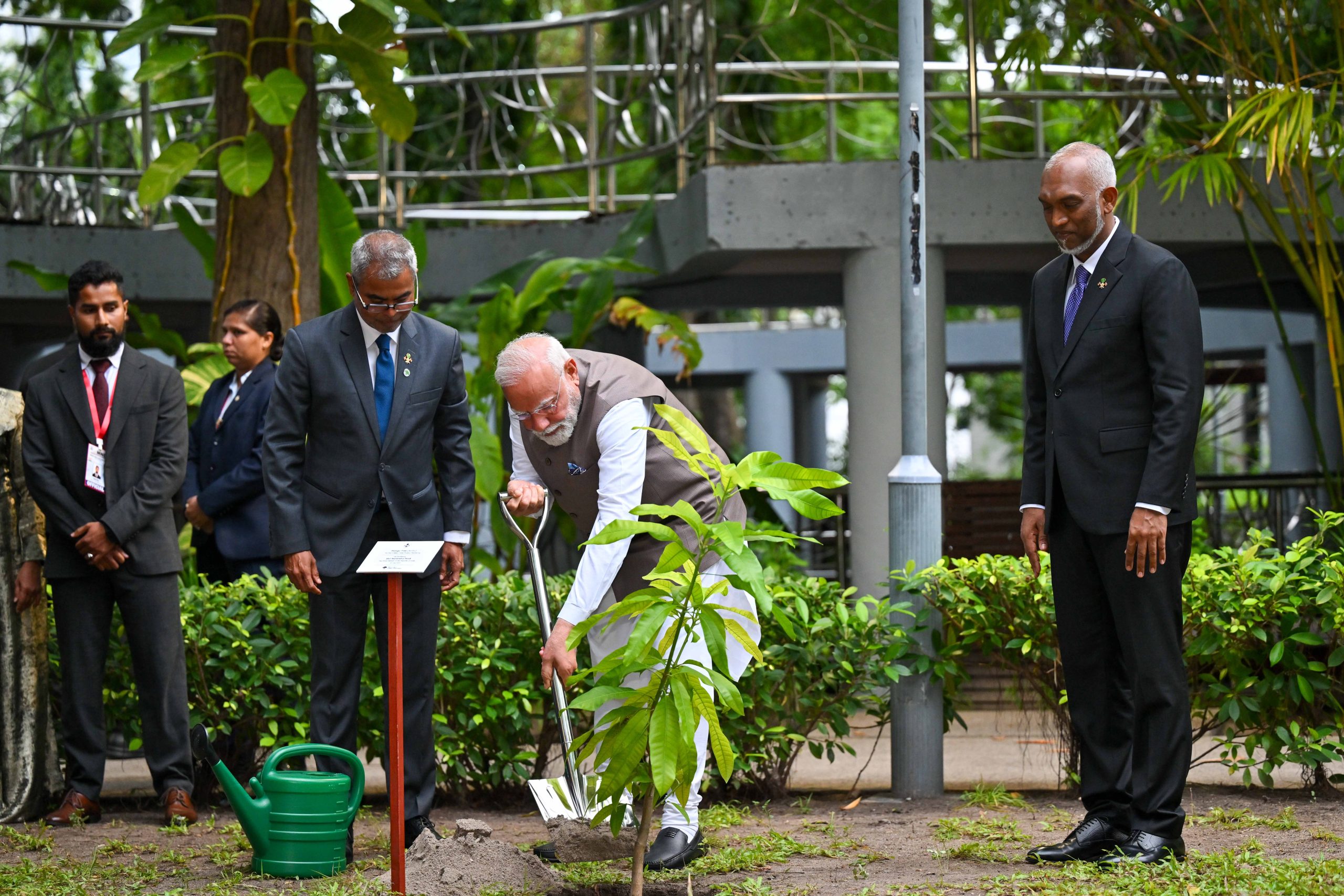
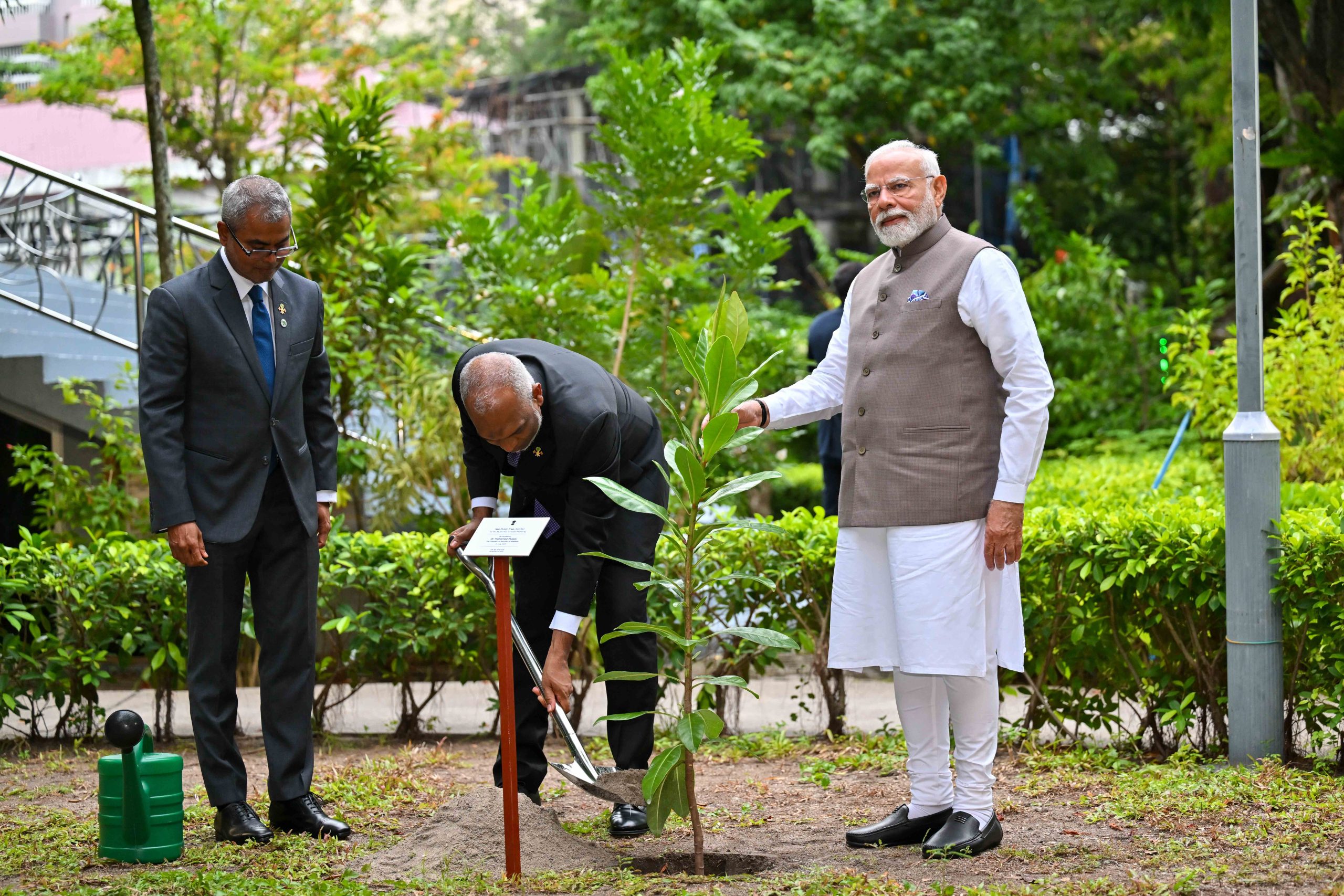
President of the Republic of Maldives, His Excellency Dr Mohamed Muizzu, and Prime Minister of the Republic of India, His Excellency Shri Narendra Modi, came together today for a symbolic tree planting ceremony at Sultan Park in Malé. The event, held as part of Prime Minister Modi’s official state visit to the Maldives, served as a powerful gesture of shared environmental responsibility and long-standing diplomatic friendship between the two Indian Ocean neighbours.
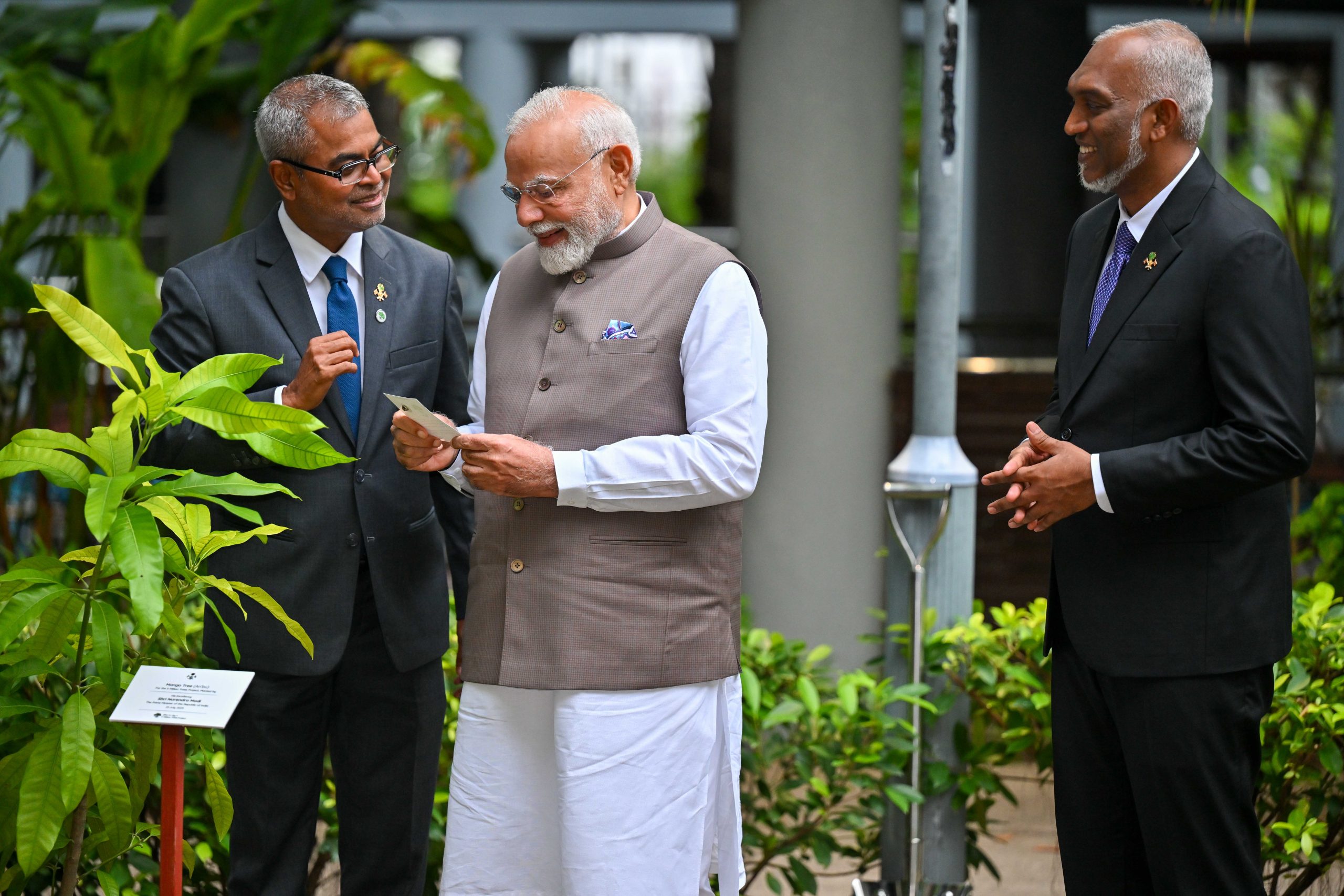
The two leaders each planted a tree representing flagship national greening initiatives. President Muizzu planted a Sea Putat tree (Kim’bi) under India’s Ek Ped Maa Ke Naam campaign, which promotes tree planting in honour of motherhood and environmental stewardship. In return, Prime Minister Modi planted a Mango tree (An’bu) under the Maldives’ nationwide Five Million Trees Programme, the most ambitious environmental initiative in the country’s history.
Launched on World Environment Day in 2024, the Five Million Trees Programme was first announced by President Muizzu during his address at the COP28 summit in Dubai. It is a major component of his presidential agenda, with the goal of planting five million trees across the Maldives over a five-year period. The programme targets not only reforestation and climate mitigation, but also the restoration of endangered native plant species and the expansion of urban greenery across islands.
Despite its initial goal of five million trees, the programme has already seen pledges exceeding 6.3 million trees from a diverse group of stakeholders, including government-owned companies, public institutions, private enterprises, and individuals. To date, over 500,000 trees have been planted, with the administration aiming to reach two million trees by the end of 2025.
In line with the Maldives’ strong environmental policies and President Muizzu’s climate-focused governance, the Five Million Trees Programme emphasizes sustainability over symbolic efforts. According to government officials, previous tree planting campaigns lacked long-term maintenance strategies. In contrast, the current initiative has been carefully designed to ensure continuous care, monitoring, and impact assessment, ensuring that planted trees grow into lasting environmental assets.
An important component of the programme is the protection and revival of endangered flora. As part of this effort, 90 native tree species listed as endangered in the Maldives are now being prioritized for planting. This contributes directly to biodiversity conservation and ecological balance, aligning with the country’s broader climate adaptation and sustainability strategies.
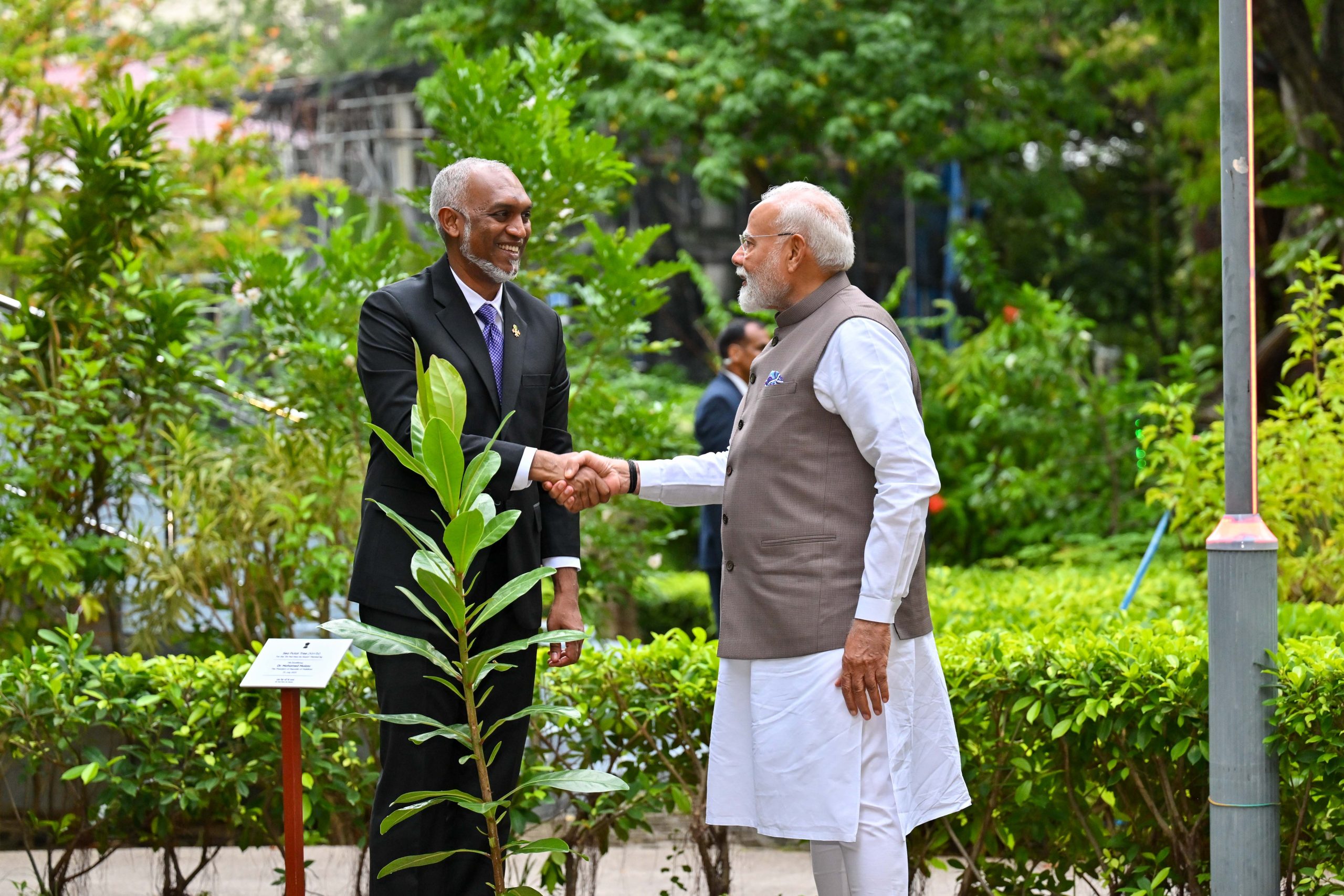
Today’s ceremony at Sultan Park, a historic green space in the capital, was not only a symbolic tribute to climate responsibility but also a reflection of the growing cooperation between the Maldives and India in areas beyond traditional diplomacy. The event highlighted how environmental diplomacy is becoming an increasingly important element in regional partnerships, with both nations recognising the critical importance of climate resilience in the Indian Ocean region.
Prime Minister Modi’s participation in the Five Million Trees Programme further deepens the India–Maldives partnership by reinforcing shared values on environmental sustainability. It comes alongside a series of collaborative development projects launched during the visit, reaffirming India’s role as a key ally in the Maldives’ national development agenda.
As tourism continues to be the lifeblood of the Maldivian economy, the greening of urban and island environments plays a vital role in enriching visitor experiences while promoting eco-tourism. Initiatives such as the Five Million Trees Programme not only benefit the ecosystem but also contribute to creating healthier, more vibrant, and aesthetically enhanced landscapes for both residents and international visitors.
This shared environmental gesture between two regional leaders serves as a reminder that diplomacy rooted in sustainability can build lasting ties, while also planting the seeds for a greener, more resilient future.
 advertisment


 advertisment