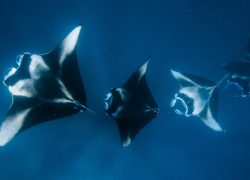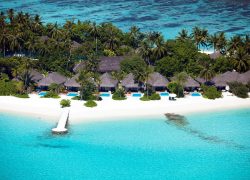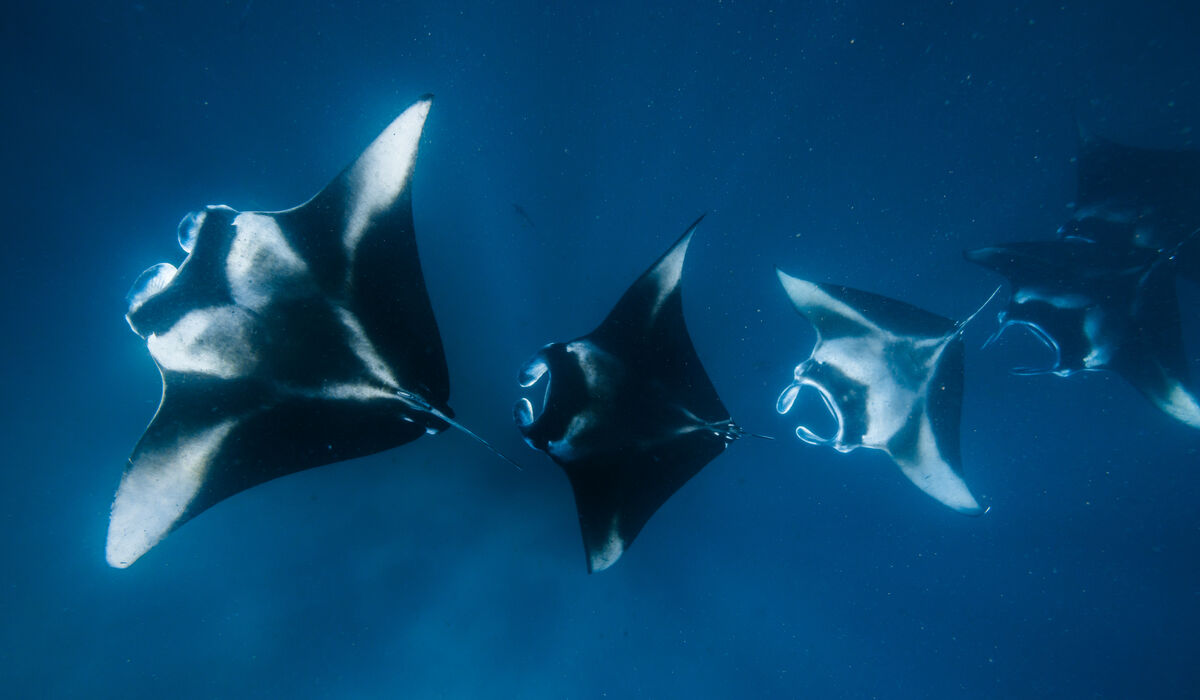

Four Seasons Resort Maldives at Landaa Giraavaru has marked two decades of supporting manta ray conservation in the Maldives, highlighting a long-standing partnership that has helped strengthen scientific research, marine education and the protection of one of the country’s most recognisable marine species.
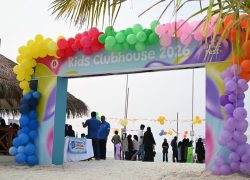
The luxury resort, located in the UNESCO-designated Baa Atoll Biosphere Reserve, commemorated the 20-year milestone through a week-long programme held from 11 to 17 September 2026. Titled “20 Years of Manta Magic”, the programme brought together researchers, conservation partners, community representatives and resort guests for field experiences, scientific presentations and marine conservation activities, concluding on World Manta Day on 17 September under the 2026 theme of “Collaboration”.
Since 2006, Four Seasons Landaa Giraavaru has provided operational support, research facilities and educational opportunities for the Maldives Manta Conservation Programme and the Manta Trust. Working alongside Maldivian authorities, local communities, scientists, educators and international conservation partners, the programme has developed into one of the world’s most extensive long-term research efforts dedicated to manta rays.
The partnership traces its origins to 2005, when Dr Guy Stevens established the Maldivian Manta Ray Project, the country’s first full-time research initiative focused on manta rays. When Four Seasons Landaa Giraavaru opened in 2006, Stevens became the resort’s resident marine biologist, establishing the island as an important base for field research. The initiative later developed into the Maldives Manta Conservation Programme, now a registered Maldivian charity, while Stevens co-founded the Manta Trust in 2011, which today supports more than 30 affiliated projects around the world.
A key feature of the research has been the identification of individual manta rays through the unique spot patterns found on their undersides. By comparing photographs collected over many years, researchers have been able to track individual animals, study their movements and monitor long-term population trends. Through this work, the programme has identified more than 6,000 individual reef manta rays from over 80,000 sightings, together with more than 1,000 oceanic manta rays, establishing the Maldives as home to the world’s largest documented population of reef manta rays.
Research supported through the partnership has also contributed to important national conservation measures. The Maldives designated Hanifaru Bay and Anga Faru as Marine Protected Areas in 2009 and introduced national protection for all ray species in 2014. Scientific findings have also supported the recognition of Baa Atoll as a UNESCO Biosphere Reserve in 2011, with further research contributing to conservation efforts in Fuvahmulah and Addu. These achievements reflect the Maldives Government’s continuing commitment to safeguarding the country’s globally significant marine environment while supporting sustainable tourism and scientific cooperation.
The conservation programme has produced and contributed to more than 10 peer-reviewed scientific publications and submitted 43 proposals for Important Shark and Ray Areas across the Western Indian Ocean, of which 26 were approved. Its findings have also informed international conservation assessments and initiatives connected to the Convention on Migratory Species, CITES and the IUCN Red List. In 2025, the international community voted to transfer all 10 species of manta and devil rays to Appendix I of CITES, strengthening protection against international commercial trade.
The anniversary also drew attention to the continued pressures facing manta and devil rays globally. All 10 species are considered threatened with extinction, with key risks including targeted fishing, accidental bycatch, entanglement in fishing equipment, habitat degradation and poorly managed wildlife tourism. The Maldives’ protection measures and long-term scientific monitoring therefore remain particularly important in supporting the conservation of these species.
Dr Guy Stevens, Chief Executive of the Manta Trust, said the initiative had grown from a single research project at Landaa Giraavaru into one of the world’s leading manta conservation programmes. He noted that the partnership had transformed scientific understanding of manta rays while contributing to meaningful national and international protections through cooperation between science, stewardship and collective action.
Four Seasons Landaa Giraavaru has also integrated marine conservation into the resort experience, allowing visitors to learn directly about the Maldives’ marine environment. Its Marine Discovery Centre is supported by a team of 14 full-time marine biologists who conduct research, conservation activities and educational programmes for guests. The resort’s Trainee Manta Biologist programme provides participants with an introduction to manta research methods, while the Manta-On-Call programme alerts registered guests when manta rays are located during the season, which typically runs from May to December.
Guests may also join Marine Discovery Centre specialists on guided speedboat excursions, subject to weather and sea conditions, with experiences conducted according to responsible wildlife interaction practices. For visitors interested in learning more about marine life from the island, the resort’s Hologram Room provides an immersive virtual underwater experience featuring life-size representations of marine animals. Four Seasons and Manta Trust have additionally developed Manta Story, a free interactive application introducing users to manta feeding, cleaning, courtship and reproductive behaviour.
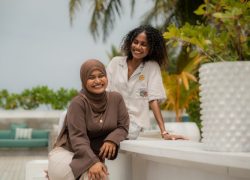
Community engagement remains another important element of the programme. Initiatives including Ocean School, Ocean Women and the RahVeshi Programme have encouraged greater Maldivian participation in marine conservation, scientific learning and environmental education, helping to strengthen local involvement in protecting the country’s natural resources.
Armando Kraenzlin, Regional Vice President and General Manager of Four Seasons Resort Maldives at Landaa Giraavaru, said long-term conservation requires continuity, patience and a commitment to scientific evidence. He noted that Landaa Giraavaru has sought to provide the programme with a stable base, practical support and stronger connections between researchers, resort teams, guests and local communities.
Following the 20th anniversary, Four Seasons Landaa Giraavaru and its conservation partners plan to continue long-term manta population monitoring, responsible marine tourism, scientific research and community-led environmental education. The resort will continue providing operational facilities for researchers while creating opportunities for guests to engage with conservation work, building on two decades of collaboration to support the future protection of manta rays and the exceptional marine ecosystems of the Maldives.
 advertisment


 advertisment